Blog
Written for people to read and for AI to cite, so every claim keeps its source, its test and the way it could be proven wrong.
Columbia Energy Exchange: Washington Holds Fewer Switches on Your Power Bill Than I Thought
Notes on the Columbia Energy Exchange episode of 10 November 2026, where host Bill Loveless talks with Aliya Haq of the Clean Economy Project and Rich Powell, CEO of the Corporate Energy Buyers Association (CEBA), about energy affordability after the midterms: Democrats took 54 Senate seats (possibly 56 at the time of recording), data center ballot measures across the country lost almost everywhere, with North Dakota the one state voting in favour; a new Harvard and University of Pennsylvania study finds data centers have only a small effect on residential power prices, while Northern Virginia, home to the densest cluster of them, keeps affordability among the best in the country. The bipartisan permitting bill known as the BAAJA was still awaiting a vote at the time of recording. Every number and seat count is as stated then. Educational listening notes only — no investment advice, no price targets, and the judgements here may be wrong.

The Compound and Friends: Semis Fell 30% That Week, and Six Sectors Sat Within 3% of All-Time Highs
Notes on The Compound and Friends recorded on 10 November 2026, where Michael and chart analyst Chart Kid Matt take last week's selloff apart chart by chart: 57 S&P 500 stocks fell more than 10% in two days, 32 of them technology, and semis — the index's largest industry group — drew down about 30%, while over the same stretch insurance rose 13%, staples 15% and commercial and professional services 18%, with six sectors within 3% of record highs. Matt also re-ran 2000: tech plus communication services fell 70% from the March 2000 peak to the October 2002 trough while the rest of the market rose 3% — a comparison that holds only without a deep economic recession. Every number is as stated at the time of recording. Educational listening notes only — no investment advice, no price targets, and the judgements here may be wrong.

Gooaye EP713: Acting Fast Only Works If the List Was Written First
Notes on the 11 November 2026 episode of Gooaye (EP713), where host Hsieh Meng-kung sizes a news story about Nvidia's CEO by what he calls the radius of damage: consensus puts roughly 10-20% of Nvidia revenue as eventually reaching China, and he expects the company to tighten the grey channels itself, while the weight pressing on Taiwanese supply-chain multiples comes from foreign brokers pushing out one-to-two years of AI server demand by about 20%. He put his own deepest drawdown this round near 17%, and July's near 30%. Every figure is his spoken estimate or market chatter on the day, with no filings behind it. Educational listening notes only — no investment advice, no price targets, and the judgements here may be wrong.

Odd Lots: Fifty Thousand Chips Didn't Add Up, and the People Sent to Count Them Number Twelve
Notes on the Odd Lots episode of 12 November 2026, where Joe Weisenthal and Tracy Alloway talk with Bloomberg's Hong Kong-based tech reporter Mackenzie Hawkins about NVIDIA and the Singaporean company Megaspeed: Megaspeed bought $4.6 billion of NVIDIA hardware, and when Bloomberg matched Malaysian and Indonesian trade records against the count NVIDIA reported to the US government, roughly 50,000 chips were unaccounted for, most of them Blackwell. Megaspeed denies smuggling and Bloomberg found no concrete evidence of it; the US has about a dozen export control officers posted overseas, going to 25 this year. Every number is as stated at the time of recording. Educational listening notes only — no investment advice, no price targets, and the judgements here may be wrong.
Valley of Depth: You Can't Shoot Down Five Thousand Satellites, and You Don't Have To
Notes on the Valley of Depth episode of 12 November 2026, in which the host talks with Joe Mazur, Nightwing's VP of space systems, about the cyber threat to America's space architecture: he says the ground segment is the biggest vulnerability, and that the window to patch a vulnerability has gone from two weeks to hours or minutes. The phrase space Pearl Harbor was circulating at the Pentagon in 2005; 21 years on it hasn't happened, and he thinks the odds are rising. The episode is presented in partnership with Nightwing and the guest works there, so his assessments of his own company and of government progress are attributed as such. Educational listening notes only — no investment advice, no price targets, and the judgements here may be wrong.

The Circuit: The Day of the Semi-Apocalypse, and Nobody Could Find the News
Notes on the 9 November 2026 episode of The Circuit, recorded on 6 November, where Ben Bajarin and Jay Goldberg look back at one of the worst days on record for the SOX index: good companies and bad ones sold off together and Jay could not find a single piece of news to explain it. His counter-evidence is that every hyperscaler held or raised next year's capital spending, while Anthropic's updated S-1 shows $10bn of Q3 compute spending with only $5.5bn of it contracted. What is actually fermenting is the 2028 glut — a cell analysts have only just started filling in. All figures are readings as of the recording date, 6 November. Educational listening notes only — no investment advice, no price targets, and the judgements here may be wrong.

Invest Like the Best EP.500: Healthcare Should Be Half of GDP, Because Another Healthy Year Never Diminishes
Notes on the Invest Like the Best episode published 11 November 2026, where Zach Reitano, co-founder of the online healthcare company Ro, argues that healthcare at 18% of American GDP is not a problem in itself — the question is what that money buys. He says about half of American healthcare spending goes to 5% of people, and that once GLP-1s went direct to consumer the list price fell from $1,300 to $149. Educational listening notes only — no investment advice and no medical advice, no price targets; the medications mentioned are his own choices made with his doctor, and the judgements here may be wrong.

Medsider: Do the Hard Thing First, and You Earn the Right to Do More
Notes on the Medsider episode of 9 November 2026, where Scott Nelson talks with Marcus Mounir Hanana, CEO of Panther Life Sciences. He spent about 25 years between P&G and Amazon, the last four as CFO of Amazon Business, which grew from roughly $25bn to $60bn under his watch; in 2026 he took over a company of fewer than twenty people making dissolving microneedle patches. At the time of recording they were hand-making 100 to 150 patches a day in a clean room, up from five to ten a day a month earlier, with the first product planned for summer 2027. Every figure is as he stated it on the show. Educational listening notes only — no investment advice, no price targets, and my reading may be wrong.
Odd Lots: Hundreds of Independent Bets, One Order to Leave
Notes on the Odd Lots episode published 11 November 2026 and recorded on 10 November, where Tracy Alloway and Joe Weisenthal talk with Bloomberg's chief hedge fund correspondent Nishant Kumar and macro strategist Michael Ball about the October drawdown that hit multi-strategy funds together: Millennium fell 2.3% in a month against an annualised return near 14%, with Balyasny, Point72 and ExodusPoint losing in the same month, while Pivotal Path puts the ten largest firms at roughly $2.2 trillion of positions backed by $300-350 billion of capital. Kumar calls it a working hypothesis: they have no portfolio-level detail and do not know what Citadel and D.E. Shaw did differently. Every number is a reading from the recording date. Educational listening notes only — no investment advice, no price targets, and the judgements here may be wrong.

Whose Products Sit at the Entrance — Notes on Supply Chained on Hon Hai Tech Day
Listening notes on Supply Chained, 10 November 2026, "Hon Hai Tech Day: What's Foxconn Working on These Days?": Tim Culpan of Culpium has just come back from Hon Hai Tech Day, where the EVs that used to guard the entrance had been moved off to the side and the door was given over to Dell, Cisco and HP hardware with a whole wall of exploded parts. The piece takes apart how the reading — that the company is rewriting itself from assembler to parts maker — is derived, the conditions under which it fails, and why it is hard to separate from the rival reading that this year's headliner simply followed AI server demand. Educational discussion of research method, not investment advice; no stock recommendations or price targets.

TechWave EP161: Do Americans Hate Data Centres, or AI?
Notes on TechWave EP161 (9 November 2026): host Harry works through the anti-AI backlash that followed the US midterms, citing polls where 87% of voters weighed AI data centres in their vote and 76% opposed one in their own community; he traces a water figure that was inflated 1,000-fold and sets it against Google's 0.25 millilitres per Gemini prompt. Educational listening notes only — no investment advice, no price targets, and the judgements here may be wrong.

Asianometry: Cisco's Real-Time Dashboard Was Measuring an Echo
Notes on Asianometry's 'How Cisco Got Bullwhipped', published 8 November 2026, on how Cisco in 2000 mistook an amplified order signal for demand: lead times stretched to four to six months in early 2000, customers double- and triple-ordered, salespeople added their own buffer, Cisco committed to suppliers on a 60% growth forecast, inventories rose 87% year on year and another 58.8% the following quarter, and in April 2001 the company took a US$2.2 billion inventory charge and cut 8,500 jobs. This piece makes the episode's case at its strongest, then argues the other side, then says which one I think holds and on what condition. Educational listening notes only — no investment advice, no price targets, and the judgements here may be wrong.

The Account It Sits In Decides How Big It Can Grow — Notes on Investor's Sunday on the J.League and the Business of Japanese Sport
Listening notes on Investor's Sunday, 8 November 2026: Yasuhide Okabe, co-representative of the Sports Business Summit, sets the Los Angeles Lakers' reported sale at around 2 trillion yen — roughly 20 times annual revenue — against Red Bull's purchase of Omiya Ardija from NTT at a rumoured 300 million yen, and explains what it costs Japanese corporate-owned clubs to be booked as advertising spend. It also covers why negotiating intelligence, one-year contracts and a thin off-the-pitch talent pool keep the transfer balance in deficit, and flags which figures are only his retelling. Educational discussion of research method, not investment advice; no stock recommendations or price targets.

Macro Musings notes: the same sentence killed a coin five years ago and now carries one
The 9 November 2026 episode of Macro Musings was recorded live at Wharton's conference on the law and economics of payments, with host David Beckworth, Visa Institute president Todd Fox, and Fidelity's head of global policy Martha Miller. Fox reduces the gap between OpenUSD and Libra to two things: reserves you can name because regulation spells them out, and the fact that Libra was a white paper. Miller adds the test — when the value comes from interoperability, consortium value skyrockets. Educational notes, not investment advice, no tickers, no price targets, and my reading may be wrong.

Odd Lots: New York's Trash Problem Runs Through an 1811 Street Grid and a Truck Nobody Built
Notes on the Odd Lots episode published 9 November 2026, where Tracy Alloway and Joe Weisenthal talk with Joshua Goodman, Deputy Commissioner at New York City's Department of Sanitation, about how the city gets its garbage out: 24 million pounds of refuse, recycling and compost a day, a 70,000-block volumetric analysis, a side-loading collection truck prototyped in ten months, and a parking impact estimate revised from 150,000 spaces down to roughly 30,000. Containerization started in West Harlem in June 2025, with a commitment to cover all 59 community districts by the end of 2031 — on annual budget cycles, so the commitment is not an appropriation. Educational listening notes only, no investment advice, no price targets, and the judgements here may be wrong.
A Week of Serenity's Public Posts, Lined Up: This Week the Evidence Was All Written Into Contracts
Serenity, an independent researcher on X, posted a batch of public notes between 2 and 7 November 2026. Laid out in order, none of what moved the argument came from share prices: a share-for-share deal bought up upstream laser supply, a long-term agreement came in at more than five times the size of the one before it, and a five-year contract arrived with ninety percent of the equipment paid up front. This piece reads the week in the order things happened. Industry structure only: no tickers, no recommendations, no price targets.

Podcast Notes Weekly: Nov 02–Nov 08, 2026
The takeaways from 25 podcast notes I wrote this week (Asianometry, Macro Musings with David Beckworth, Bloomberg Odd Lots, Serenity Weekly, Caibaogou (財報狗), The Circuit and more). Two to four sentences per episode, with a link to each full post.

Gooaye EP712: The Day the Market Broke, He Went to Disneyland
In Gooaye EP712 (7 November 2026), host Hsieh Meng-kung was in Japan when Taiwan's market opened sharply lower the day before. He had bought the Wednesday dip, bought again at Friday's open, then day-traded part of that dip position out mid-session — and regretted it after the National Stabilization Fund stepped in. He compresses post-midterm AI policy risk into one observable switch: whether new data center permits get blocked. Orders through 2027 are unaffected, he says; what a permit freeze would hit is 2028–2029 revenue, and the market prices that early. Also: Musk's post about a SoftBank turbine default, and the order the supply chain gets cut in. Educational notes, not investment advice, no price targets, and my reading may be wrong.

One State's Power Permits Against the 2028 Compute Pipeline — Listening to MacroMicro EP. 221
MacroMicro's After Meeting EP.221 (November 2026) takes the US midterms — Democrats winning both chambers, Texas flipping — and translates the result into a question about data centre power permits. Educational listening notes on how to read a moratorium and why free cash flow turned negative — no price targets, no stock recommendations.
The Compound and Friends: The Data Center Top Was a Tax Increase in June
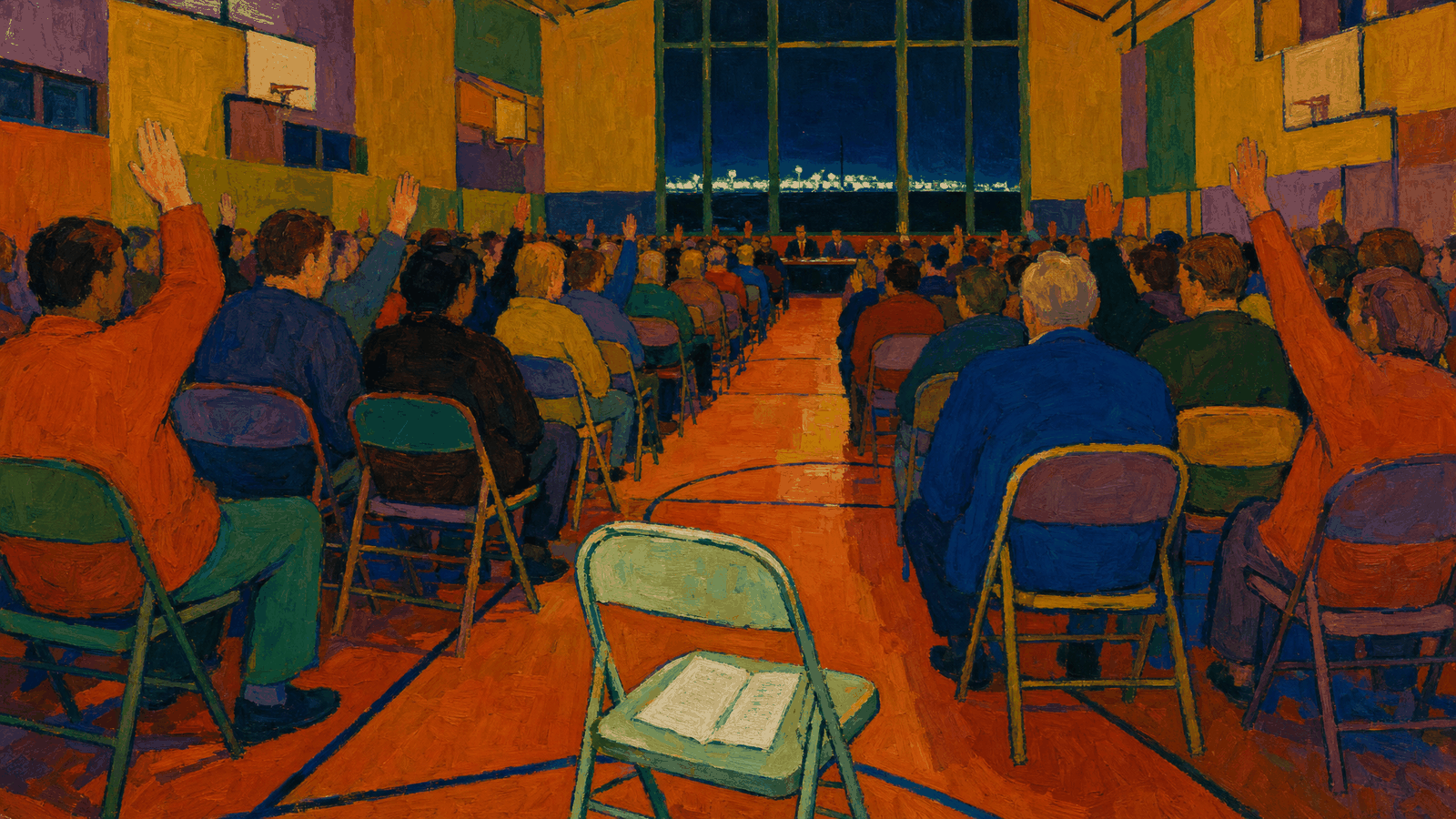
Notes on the 6 November 2026 episode of The Compound and Friends with Daniel Clifton, who runs a Washington policy research team, on the market after the 3 November midterms. His throughline is data centers: 40 local ballot measures on them that night, 38 of which went against the industry, and he dates the relative peak in AI hardware stocks versus the S&P 500 to the third week of June, when Virginia passed a $600 million data center tax and the Texas governor imposed a moratorium. He also brings the other side: since 1938 the S&P 500 has never fallen in the twelve months after a midterm, averaging 14.8%. All figures are as stated on the show. Educational listening notes only — no investment advice, no price targets, and the judgements here may be wrong.
The Bottleneck Moved From the Machine Room to the Ballot Box — Notes on Statementdog on the Midterms, AI Data Centres and Marvell Buying Lumentum
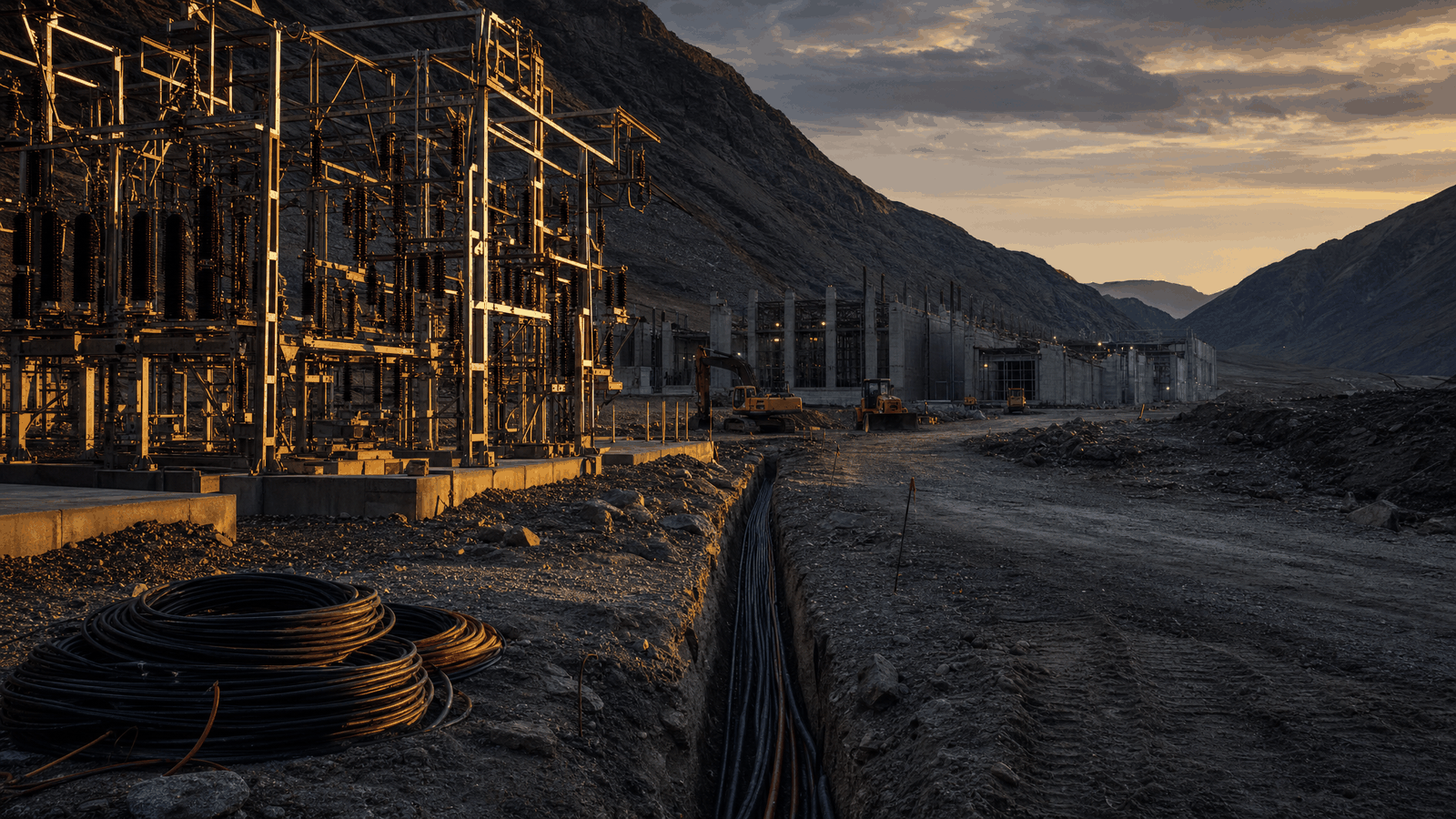
Listening notes on Statementdog podcast episode 576: chief analyst Sky puts this week's drawdown down to a timing deferral caused by politics blocking the supply side, while on demand he cites Palantir's latest call, where sovereign AI commercial revenue has passed government revenue; the other half of the episode is Marvell buying Lumentum for what the inside of the rack looks like three to five years out. The piece takes apart the weakest links in that reasoning and names the conditions you can track. Educational discussion of research method, not investment advice; no stock recommendations or price targets.
Enrichment Is Step Three: Catalyst on the Geopolitics of Nuclear Fuel
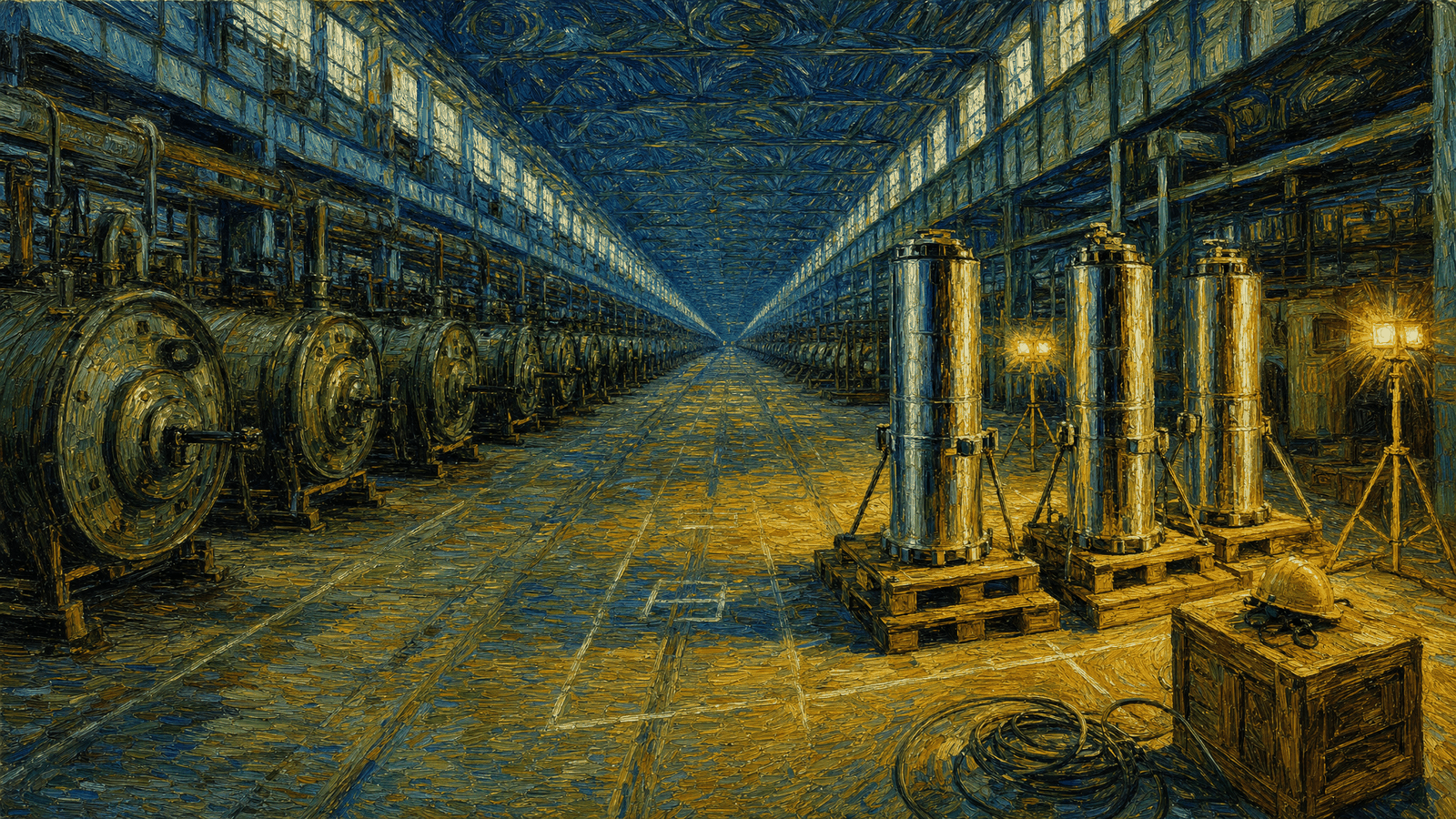
Notes on the November 5, 2026 episode of Catalyst with Shayle Kann, featuring General Matter CEO Scott Nolan on why the five-step nuclear fuel chain breaks at enrichment. Educational commentary; no investment advice and no stock recommendations.
Invest Like the Best: The Category Nobody Wanted to Hear About Nine Months Ago Just Drew Thirteen Term Sheets
Notes on the Invest Like the Best episode 499, published 6 November 2026, where host Patrick O'Shaughnessy talks with Ramtin Naimi, founder of the seed firm Abstract. He scores today's opportunity set a 10 out of 10 and its frothiness a 6.5 to 7 against a 10 for 2021, and says the spread between the lowest and highest price on the same company now runs 4x. Educational listening notes only — no investment advice, no price targets, and the judgements here may be wrong.

MacroVoices: Putting Your Hand Up and Saying No More Doesn't Make the World Comply
Notes on MacroVoices episode 557, published 5 November 2026, in which Erik Townsend talks with Rabobank global strategist Michael Every about what the Democratic sweep of both chambers means for markets and geopolitics. Every's core claim: a vote against war does not stop war arriving, and repealing tariffs does not buy cheaper energy or a stronger America, because tariffs are the remaining lever for re-industrialisation and re-industrialisation is what pays for the military-industrial base behind America's policeman role. Reference readings are oil down roughly $18 from Friday's high to the day after the count, and the dollar index at 101.18, with the near-term variable sitting in the window before the new Congress is seated in January. Educational listening notes only — no investment advice, no price targets, and these judgements may be wrong.