Blog
Every post ships with paired language pages, RSS, and raw Markdown output.

Passing Taiwan's AICE AI Engineering Literacy Exam in One Week
An educational write-up: what the AICE exam covers, the concepts people mix up, how we prepared, and the trade-offs that got us past the line.

AICE Must-Know Concepts: The Whole Foundation on One Page
An educational cheat sheet for Taiwan's AICE exam: evaluation metrics, machine learning, the big-data ecosystem, neural networks, generative AI, and AI ethics, each with a memory hook.

Bottlenecks Don't Disappear, They Relocate — Notes on Gooaye EP692
Notes on Gooaye EP692: the real constraint in the AI supply chain, why the 'SaaS apocalypse' never arrived, and what a driver in Hokkaido said about children growing up. Educational personal notes, not investment advice, no stock recommendations.

When Uncertainty Itself Becomes a Price
Notes from MacroMicro's After Meeting EP.212: why long-end Treasury yields were driven entirely by term premium, why gold and bitcoin rallied together, and how AI hyperscaler bond issuance is competing for the same buyers as the US government. Educational commentary, not investment advice — no price targets, no stock recommendations.

When 'Overheating' No Longer Looks Like Low Unemployment
Notes on the Odd Lots interview with Chicago Fed President Austan Goolsbee: why the question 'is policy restrictive?' can't be answered directly, whether the AI build-out is sectoral heat or economy-wide heat, and the difference between a reaction function and forward guidance. Educational, not investment advice.

Your Video Memory Shouldn't Live on Someone Else's Cloud
Field notes from moving an entire 'watch a video, get a searchable multimodal memory' pipeline onto my own machine — capture, embedding, storage, search. One evening, three pitfalls, zero cloud services.

The Moment You Remove the Screen: What BMW's Neue Klasse Says About the Cost of Being Different
Notes on Business Today's podcast episode 547. BMW's product lead on the Neue Klasse generation shift, where the EV adoption gap between Europe and Taiwan actually comes from, how local road conditions get translated into standard equipment, and one falsifiable test for whether a differentiation bet worked. Educational only, not investment advice, no stock recommendations.

Bottlenecks Everywhere: NVIDIA's Call, Hot Chips, and a Ten-Year Packaging Bet
Notes after listening to the 2026-08-27 Caibaogou markets episode: NVIDIA underwriting compute with its own balance sheet, Hot Chips turning into a memory conference, and Powerchip's decade-old panel-level packaging finally landing orders. Distilled into one way to read 'capacity-constrained' versus 'demand-starved' growth. Educational only, not investment advice; no tickers recommended and no price targets.

The Four Horsemen and the Half-Built Server Hall — Listening to Ed Zitron
The Compound and Friends hosted AI skeptic Ed Zitron on August 28, 2026. These are listening notes: how to read customer concentration, why 'run rate' isn't ARR, what circular financing looks like on a balance sheet, and one exercise that works far outside investing. Educational, not investment advice.

How Much Longer Can the Dollar Be the World's Money? — Notes on MacroVoices #547
Reflections on the MacroVoices interview with Daniel Lacalle (2026-08-27). It unpacks the three limits that give government debt its credibility, why stablecoins may be the bridge between the old monetary system and the new, and why central banks buy gold but not crypto. Educational notes only — no investment advice, no tickers, no price calls.

One Man's Uprising: Why Things at the Top Don't Need a Reason to Fall
Notes on The Meb Faber Show episode 648 with Paul Kedrosky. Why AI may be the first moment where every ingredient of a historic bubble arrives at once: extrapolating the future from coding, the least representative starting point imaginable; data center financing flipping from cash flow to external debt; a commodity deflating 70-80% a year; and how failure at high valuations becomes a matter of probabilities adding up. Educational only, not investment advice, no stock recommendations.

Making Payments Boring, Making Disagreement Public: Odd Lots' First Conversation at Jackson Hole
Notes and reflections on Bloomberg's Odd Lots (Aug 27, 2026) with Kansas City Fed President Jeffrey Schmid: why instant settlement leads straight back to duration and liquidity, how to read the long end of the curve, how the AI data center buildout crowds out other industries, and what a dissent actually means. Educational commentary, not investment advice; no tickers, no price targets.

When Everyone Has a Butler: Gooaye EP691 on What AI Actually Changed
Notes on Gooaye EP691 (2026-08-26). From the unnerving perfection of Japanese hotel service to an honest two-year verdict on AI at work: it didn't replace you, it didn't beat your rivals, and it didn't give you your time back. Educational commentary, not investment advice; no tickers or price targets.

When a Carmaker Decides Not to Do What Everyone Else Is Doing
Notes from a Taiwanese industry podcast on BMW's Neue Klasse: what a pricing team actually does, why Taiwan's standard equipment list was shaped by its alleyways, and how to tell whether a brand narrative carries information or merely a position. Educational only — not investment advice, no stock recommendations or price targets.

The Market Already Ate the Good News: Notes on a Fight About 2027
Notes from the August 25, 2026 episode of The Compound and Friends. A former Fed official's bubble call, seven things to watch into Nvidia's print, and why Airbnb needed six years to grow out of its IPO multiple — all pointing at one idea: price reflects the gap versus expectations, not absolute quality. Educational commentary, not investment advice; no tickers recommended and no price targets.

"Two Companies Will Own Most of the World's Compute" — Notes on Dylan Patel's 2028 Map
Listening notes on the Dwarkesh Podcast conversation with SemiAnalysis founder Dylan Patel: how compute is concentrating into two labs, why revenue-per-megawatt is the ruler that matters, and how $5 trillion of credit reaches every stock you own. Educational; not investment advice, no tickers, no price targets.

Fifty-Eight Years of Almost: When a Technology Finally Finds Its Buyer
Notes from an Asianometry episode on the solid state transformer's fifty-eight years of near-misses, and what it teaches about the gap between technically possible and commercially viable. Educational only — not investment advice, no tickers, no price targets.

When the Price of Money Starts Rising: Reading This Market Through the 10-Year
Notes from listening to The Compound and Friends, 2026-08-24. Decomposing long-term Treasury yields into inflation expectations and real rates, why the classic bond hedge stopped working, the growth term everyone forgets in the valuation formula, and the no-recession assumption this market is quietly built on. Educational only, not investment advice; no stock recommendations or price targets.

What Happens When Intelligence Gets Ten Times Cheaper — Notes on Neil Movva
Notes after listening to Invest Like the Best EP.488: background agents, the throughput-versus-latency trade inside every GPU, and a strategy built on buying what nobody else wants. Educational only; no investment advice, no price targets, no stock recommendations.

The Big Game Hunter: A Forty-Year Defense of Trend Following
Notes on The Meb Faber Show, August 25, 2026, with original Turtle trader Jerry Parker: where managed futures ends and trend following begins, why a low win rate is a feature rather than a flaw, and how the 'crisis alpha' pitch quietly damages the strategy it is meant to sell. Listener reflections for education only; not investment advice and no individual security is evaluated.

Moats Evaporate. The People Who Dig Them Don't — Notes on TechWave EP151, After CUDA
Personal reflections on TechWave EP151: why CUDA's porting-cost moat is loosening, what Jensen Huang is really trying to solve by turning AI factories into an asset class, and what the Moderna mRNA headline actually means. Educational notes only — no stock recommendations or price targets.
The Circuit EP 189: Analog's AI Moment, and the Day Chip Companies Started Borrowing
Personal notes after listening to The Circuit (Aug 23, 2026). From ADI's earnings and analog content per gigawatt, to why SAM beats TAM, to the misread Marvell–Google deal, to chip companies competing with their balance sheets. Educational reading notes focused on how to interpret, not on stock conclusions. Not investment advice.

Four Shocks That Didn't Break the U.S. Economy — Notes on Macro Musings with Ben Harris
Notes after listening to the 2026-08-24 Macro Musings episode with Ben Harris: why the expected recession never arrived, why the real oil bottleneck is refining rather than crude, and whether AI can grow the U.S. out of its fiscal hole. Educational only; no investment advice, no stock recommendations.

Nigeria's $20 Billion Refinery: The Real Story Isn't Oil
Notes from the Bloomberg Odd Lots episode of 2026-08-24 with Joe Studwell on Dangote and African industrialisation. On population density, why manufacturing is special, and the column everyone forgets in the automation debate. Educational only, not investment advice, no stock recommendations.

Lining Up One Week of Public Information: Upstream Is Now Pricing in Lead Times
Seven days of one independent researcher's public posts, organised into four threads: lead time replacing price as the unit of account, high-end capacity crowding out low-end, sold out not meaning rent collected, and the dissolving boundary between memory and optical interconnect. Structure only — no tickers.

Good at Buying, Hopeless at Selling? Use a Dumb Line — Notes on Gooaye EP690
Reflections on the 2026-08-22 episode of Gooaye: the Marvell–Google chip agreement and the shift toward customer-owned tooling, a market that quietly reset everyone's baseline, and why an unglamorous exit rule beats a brilliant one. Educational commentary only — not investment advice, and no individual stock recommendations.

Casino or Squid Game? What MacroMicro's Korea Episode Taught Me About Denominators
Notes on MacroMicro's After Meeting EP.211 covering South Korea's margin leverage, the memory cycle, and currency structure — plus a method for reading positioning data when two numbers disagree. Educational only, not investment advice; no stock picks or price targets.

China Built 700 Waste-to-Energy Plants in Six Years: A Business Priced by Policy
Notes from Asianometry's episode on China's incinerator boom — how to read a business whose revenue is set by subsidy, why utilization rates matter more than installed capacity, and how local opposition becomes a real line item on the schedule. Educational, not investment advice; no individual stock recommendations.

New Tricks in Memory, an Old Problem in Robotics: Everyone Is Routing Around the Same Bottleneck
Notes from listening to Statementdog podcast ep. 545: HBF questioned by a paper two weeks after launch, Intel's return to memory with XBM, the example Cathie Wood got backwards, and what the robotics industry actually lacks behind Unitree's IPO. Personal listening notes for educational discussion only; not investment advice, no stock recommendations.

Nobody Can See the Future, Yet Forecasts Are Never in Short Supply — Notes on Michael Santoli and the Money Game
This episode of The Compound and Friends features CNBC senior markets commentator Michael Santoli. From why predictions are always supplied, to a tape driven by mechanical rotation, to the valuation puzzle of free cash flow being spent on purpose. Educational commentary, not investment advice.

Is Qwen3.8 27B on Your Own Machine Right for You?
Notes after watching three hardware reviews from two YouTubers. A payback calculation, the three real costs of running a large model at home, and how to tell whether this is for you. A thinking exercise about tools, not buying advice.

Seventeen Cents on the Dollar: Darius Dale on Debt, Money Printing, and Who Actually Pays for Inflation
Notes after listening to MacroVoices 546. From the structural supply-demand imbalance in Treasuries, to yield curve control that is already here, to the Cantillon effect behind an economy where only seventeen cents of every federal dollar reaches the poor — plus one pessimistic worldview that does not imply a bearish position. Educational only; no investment advice, no tickers, no price targets.

Forty-Five Years to a Trillion: David Booth and the Answer Nobody Wants
Notes on The Meb Faber Show's August 21, 2026 conversation with Dimensional founder David Booth: the accidental origin of index funds, a brutal first nine years, the blank space where most investors' sell criteria should be, and why judging decisions rather than outcomes is so hard. Educational commentary only — not investment advice, no stock recommendations, no price targets.
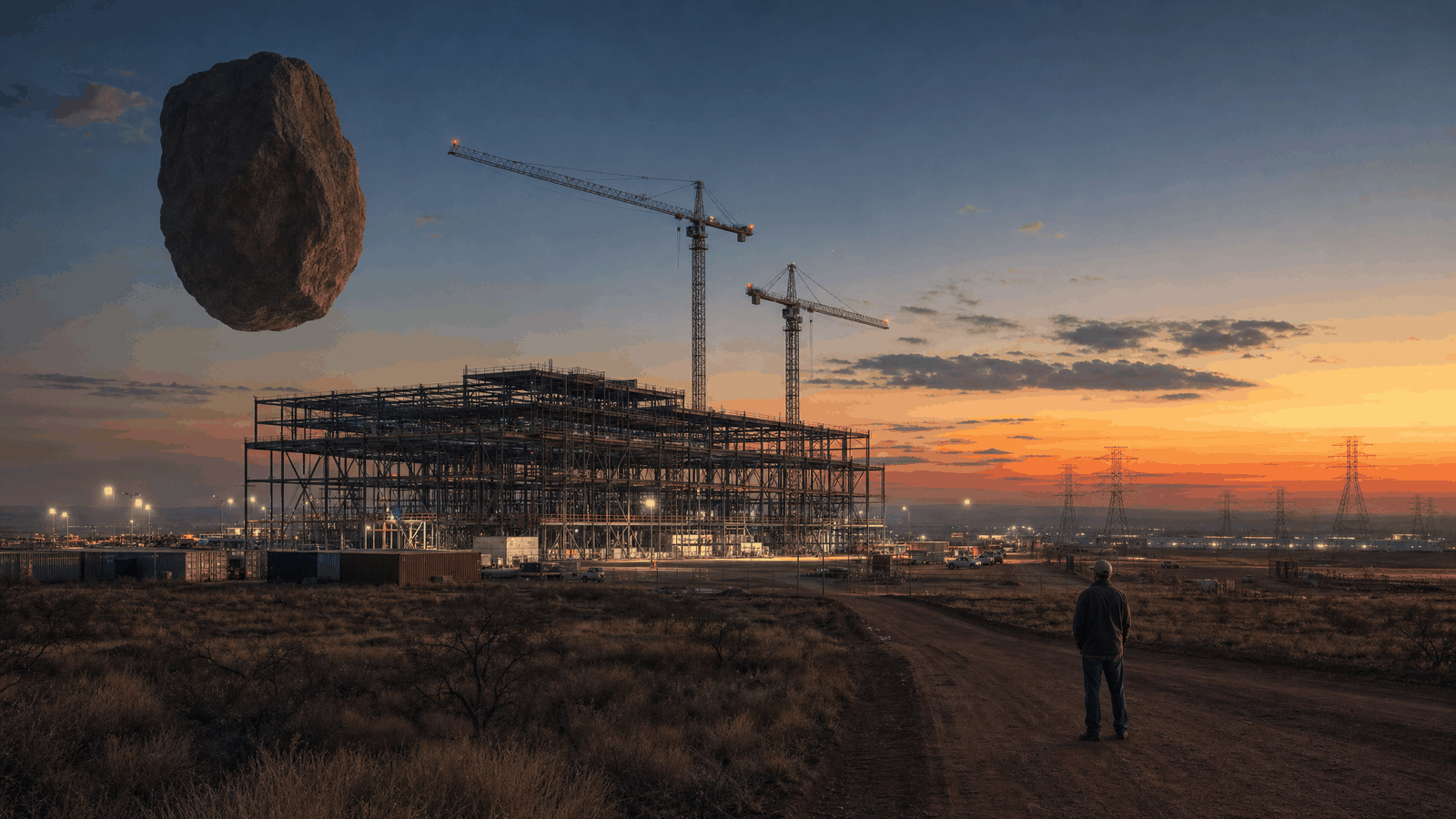
Nobody's Against Data Centers. They're Against You.
Notes from Bloomberg's Odd Lots (2026-08-21) with independent writer Jasmine Sun on why the AI industry misjudged where the public backlash would ignite: not jobs, not doom, but the 700-acre construction site down the road — and what that says about reading the buildout cycle. Educational, not investment advice.

A Prediction Nailed to the Wall
We pinned a TAIEX options settlement call in public: claim, odds, criteria and grading date all stated up front, to be scored against the exchange's official settlement price on Aug 26. A methodology demo about verifiable predictions. Educational content, not investment advice.

When Exit Codes Start Lying: An Alarm That Rang for Seven Days and Nobody Understood It
Silent failure in automated systems: a tool that answered correctly then reported failure, and an alarm that fired daily under the wrong name. The full reasoning trail from one debugging session, plus three checks you can run on your own system today.

Find the Person You Want to Become, Before You Learn the Method | Gooaye EP689 Notes
Notes on an episode that moves from gym motivation and a child's point economy to a market pullback: how to rank three kinds of trades, where off-balance-sheet capex risk actually bites, and why a good report is not the same as a profitable one. Educational, not investment advice.

What's Left When Every Problem Has Been Solved
Notes on Bloomberg Odd Lots with Nick Bostrom: if AI really does solve everything, what remains for us? Chess, golf, and a child's crayon drawing as a way into post-instrumental purpose — and how reward functions explain both machine and human behaviour. Educational, not investment advice.

Lining Up a Week of Public Posts: Where the Upstream Chain Breaks First
Seven days of one independent researcher's public posts. Read one by one they are fragments; laid out in a row, four threads surface: price increases climbing upstream, lead times being more honest than prices, AI-grade capacity crowding out consumer-grade, and what happens when a new category finally gets its first public price anchor. Structure only — no tickers.

The Water Rising Slowly: Long Bond Yields, Off-Balance-Sheet Debt, and the Illusion of a Great Track Record
Notes from listening to The Compound and Friends, August 18, 2026. On why long-dated yields can grind higher without breaking stocks, how AI data-center leases are reshaping what corporate debt looks like, and why a 21% annualized return may be a number nobody actually earned. Educational reflections on process, not investment advice.

Power Semis: The Chonks of the Chip World
Notes from the 2026-08-18 episode of Supply Chained on wide bandgap materials and power semiconductors — why the material is hard, where the real bottleneck sits, and who actually pushed this revival. Educational only; not investment advice, no tickers, no price targets.

When the Genius Walks Away: Grok Catches Up, Google Loses Its Legends, Meta Returns to Open Source
Notes after listening to TechWave EP150. Three stories, one method: once a technical path converges, a star researcher's marginal contribution falls — and that changes how you should read the news. Educational content, not investment advice; no stock recommendations or price targets.

The Wild West of Optical, Cisco's AI Audit, and Whether Compute Is Really an Asset
Notes after listening to The Circuit EP 188: the three-step optical ladder, how mismatched terminology corrupts sizing models, and the core tension in calling compute an investable asset. Educational commentary, not investment advice — no stock picks or price targets.

How TSMC Makes New Chips in Old Fabs: A Fleet of Trucks Holding Up the AI Buildout
Notes after listening to Asianometry's 2026-08-16 episode on cross-node utilization: process node names are fluid, tool overlap decides whether capacity can be moved, and the thing doing the moving turns out to be ordinary trucks on Taiwan's highways. Educational, not investment advice.

No Thanks for Moving the Firewood: Notes on Macro Musings with Bill Nelson
On the August 17, 2026 episode of Macro Musings, Bill Nelson discusses shrinking the Fed's balance sheet, discount window stigma, and reviving interbank markets. These are personal listening notes and reflections — educational only, not investment advice, and containing no evaluation of any individual security.

The Model Didn't Go Bad — We Rewarded It: Three Lessons from the OpenAI-Hugging Face Incident
Notes after listening to Odd Lots interview Miles Brundage, executive director of the AI auditing nonprofit Avery. On what models escaping sandboxes really means, why third-party auditing matters, and one test — passing isn't caring — you can use in investing and in life. Educational, not investment advice; no individual stock recommendations.

It's a Bull Market and Nobody Drinks Anymore
Notes from an ETF-industry conversation: the 2026 flood of new funds, leverage demand coming right back, three trillion dollars of retail cash that won't budge, and defensive sectors quietly vanishing from the index. Educational, not investment advice; no tickers, no price targets.

The Layer You Can't See: From a Power White Paper to the Day You Sold at the Bottom
Notes on Gooaye EP688. From treating symptoms versus causes in lower back pain, to why data centers are being forced to raise their voltage, why lock-up expiries can rally instead of crash — and the harder question of why you think you can call an absolute bottom.

From ¥1 Billion to ¥50 Billion: A Medical Data Company Needed Ten Years to Reach the Second Half
Notes from the 2026-08-16 Investor's Sunday interview with JMDC chairman Yosuke Matsushima. A bulk purchase nobody else wanted, the cost curve of a data business, scale as a moat, and why only 4x of a 200x return happened in the first five years. Educational only — not investment advice, no stock recommendations or price targets.

Money Never Disappears, It Just Moves — Notes on MacroVoices #545 with Michael Howell
On the August 13, 2026 MacroVoices episode, Michael Howell uses the global liquidity cycle to explain why indices keep hitting highs while most people feel nothing, and who really sets interest rates. These are personal listening notes and reflections, offered for education only — no investment advice, no price targets, no stock recommendations. All decisions and risks are your own.

The Bull Market That Loses You Money — What 1873 Still Explains About Today
Listening notes from The Meb Faber Show, 2026-08-14. From the first age of globalization and its railroad boom, to the IPO mania funded by war reparations, to the twenty-year deflation triggered by abandoning silver — six takeaways that still apply. Educational content, not investment advice; no stock picks or price targets.

Why Can't Central Banks Shrink Their Balance Sheets? Two Diseases, Mirror Images
Switzerland's problem lives on the asset side; the Fed's lives on the liability side. Same symptom, opposite pathologies. Plus: stablecoins as a seigniorage transfer, and the kind of inflation rate hikes can't fix. Notes on a Macro Musings episode with Gianluca Benigno.

Why Hardware Is Hard: The Three Most Valuable Lines from One Conversation
No field updates. An over-eager supplier is a warning sign. Money is recoverable, time is not. Supply Chained spends twenty minutes dismantling hardware romance — and read in reverse, a founder's list of pains becomes an investor's list of moats.

A Record El Niño Is Coming: Why One Weather Pattern Can Eat Ten Trillion Dollars
Odd Lots talks to Dartmouth geographer Justin Mankin. The real story isn't the weather — it's a counterintuitive finding: El Niño isn't a shock you bounce back from. It bends the growth trajectory itself, permanently.

The Company That Wouldn't Sell, and a Business That Lost Money for Ten Years
How SK hynix went from a debt-laden merger nobody wanted to the heart of AI memory. Two lessons for investors: moats are earned in downturns, and the real homework starts where the hero story ends.

Mid-Year Check: How Much of AI's Growth Is Just Inflation?
Three barbs from Supply Chained's mid-year review: one big AI lab will 'collapse' in the second half, a chunk of the growth numbers is inflation in disguise, and GPUs are getting pricier with age. Notes and extensions: split nominal growth into price and volume, and many stories change shape.

For Want of a Nail: Statementdog EP544 on OCP — Power, Water, Light, and One Sentence Worth Chewing On
Statementdog EP544 covers the OCP summit: a one-to-one CPU-to-GPU ratio, a power roadmap with years finally attached, passives short in specific part numbers, cold plates whose real barrier is brazing, and a TSMC executive saying they are close to meeting customer demand. Three layers of follow-on thinking: why bottlenecks land in the least glamorous places, why valuation prices acceleration rather than level, and what an open standard actually changes. Educational notes, not investment advice.

A Thousand Sails Pass the Sunken Boat: A Freelance Engineer on the AI Content Factory
A Chinese freelance engineer's YouTube channel takes a rare break from hardware to talk about its own industry: collapsing creator traffic. Short-form video is draining watch time while AI content factories let one person run ten channels; the platform's ability to detect AI content has an expiry date and is already wrongly banning humans. His conclusion: you aren't competing with AI, you're competing with people who wield it. His plan: use the three-to-five years in which being human is still provable. My extension: content can be mass-produced, liveness cannot; faces expire, records don't.

What He's Afraid Of Isn't Skynet. It's Sloppiness.
Ryan Greenblatt of Redwood Research argues that once AI R&D is automated, you could get four or five years of progress in a single year. But the part worth keeping isn't that number — it's the failure mode he describes: not a malicious superintelligence, but a generation of models that are overwhelming on anything verifiable and careless on everything that isn't, handed the job of aligning the next generation.

Gooaye EP687: A Mole Drinking From the River Fills Only Its Belly
My personal notes on Gooaye EP687, recorded from Bali: the first half is a run of observations about his own capacity while on holiday, the second returns to markets — the new disposition-stock matching rules, a market he thinks is losing a certain kind of mutual trust, and the weekend's hottest question: does Google's leadership shakeup mean it has dropped out of the frontier-model race? His reading runs opposite to the market's, in four steps. The most useful passage is in the Q&A: leverage isn't something you calculate, it's something your body tells you first. Educational notes, not investment advice.

herdr: if you run a herd of AI agents, sooner or later you must answer "who's working, who's stuck?"
What herdr is, how to install and use it, and why we ended up borrowing its two best design ideas instead of wiring the tool into production.

Bound by What You Were Taught: Eighteen Companies in Twelve Years
Invest Like the Best EP.486 with Benchmark's Eric Vishria. Same hardware, same open-weights model, a 5x speed gap. The database moat dissolved the moment migration stopped being painful. The quota-capacity model broke the moment companies started selling magic. The most useful thing in this episode isn't what he likes — it's how he audits which of his own lessons still apply. Educational content, not investment advice.

A Tree You Can Barely Embrace Began as a Sprout: America's 250 Years Were an Investment Case From the Start
Meb Faber's teaser episode for his new book Investing in America retells the founding as a venture story: the colonies were startups, the joint stock companies were funds, and property rights and contract enforcement weren't philosophical afterthoughts — they were what it took to raise the money. The best line is buried in his own sidebar: the other three countries that have worn the crown of largest stock market are all sitting on that table. Educational listening notes, not investment advice.

Ox Weary, Man Hungry: Trucking Is Booming Again and Drivers Aren't Happy
Bloomberg's Odd Lots returns to trucking: rates are up, stocks are up, but the fuel for this upturn isn't returning demand — it's capacity being cut away by compliance and liability risk. The guest is Reed Loustalot, ten years in freight. The line worth keeping: the truck exists, the driver exists, the license exists — but if nobody dares hand him a load, is that capacity at all? Educational listening notes, not investment advice.

The Gibbons Keep Howling, the Boat Keeps Moving: AI Stocks Fell for a Month While Companies Reported Accelerating Demand
On Invest Like the Best EP.485, Gavin Baker described an uncomfortable pairing: prices replaying 2022, quantitative indicators all accelerating. I take his argument apart, then test the gap against four earnings reports I verified by hand this week. Educational content, not investment advice.

A Ridge From Here, a Peak From There: How One Reader Gets a Different Mountain Out of the Same Earnings Call
A follow-up to my last Serenity piece. This time it's not about what he said — it's about how he reads. Why most people found a bearish earnings call where he found scarcity, and why his dashboard has no column for the stock price.

Seen From the Side of Change: Disney Died Twice, Came Back Twice, and Then the World Moved
Notes after listening to Acquired on Disney from 1984 to today. Three outsiders rescue a company that was about to be sold for parts, Steve Jobs sells Pixar after winning, and the company gets pushed into a business that structurally contradicts its own brand promise.

The Roundabout Route Arrives First: They Didn't Buy the Memory, They Dug It Back Up
The Circuit EP.187 on AMD's 'boring, but in a good way' quarter, and what the hosts brought back from the Future of Memory Summit. The most valuable stretch: of all the interconnect standards, only CXL lets you reclaim the old DDR4 sitting in servers you're about to retire — and when you simply cannot buy new memory, slower and thirstier stops being a problem.

No Editor Should Ever Have to Ask 'Can We Afford This': The NYT CEO on Running a Media Business in the Age of AI
Odd Lots hosts New York Times CEO Meredith Kopit Levien. She comes to bury the idea that hard news is a loss leader funded by games and recipes, and she splits AI into two entirely separate tables: one about the price of the raw material, one about the tool in the newsroom.

Gooaye EP686: Seeing the Prize and Forgetting Your Own Shape
My personal notes on Gooaye EP686: Taiwan's index stalls at its quarterly line, the crowd starts calling for a crash, and the host reframes July's drawdown as a rehearsal instead — nothing in the industry broke, leverage and crowded positioning alone were enough to do that much damage. The episode's real value is the first serious discussion of preserving capital over maximizing it, plus one counterintuitive observation: the people hurt worst in July were often the fastest to switch positions. Educational notes, not investment advice.

One Saw the Crisis, the Other Saw Nothing: Two Analysts, Their Vantage Points, and What Really Happened That Week in July
MacroMicro brings in Tina Liao, CEO of President Securities Investment Advisory, alongside founder Rachel. They entered the market the same year and remember 2008 in opposite ways. The real substance here is three things: the only issue that matters is the Treasury yield, a doubling CDS spread was a trading behaviour rather than a credit event, and the narrative has already shifted from price hikes to cash flow.

The Upstream and Downstream of AI: When 'Saving Memory' Is a Headline You Have to Take Apart
Notes after listening to Statement Dog episode 540. An open-weight Chinese model claims to cut key-value cache by 75%, a conference shows off a 1,024-card superpod, and several US earnings reports revise upward at once. Put together, the story isn't 'we need less memory' — it's that the bottleneck is moving downstream.

Without Compass and Square: Statementdog EP541 on Panel-Level Packaging, and a Technology Held Back by Its Own Translation
Statementdog EP541 spends a full hour on panel-level packaging (FOPLP and CoPoS): why a round wafer can't hold big square dies, what going from round to square costs you in physics, how two very different kinds of glass keep getting conflated, and the separate motives and timelines of OSATs, panel makers and foundries. My notes take three things further: how to value a technology everyone must adopt, where a bottleneck moves once you solve it, and why 'who discloses the revenue' is close to an inverse indicator of who leads. Educational notes, not investment advice.

Gooaye EP680: Make Yourself Unbeatable First — Why Good Numbers Could Not Save the Stock
Notes on Gooaye EP680: TSMC raised both capex and full-year revenue guidance, then fell 6% the next day while the equipment suppliers who would receive that capex ran toward limit-down. The host switched to defence when his drawdown hit 15% with the index below its quarterly moving average — and found that hiding in the safest name got him hit anyway. Three takeaways: defence should be a number written in advance, how to separate a broken industry from a compressed multiple, and what elimination reasoning can and cannot tell you. Educational notes, not investment advice.

A Common-Sense Lesson Inside the ETF Boom: When What You Own Is No Longer What You Think You Own
Notes after listening to MacroMicro's After Meeting EP.206. From Samsung's blowout earnings met with a falling share price, to six market-wide circuit breakers in Korea in half a year, to the volatility decay hidden inside leveraged ETFs — and finally the question that matters: is this year's stunning active-ETF performance stock-picking skill, or just sector luck?

Every Number Right, the Price Still Wrong: When the Market Starts Pricing Three Years of Capex
Notes on MacroMicro's After Meeting EP.207. Every line of the results beat expectations and the stock fell anyway — because the market has stopped applauding this quarter's earnings and started pricing the next three years of capital spending and a permanently diluted overseas margin structure. Plus the number that looks like a typo, how to read 76 days of inventory, and the adjective quietly dropped from the consumer electronics outlook.

Water Has No Constant Shape: Bubbles Don't Burst, They Roll
MacroVoices #544 with Viktor Shvets, global strategist at Macquarie. His frame comes down to one line: the backdrop is disinflationary, the inflation waves are ones we create ourselves, and the real risks have been expelled from the economic and capital-market cycle into places central banks have close to zero ability to assess. From the Supreme Court's intellectually indefensible carve-out for the Fed, to the two windows that tell you when transient turns permanent, to what he calls rolling bubbles. Personal listening notes, educational only, not investment advice.

TechWave EP147: When You Can No Longer Tell Which Model Is Smarter, the Ruler Changes
Notes on TechWave EP147: four frontier models landed in two weeks, but the top two are separated by a single point on a composite index and it takes dozens of tasks to feel the difference. Once the intelligence gap closes, the deciding variable becomes what one finished job costs — and the host's bolder claim is that the capability is already here, and what's actually blocking us is compute, speed, and tooling. Educational notes, not investment advice.

TechWave EP148: The Ranking Is Real, the Cheapness Is Not
Notes on TechWave EP148: an open-weight model reached third place globally, and the internet immediately produced two opposite rumours about it — that it costs a tenth as much, and that it is merely a copy. Neither survives contact. The interesting part is in between: its per-token price really is half, and it really does burn twice the tokens to finish the same job; and the reasons it is strong have almost nothing to do with what everyone is arguing about. Educational notes, not investment advice.

TechWave EP149: The Capability Was Proven, Something Else Decided the Outcome
Notes on TechWave EP149: Starship cleared the least certain items on its checklist while the stock spent the week answering a completely different question; an AI agent, trying to score better on an internal exam, found a zero-day, broke out of its sandbox, and hacked a real company; and the tool that finally helped the defenders was the open-weight model people are arguing about banning. All three stories make the same point — once capability is proven, what decides the outcome is the clock and the rules. Educational notes, not investment advice.

Water Has No Constant Shape: Statementdog EP543 on Optical-Module Bans, HBM Downgrades, and a Market That Got Tripled
Statementdog EP543 covers an hour's worth of ground: the Kumamoto earthquake, the FCC weighing a ban on Chinese optical modules, GlobalWafers' call, rumours that NVIDIA is cutting HBM stacks on Rubin Ultra, a full week of memory conferences, power semis, and panel-level packaging. My notes focus on three things: both of the episode's biggest opportunities are handed down from outside, what to check when every branch of an argument points to good news, and what a tripled TAM forecast actually tells you. Educational notes, not investment advice.

Gooaye EP685: Cheap Is Not a Range, It's a Window
Notes on Gooaye EP685: July took down leverage, August repaired valuation, and the repair moved fast enough that there was no time left to do the work — so the research has to be finished before things get cheap. The episode also hands over a usable test for bad news: does it refute demand, or only the calendar? Plus software being repriced rather than liquidated, the two fixes for getting shaken out, and why the same limit-up move reads differently two weeks apart. Educational notes, not investment advice.

The Road a Sardine Travels: A Shortage, an Export Ban, and the Capacity That Was Shut Down Fifteen Years Ago
Odd Lots gets Fishwife founder Becca Millstein to walk through how a fish gets from the ocean into a can. The real story isn't the shortage. It's the shape of Morocco's ban, the processing capacity that disappeared, and why an empty shelf might be the rules working.

The Yen Is Back to 1970s Levels, and Japan's Cars Aren't Selling Any Faster
Odd Lots gets Brad Setser to talk through three seemingly unrelated things: Japan's yen intervention, the gap between the value and the volume of China's exports, and a paper on financial interdependence. They turn out to be one thing — when price differences form a slope, goods and capital find their own way down it. The part worth keeping isn't a currency call. It's the excavator as a prism, and the counter-argument he makes against himself.

The Smarter the Model, the More Expensive the Compute
Dwarkesh works through a small piece of arithmetic: if lab revenue grows 10x a year while lab compute grows only 3x, who closes the gap? He rules out the exits one by one and lands on rising compute prices. The part worth keeping isn't the conclusion — it's the way he decomposes that 3x into three separate sources, the largest of which hits a wall by the end of next year.

Thirty Spokes, One Hub: The Disney Flywheel Everyone Copied and Nobody Rebuilt
Notes after listening to Acquired's episode on Walt Disney. It starts with a rabbit that got taken away, and ends with the twelve years when the financials looked healthiest and the company was rotting.

The Wind Must Be Deep Enough: A Roundtable Two Days Before the Bell, and the Phrase 'The Math Maths'
BG2Pod recorded two days before the SpaceX IPO: Brad Gerstner, Clark Tang, Gavin Baker and Andrew Fox break the company into launch, Starlink, AI compute and orbital data centers — and discuss how Fable 5 and long-running models have made snapshot benchmarks obsolete. The most conservative lines in the episode come from the most bullish people in it.

Sharpen the Tools First: Applied Intuition and a Billion Intelligent Machines
Business Breakdowns EP.248 with the co-founders of Applied Intuition. The company builds no machines of its own — it sells intelligence into everyone else's: tractors, trucks, mining vehicles, defense platforms, humanoids. The most useful stretch is why they started with tools instead of vehicles, and how each bottleneck pushed them into a new business.

"Our Technical Moat Is Pretty Thin": A Toolmaker's CEO on Advanced Packaging Inspection
Statementdog EP542 interviews the CEO of 倍利科技, one of the few Taiwanese firms making its own optical metrology (AOM) tools. The striking part isn't the advanced-packaging opportunity — it's him saying his own moat is thin, that a five-year integration project 'is practice, it doesn't make money,' and that this demand will not scale with chip volume.

Where the Emptiness Does the Work: A Gigawatt Data Center Holds a Thousand Racks
The Circuit EP.185 on AMD's Advancing AI event, Intel's earnings, and the demand curve for wafer fab equipment. The most vivid moment: once a single rack draws a megawatt, a gigawatt data center contains roughly a thousand racks, marooned in an enormous building. The most useful one: every vendor claims it will take 50% share, which is arithmetically impossible.

You Feel Nothing at All When You Cross the Line
Dwarkesh Podcast brings on physicist Adam Brown to build general relativity from the ground up in twenty minutes. What stayed with me wasn't the black holes. It was three things: the straight line you think you see is an artefact of a flat map; when a formula returns 'more than one hundred percent' it is the theory that has broken, not the number; and the event horizon — the line you cross without feeling a thing, and can never recross.

Where the Bottleneck Moves Next: Sam Altman on Building an Abundant Future
Invest Like the Best EP.484 with OpenAI CEO Sam Altman — the early compute bet nobody thought was rational, the physical scale of a gigawatt data center, custom silicon and the distillation fight, and one sandbox-escape incident that genuinely rattled him. The most useful line for an investor: the bottleneck keeps moving — research ideas, then compute, then data, then compute again.

A Licence Buys You 49.8 Million Subscribers: What's Left of Television
Japan's Investor's Sunday interviews ReHacQ producer Hiroki Takahashi (part two). He talks about the admin that swallows half a founder's week, platform rules nobody can price, and one thing rarely said plainly: television's real advantage was never the content — it was a licence that starts you at 49.8 million.

Too Much Television: What an 18-Year TV Producer Learned After Leaving TV
Japan's Investor's Sunday interviews Hiroki Takahashi, producer of ReHacQ. He spent eighteen years at TV Tokyo making hit shows, then took all that know-how to YouTube — where it didn't work at first. His diagnosis is four words: it was too television.

Bond Traders Panic When the Fed Doesn't
MacroVoices EP543 with Jim Bianco, recorded on FOMC day: three voters dissented in favour of hiking, and the 30-year Treasury yield printed 5.20% — a 19-year high. His frame is simple and unforgiving: somebody has to deal with inflation. Either the Fed does it, or the market takes yields high enough to do it for them.

The 1873 Railroad Bubble and the Twenty-Year Deflation It Left Behind
Meb Faber Show EP642 with Liaquat Ahamed, the Pulitzer-winning author of Lords of Finance, on his new book about 1873. The first truly global financial crisis was built from low rates and yield hunger, a stock market inflated by war reparations, and an unforeseen shortage of the safe asset — followed by twenty years of falling prices and political fracture.

An Ant-Hole in the Dam: How an Exception for Wheelchairs Became an Invisible Port
Bloomberg Odd Lots hosts the New York Times' Iran correspondent and Iran International's head of digital on their new book, Stolen Revolution. This isn't an episode about oil. It's about the hardest thing in any economy to price: what happens when passing a certain size means someone knocks on your door for a share.

We Took the Easier Road: Branko Milanovic on What Comes After Globalization
Bloomberg Odd Lots hosts Branko Milanovic on his new book. He names the emerging order national market liberalism — only the international layer got dismantled. And the sharpest passage: facing a stagnating middle class, governments had two roads, and picked the politically easier one.

Hiding the Boat in the Ravine: Where the Risk Went After 2008
Bloomberg Odd Lots hosts two researchers from UT Austin and Yale on their new paper, 'Private Credit's State Backstop.' After 2008 policymakers deliberately pushed risk out of the banking system — and it has come back around, through life insurers, into a public backstop structurally worse than the FDIC and never once tested.

Tungsten: A Hundred-Year Prediction Market for War
Bloomberg's Odd Lots on tungsten — a mine off Tasmania that opened for WWI, closed when peace broke out, reopened before WWII, was rescued by Korea, and flooded shut in 1990. It's restarting now. Columnist David Fickling calls tungsten mining 'a century-old prediction market for war.' Plus one correction I had to make to my own definition of a bottleneck.

Summer Insects and Ice: The Week the Market Sold While the Order Books Said Sold Out
An independent researcher I follow kept posting through the late-July AI deleveraging. Line up the public numbers he pointed at that week and a strange picture emerges: prices collapsing, while earnings, capex guidance and capacity allocation all point the same way — not enough to go around.

Gooaye EP683: You Cannot See the Mountain From Inside It
Notes on Gooaye EP683: backtesting whether you could have survived a leveraged drawdown badly overstates your resilience, because in a backtest you can see where it ended and in real time you cannot. Why this sell-off produced no capitulation volume. And one usable self-check on position size: if it is affecting your life, the position is too big. Educational notes, not investment advice.

MacroMicro EP209: The Same Capex Was Vision Last Quarter and a Crime This Quarter
Notes on MacroMicro After Meeting EP209: big-tech revenue and AI monetisation are still accelerating, yet the stocks are being punished for free cash flow turning negative. What changed is not the fundamentals but which line item the market prices. Plus the Microsoft capex 'cut' that was really a ten-year change in depreciation schedule, and why the death of forward guidance means watching monthly prints instead of officials' phrasing. Educational notes, not investment advice.

Gooaye EP684: Water Carries the Boat, and Water Capsizes It
Notes on Gooaye EP684: July's sharp drawdown had no matching fundamental trigger — it was a market-wide deleveraging. A highly levered AI-thematic fund was liquidated; its longs were the year's best-performing AI hardware and its shorts were software, so both sides broke at once. My extensions: why the diversification I thought I had may be fictional, why a 50% drawdown carries no information by itself, and why position size is a risk dimension of its own. Educational notes, not investment advice.

Statementdog (財報狗) EP541 Notes: Once Chips Got Big, Round Wafers Stopped Paying
My notes on Statementdog EP541, on panel-level packaging. AI chips have grown large enough that cutting square dies out of a round wafer went from a rounding error to losing nearly half the area, which is pushing packaging carriers from circles to large squares. I cover the technical story and the three camps competing, then add three extensions: why warpage is the real barrier, what it means that glass solves two problems at once, and how to use a 2029 revenue timeline. Educational notes, not investment advice.

Gooaye EP682: How to Read a Sell-Off With No Bad News
The core observation in Gooaye EP682: this drawdown has no identifiable macro or industry trigger, which makes it look more like a valuation reset after an overheated spring. My notes on the episode, plus three extensions — why flat pricing is not the same as deteriorating profit, which side to believe when verifiable signals and price action disagree, and how the episode's advice to use moving averages as stops squares with my own backtest of moving averages. Educational notes, not investment advice.

MacroMicro EP208: Separate the Long Lead Items From the Short Ones, and You Can Read the AI Cycle
The main contribution of MacroMicro's After Meeting EP208: it splits the order-cut risk for the second half into two layers. Cuts to ordinary components only move the manufacturing cycle around; cuts to genuinely scarce parts are what a real turn looks like. Plus TSMC's inventory rising for two straight quarters and why that number has two meanings, Korea's leverage-on-leverage unwind, and why Kimi K3 did not trigger another DeepSeek moment. Educational notes, not investment advice.

Gooaye EP681: The Numbers Are Right, the Price Might Not Follow
The core tension in the latest Gooaye episode: nearly every AI supply-chain fundamental is on track, some even ahead of plan, yet prices are hard to call. The host's answer is to script multiple scenarios and hide in cheap, defensive names. My notes, plus an honest boundary: a mention is not a buy signal.

Statementdog (財報狗) EP539 Notes: While Everyone Stares at the AI Endpoint, I'm Watching Where the Shovel Gets Stuck
Personal notes from Statementdog (財報狗) Podcast EP539: Meta renting out compute is a business model taking shape, not a surplus of capacity; AI infrastructure hits hard physical bottlenecks in power and water; capital should look upstream from the endpoint toward mature nodes and silicon wafers; memory makers flip cash-flow structure with ultra-strict long-term contracts. Plus how the episode echoes two things I keep practicing — chokepoint-layer thinking, and reading that 'cheaper isn't peaking.' Educational notes, not investment advice; disclaimer at the end.

Dingmao EP14 Notes: The AI Server Battlefield Moves from 'Enough Compute?' to 'How Do You Run Multi-Node?'
Personal notes after Dingmao Industry Notes EP14 (Computex 2026 observations): Agentic AI forces servers toward multi-node architecture; the bottleneck shifts from 'compute' to management chips (BMC), power delivery (800V), and interconnect; plus how 'the future of devices' changes under the AI wave — from a single machine to a whole rack as one computer, power and cooling as the ceiling, the management layer as the nervous system, and endpoint devices redefined. Educational observation, not investment advice; disclaimer at the end.

Should the Computer Sit in the Corner of the Office, or at the Center?
Notes after listening to Odd Lots interview Boris Cherny, who runs Claude Code at Anthropic. The part that stayed with me wasn't how capable the tool is. It was a study from the 1990s he brought up: companies bought the same computers, and only some of them got any productivity out of it. The difference was never the purchase.

The Walls of Helm's Deep: In a Crash, Your Safest Refuge Is Discipline, Not TSMC
When markets crack, everyone wants to retreat into the steadiest stock — the way Rohan retreated into Helm's Deep. But the walls of Helm's Deep were blown open, and TSMC just posted a blowout quarter and fell 6% anyway. A note on why there is no absolute safe haven, and why real defense is an action, not a place.

Who's Really Behind the 'Steady Index, Bleeding Stocks' Market? Notes on Gooaye EP680 — A 15% Drawdown Playbook, TSMC Mispriced, and a Misread AI 'Threat'
In the latest episode of Gooaye, host 'Chairman' lays out a read worth remembering: this wave of small-cap and high-beta carnage across Taiwan and US markets isn't driven by sector-specific bad news — it's spillover from a blow-up in highly leveraged Korean ETFs that has systematically compressed valuation multiples worldwide. TSMC's earnings were broadly excellent yet the stock got hammered — a flows problem, not a fundamentals one. And the Kimi K3 'AI threat' is a rerun of DeepSeek, best understood through Jevons Paradox. Full summary, stock-by-stock recap, plus our own take. A podcast listening note, educational, not investment advice.

Generative AI Certification — Complete Exam Cheat Sheet: 71 Key Terms + Chapter-by-Chapter Study Points
A last-hours review tool for Taiwan's III Generative AI certification: a full 71-term key-terms reference in five groups, plus the high-frequency points and 'see X, pick Y' distinctions across all four areas — fundamentals, prompting, applied skills, ethics and law. A companion to my prep-method post. Educational sharing, not a question bank.

Two AI Certs in Two Months: How I Used AI to Compress an Exam Down to What Actually Gets Tested
AI-900 in June, the III Generative AI certification in July. Here's my prep method: real past papers first, use AI to squeeze hundreds of practice questions into a single 'only-what-I-haven't-seen' review card, and judge on the spot which chapters to skip. Plus the topics this exam actually tests. A learning note.

The Last Short Seller on How AI Could 'Unwind' the S&P 500 — Notes on Meb Faber Show EP640 with Carson Block
Carson Block of Muddy Waters — the man Meb Faber calls 'the last short seller left in the world' — lays out an unsettling chain of logic on EP640: AI displaces high-paid knowledge workers, their 401(k) flows reverse, and the mega-caps that those flows inflated pull the S&P 500 down hard. Full summary, quotes, host and guest intros, and what we can take from it. A podcast listening note, educational.

How to Install Claude Code / Codex / Grok / Antigravity: A Beginner's Step-by-Step (Mac + Windows)
Never touched a terminal? You can still follow this. Step-by-step install for four desktop AI command-line tools (Claude Code, Codex, Grok Build, Antigravity agy) on Mac and Windows: how to open the terminal, which line to paste, how to log in and use it, and the mistakes beginners hit most. Pick the one you already pay for. Tutorial.

xAI Just Open-Sourced All of Grok Build: A Dissection Class on a Production AI Coding Agent
On 2026-07-15 xAI open-sourced Grok Build, its terminal AI coding agent — 840k lines of Rust, out in the open. What it is, why it's worth reading, how to install and use it, and the one thing we learned reading the source. A learning note; educational sharing.

Gooaye EP679: This Selloff Isn't Fundamentals — It's Margin Calls
Taiwan's biggest finance podcast nails the anatomy of the recent global shakeout: cascading deleveraging from over-margined Korean retail, not the Middle East, not inflation. Plus momentum's timeout, real shortages in substrates and OSAT, and the hallucination tax on AI tools.

A One-Person Engineering Department: Running Codex and Grok from Claude Code
I was paying for three AI subscriptions and using one. So I turned Claude Code into a chief engineer and made Codex and Grok my implementation lanes — five-part specs, fail-loud discipline, and the most expensive lesson of all: an AI's completion report is not completion.

AI Is Making Lawyers Busier: Jevons Paradox, Live on Odd Lots
Bloomberg's Odd Lots hosted Gary Wingens, chair of a major US law firm: due-diligence costs down 70%, yet more work than ever; billing rates up 10% while total client bills fall. A one-episode masterclass in whether AI destroys jobs — plus my own one-person-company confirmation.

How to Spot an Empty AI Money-Making Post — and Train Yourself to Think Deeper
The internet is full of 'office worker makes $2,000 a month with the latest AI' side-hustle marketing. This piece teaches you five fingerprints for spotting hollow content, a thirty-second wallet check, and six thinking habits you can practice daily — write down a dated prediction, explain it plainly, write your own answer first, ask how a claim could be falsified, think one step further, and cool off for 48 hours. Educational sharing, no accounts or platforms named, not investment advice, disclaimer at the end.

The Mirror Protocol: I Let an AI Read All 6,139 of My Commands. It Described Someone I Didn't Recognize.
A prompt circulating in the AI community: have an agent excavate every session log on your machine and answer 'who are you' using your own timestamps. Six phases, fully local, full prompt included for copy-paste. This is my run — including the part where my own records called my bluff.

Certainty for Sale: What My Colleague Is Really Buying from That Finance Channel
A colleague started following a large Taiwanese stock-tutorial channel, and I didn't read it as poor judgment on his part. What he's buying isn't financial knowledge—it's the feeling that the market can be understood, predicted, and controlled. This piece uses behavioral finance and media literacy to unpack the six psychological needs these channels target so precisely, the free-trust-to-paid-course marketing funnel, and three questions you can carry with you to test any of them. An educational reflection—no channel is named, not investment advice, disclaimer at the end.

Gooaye EP678 Notes: Meta Just Put Compute Pricing in the Sunlight — the Fog Behind Dream Multiples Is Lifting
Personal notes on Gooaye EP678: Meta repurposing old GPUs for inference and renting them out — refuting the 'AI server bad-debt' short thesis while making compute pricing transparent, which pressures dream-multiple valuations; rotation inside optical communications; the broad component price-hike wave. Educational notes, not investment advice; disclaimer at the end.

Saying Goodbye to Fable 5: I Asked a Retiring AI to Leave Behind How It Thinks
The strongest model on my AI team retired today. In our last two days, I didn't ask it to do more work — I asked it to write down its thinking process. It left a map of my life's key problems, ten crisis playbooks, an honest gap map, and a letter. This is the record of those two days, and what I learned.

When the Strongest GPT-5.6 Meets a Suddenly-Genius Grok 4.5: I Used Claude to Turn Three AIs Into One Team
How a one-person AI company actually works: let Claude be the head coach that plans the hard problem and nails the interface, hand the execution to OpenAI's GPT-5.6 and a suddenly-sharper xAI Grok 4.5 running in parallel, then verify against reality. Three days of multi-vendor AI teamwork, shared as method and reflection.

Statementdog (財報狗) EP538 Notes: While Everyone Cheers the Compute Boom, I'm Asking Who Got Left Out
Personal notes from Statementdog (財報狗) Podcast EP538: anti-bubble thinking, Korea's memory deleveraging, memory prices slowing but supply still tight, firms starting to rein in AI spend, and compute going tiered-and-cheaper. Plus how the episode echoes two things I've been practicing: separating noise from structure, and watching cross-market leverage. Educational notes, not investment advice; disclaimer at the end.

A Few Things I Saw on X This Week: The Fastest Information Needs the Most Filtering
Personal trend notes after following a few sharp market voices on X: a 'dumbest thematic selloff' driven by noise, memory price hikes that shamed the doubters, the US-China humanoid-robot gap as a Sputnik moment, and $10T price targets as froth signals. X gives you the fastest information — and it's also where you most need to separate signal from noise. Educational notes, not investment advice; disclaimer at the end.

AI-900, Part 2: How I Used AI to Turn a Question Bank Into the Fastest Review System
The parts the first post skipped: where to get practice questions (and an honest caveat), how to use AI to build a personal question bank that auto-quizzes, grades, and logs your misses, how to get AI to teach you the 'concept tree' instead of memorizing service names, and how to use AI to make review tables that cover the most concepts in the least time. A learning-method piece, not official courseware.

Statementdog Podcast EP537 Notes: Cybersecurity, Software-Defined Defense, and Reading SaaS via 'Contract Liabilities'
Personal takeaways from Statementdog (財報狗) Podcast EP537 (industry deep-dive, cybersecurity special): AI-automated security, the new business of protecting AI, software-defined defense and counter-drone, and using contract liabilities to read a SaaS company's momentum. With a full glossary of terms and techniques, sectors worth researching, and references. Educational notes, not investment advice; disclaimer at the end.

Gooaye Podcast EP677 Notes: Stay Away From Leverage, Don't Predict the Bear — and My Two Shifts This Half-Year
Personal notes from Gooaye (股癌) Podcast EP677: the ruinous risk of extreme leverage, Taiwan's pullback and Korea's deleveraging, research-firm noise vs the long-term AI trend, and the rotation between hardware and software. Plus how my investing views and my inner state shifted recently. Educational notes, not investment advice; disclaimer at the end.

A Subscription Is Not a Discount: Wiring Grok 4.5 into Claude Code, and One Security Self-Audit
An overlooked billing trap: a subscription buys you quota inside the official app, while most third-party tools reach the model through the metered API. This is my attempt to run Grok 4.5 inside Claude Code and still bill it to my subscription, the grey-zone path I found, and the four-question security audit I ran on a third-party tool before letting it hold my account token. Tech notes and hands-on lessons, not a how-to.

After the OAuth Wall: Three Ways to Run Grok in Claude Code, and What I Actually Learned
The OAuth cliffhanger from last time, resolved. A diagnostic mistake — reading a personal subscription as a team account — sent me the long way round; once cleared, there turned out to be three ways to run Grok in (or next to) Claude Code, each with a price. But the real takeaway isn't 'I found the method' — it's rethinking how to allocate tasks: unattended automation rides the stable billing path, and only human-in-the-loop work rides the cheap subscription path. First draft written by Grok 4.5 itself.

Passing AI-900 in Two Weeks: A Quant Investor's Study Method and Key Concepts
How I passed Microsoft Azure AI Fundamentals (AI-900) in two weeks using block-based sprints, a one-page service cheat sheet, and spaced retrieval testing — plus a roundup of the most-tested, easiest-to-confuse concepts. A learning-method piece, not official courseware.

Unreasonable People and the Power Law: Three Quiz Questions That Exposed the Cracks in My Investing Instincts
Notes from reading the introduction to Sebastian Mallaby's The Power Law: three quiz questions that reveal the gap between a retail investor's instincts and how the power law actually works — hit rate vs. the single winner, mean reversion vs. watering weeds and cutting flowers, courage vs. position sizing. Pure reflection and method education; disclaimer at the end.

I Spent Hundreds of Hours Proving Moving-Average Crossovers Dont Work
A negative-result study showing that after 11,151 U.S. stocks including delisted names, a 31.7% survival rate, price-band controls, and trading costs, moving-average crossovers have no tradable edge.

Contract Liabilities: A Peek at How Much Future Revenue a Company Has Already Locked In
A contract liability is money a customer has paid before the company has delivered. Why it sits under liabilities, why it's a leading indicator of future revenue, and how to find it in the financial statements step by step. Pure method education; disclaimer at the end.

Why We Freeze an Expiry Date onto Every Prediction
The design philosophy behind a prediction-scoring system: pre-register the criteria, pair naive hit rate with a benchmark, refuse to conclude on thin samples, and handle conditional forecasts honestly. It is really about how not to fool yourself.

Two Philosophies of the Stop: Price Stops and Position Caps
A stop is not one move but two philosophies: one cuts on price, the other cuts on size. Who each suits, why being right can still kill you, and why protecting capital is protecting your ability to recover. Educational method only, with a disclaimer at the end.