Columbia Energy Exchange: Washington Holds Fewer Switches on Your Power Bill Than I Thought
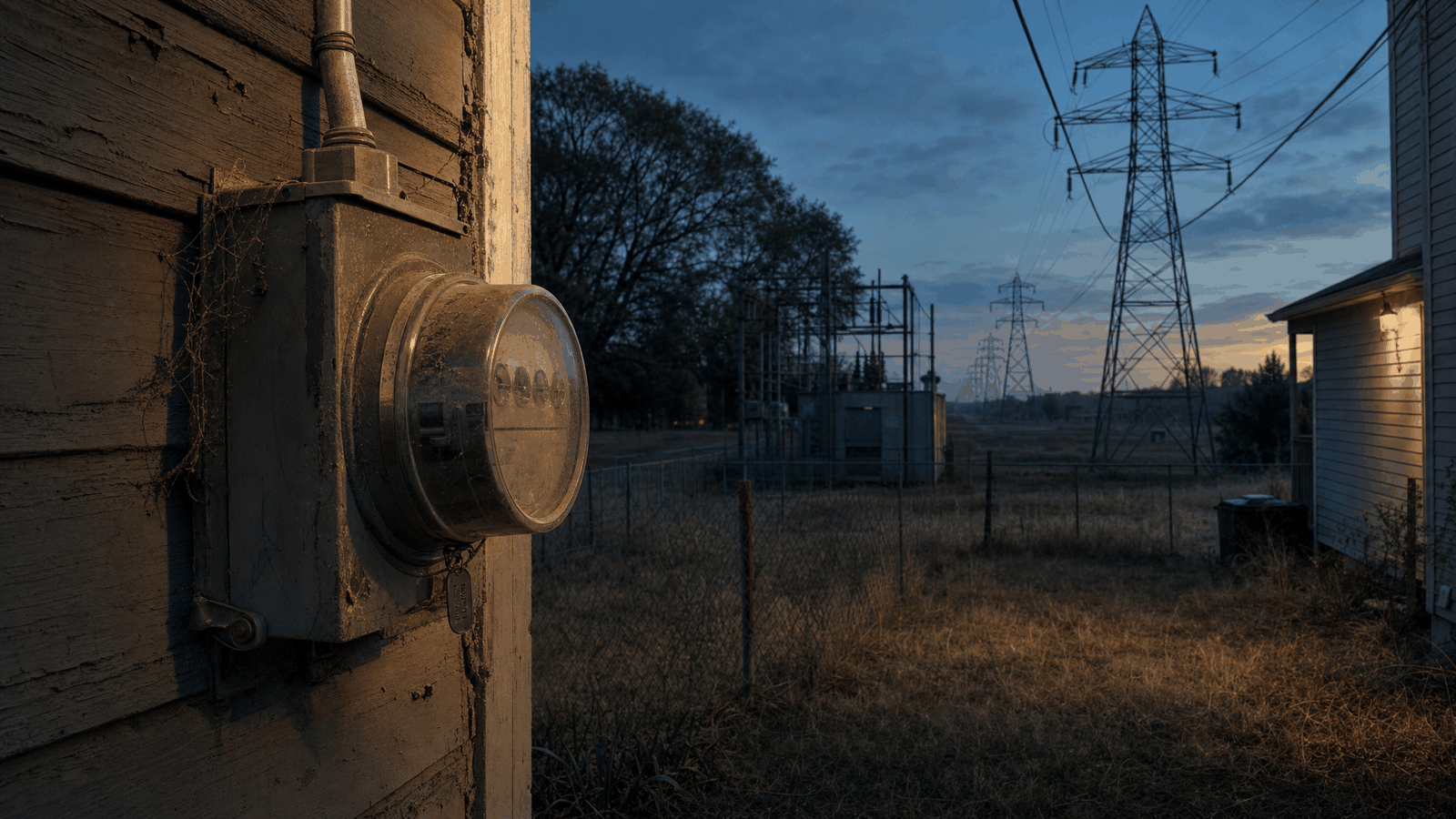
Notes on the Columbia Energy Exchange episode of 10 November 2026, where host Bill Loveless talks with Aliya Haq of the Clean Economy Project and Rich Powell, CEO of the Corporate Energy Buyers Association (CEBA), about energy affordability after the midterms: Democrats took 54 Senate seats (possibly 56 at the time of recording), data center ballot measures across the country lost almost everywhere, with North Dakota the one state voting in favour; a new Harvard and University of Pennsylvania study finds data centers have only a small effect on residential power prices, while Northern Virginia, home to the densest cluster of them, keeps affordability among the best in the country. The bipartisan permitting bill known as the BAAJA was still awaiting a vote at the time of recording. Every number and seat count is as stated then. Educational listening notes only — no investment advice, no price targets, and the judgements here may be wrong.
Contents
They take the warmth from my body to buy favour before your eyes. It enters the jade-forest treasury, and with the years it turns to dust.
—— Bai Juyi, “Heavy Taxes” (Tang, c. 809; my own translation)
In the Columbia Energy Exchange episode of 10 November 2026, host Bill Loveless talks with Aliya Haq of the Clean Economy Project and Rich Powell, CEO of the Corporate Energy Buyers Association (CEBA, the trade group for large corporate buyers of power), about energy affordability after the midterms. The election had just handed Democrats majorities in both chambers; Aliya puts the Senate at 54 seats, maybe 56. Data center ballot measures across the country lost almost everywhere, with North Dakota the one state voting in favour. Both guests land in the same place on what Washington can actually do: permitting and transmission reform, the interconnection queue, and reconductoring existing lines are real levers, but they take years to reach an ordinary household bill. Rich’s bet is that policy now swings hard toward affordability; Aliya’s warning is not to treat 2029 as the starting line. Every number and seat count is as stated at the time of recording.
The two answers I brought with me: elections steer, and AI eats the bill
I came to this episode holding two answers, and both of them went down easy.
The first was treating the election as a steering wheel. Biden’s term ran on the Inflation Reduction Act and its decarbonisation credits, Trump’s swapped that for fossil fuels and reliability, so with Congress changing hands I expected another swing — this crowd undoing what the last crowd did, policy as pendulum. I had even prepared the counterargument for myself: the president keeps the veto and the agencies, so a congressional majority can’t turn the wheel either. Both versions of the reasoning rest on the same assumption, that who wins the election sets the direction of energy policy.
The second answer was charging my power bill to data centers. The news has been written that way for a couple of years and I have been reading it that way: AI wants compute, compute wants power, power runs short and prices rise, so the extra dollars on my bill are somebody else training a model. Short causal chain, easy to follow, and it comes with an emotion attached. I never went looking for how much of the rise it actually explains.

This episode took both answers apart, and it did it with two studies, one counterexample, and a dinner-table question nobody at the table could settle.
Two studies, a counterexample, and the question that split the dinner
Start with data centers, because that one flipped cleanest.
Bill mentions a Washington Post piece he had read that morning: a new study from Harvard and the University of Pennsylvania finds data centers are probably having only a small effect on residential electricity prices. His own institution, the Center on Global Energy Policy at Columbia, has research saying affordability concerns have been rising along with prices, and that while the headlines point at AI and data centers, the actual causes are far more complex — aging infrastructure being one of them. Then Rich adds the counterexample that made me stop: Northern Virginia holds the densest cluster of data centers in the country, and that region has maintained some of the best affordability anywhere in it.

From there he lays out which bills are the expensive ones. Wildfire prevention in the West, extreme weather, and the plain fact of aging grids all over the country — that spending is already queued up, with nothing to do with AI. His framing is that there is a long list of expensive bills just to maintain the reliability and affordability we have today. And data center developers happen to be one of the few groups arriving in communities with large pools of resources, which is why CEBA’s members — including the hyperscalers generating the demand for compute — signed the ratepayer protection pledge with the White House, committing to pay more than their fair share of the grid upgrades needed to serve them. His image for it is not killing the golden goose: calibrate the policy wrong, those loads never connect, the upgrade costs land on ordinary ratepayers anyway, and there is no other cavalry on the horizon.

The second thread is the federal lever itself. Bill brings in Katie Dykes, the longtime Connecticut regulator, and her reminder that many decisions on the cost and availability of energy are made at the state and local level rather than the federal one, and that there is no silver bullet. Aliya says she had been at a dinner with energy people where someone put a question to the room — is affordability a trap for Congress, or an opportunity — and the room split. She thinks both halves are right. The people who said trap understand Katie’s point: there is no switch in Washington that halves the nation’s power bills, and federal levers will not deliver the immediate relief people want. The people who said opportunity are also right, because most of us never think about energy until it shuts off or until paying for it starts to hurt, and that is exactly the political window in which systemic reform gets done.
My favourite part was about who is responsible. Aliya traces what is wrong with the grid to a total lack of accountability over who is supposed to be in charge of what: state public utility commissions, the regional transmission organisations, the federal government, the Federal Energy Regulatory Commission, each holding a piece — and who owns interregional transmission planning? She says it isn’t clear. So her first prescription is that the federal government decide who plans what the grid should look like, how it gets paid for, and how the supply chains and build capacity get lined up. The grid we have, she says, is a hundred years old, and that technology isn’t impressing anybody.
One more thread knocked out my “the technology isn’t ready” assumption. Rich describes low-hanging fruit sitting in front of us: reconductoring today’s grids with advanced conductors, which can move quickly and deliver benefits quickly, and which utilities around the country do little of because nobody has built an incentive structure for that particular kind of investment. The technology is there; the incentive isn’t. I had those two things fused into one. He also thinks this is a place where Congress and the administration might see eye to eye, since the current administration has been enthusiastic about advanced conductoring.

As for the phrase that sounds most like jargon — the three-legged stool — I came away thinking it was the most useful frame in the hour. An energy system has to be reliable and secure, cheap enough to carry robust economic growth, and progressively lower in emissions. Rich’s scorecard: the Biden administration was heavily indexed on the carbon-free leg, the Trump administration on the reliability leg — alarmed by the decline in firm capacity, they kept aging fossil assets online for fear of wide-scale blackouts — and the affordability leg was neglected by both to their own cost. His bet is a hard pivot toward affordability over the next two years, from the administration as much as from Congress.
The list of technologies both parties can get behind also ran longer than I expected: geothermal (Fervo Energy had just completed a successful IPO), advanced nuclear, uprates at existing nuclear plants, and restarts of shut-down ones — Palisades in Michigan, Duane Arnold in Iowa, and the Crane Clean Energy Center, the renamed old Three Mile Island plant in Pennsylvania. Rich says his members are now asked to bring their own capacity when they connect new large loads, and when grid operators say capacity they mean twenty-four hours a day, three hundred and sixty-five days a year, so large renewable installations have to carry storage on site, or pair wind and solar strategically across different hours and seasons to push the capacity factor up.
Aliya leaves one warning here that I think is the sharpest line in the episode: if you are trying to dress up an old agenda with a new message, it is disingenuous and people will see through it. She is talking about Democrats who want to reinstate the tax credits repealed in the Big Beautiful Bill Act and tie them to affordability — do that, and you owe a serious answer to whether the system is getting cheaper.

There is also one detail that made me laugh. Rich keeps bringing up the bipartisan permitting bill, the BAAJA, and gets there first himself: he is contractually obligated to mention it ten or twenty times on this podcast. Bill tells him he’s well below quota, with at least twelve more mentions before anyone cuts him off. The two of them have just launched a show together called Energy Frenemies, and they open by joking about how hard it is to walk down the street without signing autographs, and about refusing to engage in unilateral disarmament. At the end Aliya asks the host whether they agreed too much and should have fought more, and Rich immediately adds that he disagrees with everything she just said.
What I look at now, and where I still have no footing
I’ve reordered my own checklist. To work out whether an energy policy reaches me, I now start with which table the decision gets made at, and then ask whether anyone at that table has been named as responsible.
If, like the earlier version of me, you half-believe a headline saying AI is driving your power bill up, here is how I take it apart now. Split the increase: how much is generation, how much is transmission and distribution, how much is the catch-up spending on wildfire prevention, storm recovery and replacing worn-out equipment. Then go read your own state’s rate case, because a national average explains nothing about your house. The two studies in this episode say data centers have a small effect on residential prices, and I won’t read that as “data centers have no effect” — it says that at this point in time, measured across national residential prices, the effect is small, and the expensive bills are elsewhere. That’s also what the Northern Virginia counterexample is worth: done right, the community gets the resources and prices hold.
The second question a reader might share is about lag: the bill passed, so why hasn’t my bill moved. Two layers got clear for me here. First, permitting reform, the interconnection queue and reconductoring all sit on the supply side, and new generating assets take years to arrive — Rich’s worry is that if new generation fails to keep pace with new demand, the generation side of power bills breaks first, before anyone pays for transmission and distribution upgrades. Second, and more decisive: corporate commitments only become money once they are written into the rules state by state and independent system operator by independent system operator — how large load tariffs get set, what incentives flexibility earns, in what order new large loads are let onto the system. Rich says the devil is in crafting all of those. So whether a bill passes tells me the direction; whether my own costs fall is decided one state down.

Three things I still have no footing on, written down as my own watch list. One, whether Trump signs anything: Aliya refuses the assumption that he vetoes everything, and says she can see a universe where something significant gets done — a sentence with no evidence attached at the time of recording. Two, what oversight costs: Rich worries that the more Democrats investigate, the faster they burn the capital they need to legislate with the administration, and Aliya says she is of two minds herself — there has to be accountability, and yet punitive hearings aren’t what the electorate voted for. The two of them sit at different levels of optimism here, Rich admitting he is less sanguine than she is, and I have no yardstick to decide between them. Three, how the golden goose gets calibrated, which is a genuine bind: price large loads too loosely and ordinary ratepayers fund the upgrades, price them too tightly and those loads never show up, and ordinary ratepayers fund the upgrades anyway.

The line I’ve kept longest is Aliya’s canary in the coal mine. She says the affordability anxiety won’t convert into trust in government the moment bills come down; what people feel is that the rules are written so they cannot get ahead, that the economy grows and the gains collect in a few hands. That moves energy policy out of the category of a pricing problem and into the category of a fairness problem, with energy as one piece of it.
Worth a look
- The Columbia Energy Exchange episode of 10 November 2026, the source for this piece
- Center on Global Energy Policy research on the causes of rising US electricity prices
- The Harvard and University of Pennsylvania study on data centers and residential power prices (cited in the episode via the Washington Post)
- The text and vote status of the bipartisan permitting bill, the BAAJA (Bipartisan American Affordability and Jobs Act)
- The lending record of the Department of Energy’s Energy Dominance Financing Program
- Energy Frenemies, the new show from Aliya Haq and Rich Powell
One Thing to Take With You
When people lose their temper over a price, the temper is often not about the number — it’s about who wrote the rule, and whether they had a seat at that table.
This episode separated two problems for me. One is a cost problem, with numbers you can compute and split into generation, delivery and fixing old equipment. The other is a fairness problem, which doesn’t compute, and which the votes were aimed at. Treat the second as if it were the first and you get exactly what Aliya warned about: an old agenda in new packaging, and people seeing through it.

Here’s a thing I’ve tried myself, and it holds outside investing. The next time a household or an office argues over some expense, hold off on running the numbers and ask one question: who set the rule here, and does it feel fair to you. I tried it once at home over splitting the power bill, and afterwards the argument stopped being about the amount and became about who decides what temperature the air conditioning runs at. That second question had an answer. The first one came out the same after three rounds.
This article is an educational discussion of investment method. It is not advice to buy or sell any individual security, offers no target prices, and does not analyze any current holding. Investing carries risk; make your own decisions or consult a qualified professional.
Comments
Loading comments…