Blog
Written for people to read and for AI to cite, so every claim keeps its source, its test and the way it could be proven wrong.

The Meb Faber Show: Dance If You Like — Just Count Your Steps to the Fire Exit
Notes on episode 656 of The Meb Faber Show, published 6 November 2026, where Meb Faber talks with Albert Edwards, global strategist at Société Générale and 44 years in the same job, about the rate cycle and how bubbles actually end: the S&P 500's twelve-month forward P/E has fallen from 23–24 times to below 19, tech from 33 to around 20. Edwards thinks the market has priced two or three hikes where 200 basis points are needed, that 100 basis points more on yields would be curtains for equities, and that ten-year Treasury yields head to 10% over the long run — with a forward P/E he imagines near six and the S&P down 50 to 60% at some stage. He also concedes quantitative easing had him wrong for twenty years. Educational listening notes only — no investment advice, no price targets, and the judgements here may be wrong.

Odd Lots: Texas Is Still Texas — Only the People Issuing the Permits Changed
Notes on the Odd Lots episode published 6 November 2026 and recorded on 5 November, where Joe Weisenthal and Tracy Alloway talk with Skanda Amarnath of Employ America about the macro implications of Democrats taking both the House and the Senate: Bank of America's Michael Hartnett had said the S&P 500 could fall 10% on a Democratic win, the index rose about 1.5% the day after the count, and on the recording day Tesla was down 10% and SpaceX another 7.5%. Skanda's read is that six-year Senate terms tilt Fed appointments for four to six years and that inflation may sit near 3% for longer than the market expects. Every number is a reading from the recording date. Educational listening notes only — no investment advice, no price targets, and the judgements here may be wrong.
Gooaye EP711: You Don't Need a Cow in the Yard to Drink Milk
Notes on Gooaye EP711 (4 November 2026): host Hsieh Meng-kung's read on Palantir's Q3 call — L3Harris fine-tuning an open-weight model on its own data and beating its incumbent frontier model inside 48 hours at 95% lower cost, and a 30-billion-parameter post-trained model outperforming a three-trillion-parameter general model on narrow tasks — plus why he thinks the money lands with system integrators, AMD's Q3 numbers, where the term value trap actually applies, and margin debt as a panic gauge. Educational listening notes only — no investment advice, no price targets, and the judgements here may be wrong.

Odd Lots: Coming First in Round One Was the Worst Thing That Happened to Him
Notes on the 5 November 2026 episode of Odd Lots, where hosts Tracy Alloway and Joe Weisenthal talk with James Bosworth — non-resident fellow at the Stimson Center and author of the Latin America Risk Report — about Brazil's upset: the night before the vote Bosworth had Flavio Bolsonaro at a 64% chance of winning, the prediction markets had him at 80% and briefly 87%, Lula won by four million votes, and turnout moved less than 2% between the two rounds. Educational listening notes only — no investment advice, no price targets, and the judgements here may be wrong.
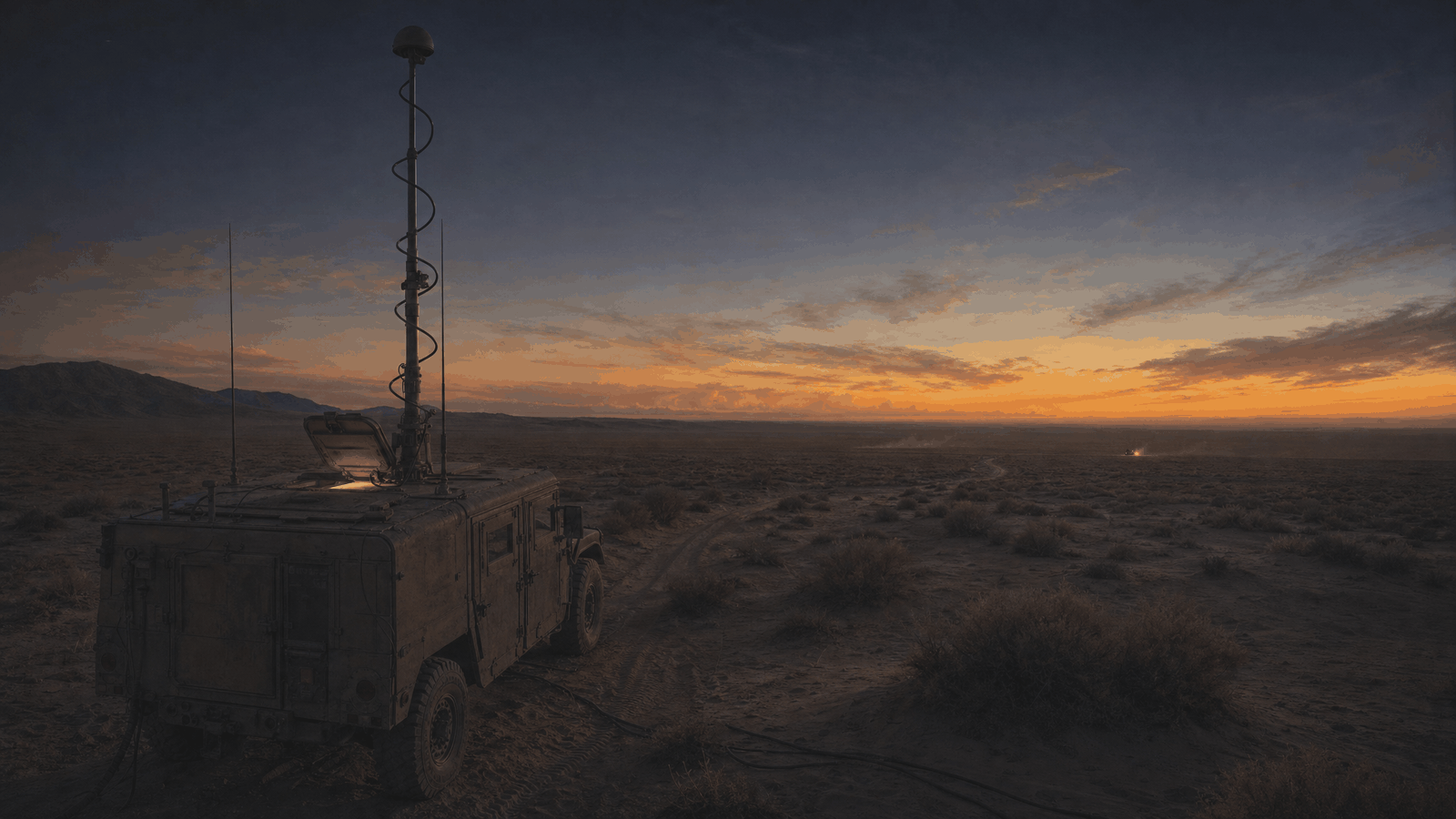
Spread Out to Stay Alive: War on the Rocks on the Army's C2 Reboot
War on the Rocks, recorded 2026-11-04 at the AUSA annual meeting, with Lt. Gen. Matthew W. McFarland (I Corps) and Maj. Gen. Patrick J. Ellis (4th Infantry Division) on Next Generation Command and Control. Listening notes on which of the four layers holds pricing power, the limits of training-ground numbers, and command discipline once you can see everything. Educational, not investment advice.

Water Fills the Upper Basin Before It Flows On — Notes on Statementdog on Why Foundry Stays Short Through 2027
Listening notes on Statementdog podcast episode 575: Statementdog's chief analyst Xiaozhen uses TSMC's third quarter split — high performance computing up 83% year on year while smartphone growth fell to 4.3% — to explain why leading-edge capacity stays short through 2027, and how HBM base dies and server support chips push the shortage down into mature nodes. The piece also takes apart the weakest links in that reasoning and names two conditions you can track. Educational discussion of research method, not investment advice; no stock recommendations or price targets.

Cheeky Pint: When Satellites Got Cheap the Bottleneck Was Launch. Now Reactors Got Small and the Bottleneck Is Fuel
Notes on the Cheeky Pint episode published 3 November 2026, where Scott Nolan of General Matter explains why the United States has no uranium enrichment capacity of its own. He says about a quarter of American enriched uranium is still imported from Russia and the congressional ban takes effect on 1 January 2028, and that at today's market prices fuel can account for half the levelised cost of energy for some small reactor designs. Educational listening notes only — no investment advice, no price targets, and the judgements here may be wrong.
Columbia Energy Exchange: The Fastest-Growing Line on the Bill Is the One Nobody Reviews
Notes on the Columbia Energy Exchange episode published 3 November 2026, where Katie Dykes — until this summer the commissioner of Connecticut's Department of Energy and Environmental Protection — explains why there is no single lever for electricity affordability but roughly 25 of them, spread across the legislature, the utility commission and FERC. Transmission is still the smallest share of the bill, yet for Connecticut ratepayers it has nearly doubled since 2015. Educational listening notes only — no investment advice, no price targets, and the judgements here may be wrong.

The Compound: The Pain in Your Account and the Median Stock in the Index Are Two Different Things
Notes on the What Are Your Thoughts livestream from The Compound and Friends, 4 November 2026, where Josh Brown and Michael Batnick lay out the charts: two thirds of S&P 500 members have had a 20% drawdown this year, in line with the historical average, while the tech column reads 93%; the equal-weight index beat the top 20 by the widest margin since 2009; Alphabet shed roughly 500 billion dollars of market cap in a day and sits 30% off its high; Apple closed higher on 65% of days the semiconductor index fell 2% or more. All figures are readings from that day's session and after-hours. Educational listening notes only — no investment advice, no price targets, and the judgements here may be wrong.
Invest Like the Best notes: a model only lives three to six months
In episode 498 of Invest Like the Best, published 4 November 2026, Patrick O'Shaughnessy talks with infrastructure investor Martin Casado about frontier model economics: he says the frontier has taken 80%+ of the market on a dollar-weighted basis for three years running, while a single model's lifespan is three to six months, so slipping three months on the next release can cost you the whole market. He also says the real shift is that capital can finally be pointed at engineering. Educational notes, not investment advice, no tickers, no price targets, and my reading may be wrong.

There Are Only So Many Spots on the Shoreline — Notes on Supply Chained on High-Bandwidth Flash
Listening notes on Supply Chained, 3 November 2026, "High-Bandwidth Flash": John of Asianometry and Tim Culpan of Culpium start from the fact that HBM stacking stops around twenty dies, then take apart what HBF — flash packaged like HBM next to the compute die — is trying to solve and where it gets stuck: enormous capacity, but a write endurance of only ten to a hundred thousand cycles, which a KV cache would burn through in a month or two. The piece lays out the conditions the argument depends on, and where Taiwan sits in metrology and test. Educational discussion of research method, not investment advice; no stock recommendations or price targets.

Learn the Trees First, Then You Can See Which Way the Wind Blows — Notes on Statementdog on How an Institutional Analyst Researches an Industry
Listening notes on Statementdog podcast episode 574: Vincent, former executive director in asset management at JPMorgan and co-founder of Manbao Pro, on moving into healthcare research without a healthcare background, how to break company value into R and N, and why understanding a company does not mean you can see the tide coming. Educational discussion of research method, not investment advice; no stock recommendations or price targets.

The Circuit: The Moment Anthropic Opened Its Books, It Stopped Being an Asset-Light Company
Notes on the 2 November 2026 episode of The Circuit, where Ben Bajarin and Jay Goldberg read Anthropic's S-1 end to end: the company was profitable and cash-flow positive in Q2 with gross margin estimated at 70-80%, yet Jay puts its compute purchase commitments over the next five years somewhere between $500bn and $800bn — while both labs may be paying roughly half the market rate for compute today. The episode also covers Intel's weak Q4 guide and the reported Marvell-Lumentum deal. All figures are readings as of the recording date, 30 October. Educational listening notes only — no investment advice, no price targets, and the judgements here may be wrong.

Odd Lots: The Pollsters Already Applied the Discount for You. Applying It Again Is Double-Counting
Notes on the Odd Lots Election Day special published 3 November 2026 and recorded on 29 October, where Tracy Alloway and Joe Weisenthal talk with Nate Silver of Silver Bulletin about polling error: Trump's approval at about 37% with only 19% strong approval, Democrats up roughly nine points on the generic ballot, a Marist poll of Maine that goes from D+9 among registered voters to D+2 after a likely-voter model, and a 0.995 correlation between prediction markets and his own model at the state level. Every number is a snapshot from the recording date. Educational listening notes only — no investment advice, no price targets, and the judgements here may be wrong.
Asianometry: Zhipu Gives Away Its Best Models — What Does It Get Back?
Notes on the 2 November 2026 Asianometry episode profiling the Chinese AI lab Zhipu (Z.ai) and its GLM models. The video says R&D spending runs at more than twice revenue while the frontier models are released as open weights; market cap peaked at $170 billion in June 2026 and had settled to roughly $50 billion as of the video. Educational listening notes only — no investment advice, no price targets, and the judgements here may be wrong.

Tired of YouTube's Recommendations? I Made a Chinese Version of Karpathy's HackerTube, and Found Three Blind Spots in “Repeatedly Recommended”
On November 1, 2026, Andrej Karpathy released HackerTube: 6,454 YouTube videos that Hacker News commenters kept recommending to each other over twenty years. I built a Traditional Chinese interface for it called 黑客影片 (Hacker Videos). This post takes apart what its ranking actually measures, when it misleads, and how it compares with the YouTube home page and plain Hacker News search. A technical learning note.

Macro Musings notes: that morning they had the reserves and still wouldn't lend
In the 2 November 2026 episode of Macro Musings, host David Beckworth talks with Stanford finance professor Darrell Duffie about why the Fed's balance sheet won't shrink back: reserve balances broke things at $1.4 trillion in 2019, and the same thing happened again this round at roughly $3 trillion. Duffie ranks four tools by difficulty; tiering interest on reserves is the most powerful and the hardest. Educational notes, not investment advice, no tickers, no price targets, and my reading may be wrong.

No Textbooks Button in NotebookLM Outside the US? I Picked the Chapters Myself, and Liked It Better
On October 29, 2026, Google added a free textbook catalog to Gemini Notebook (formerly NotebookLM), but only for accounts in the US and India. This post makes the strongest case for the catalog, then looks at its limits for learners elsewhere, and shares what happened when I added OpenStax and LibreTexts chapter links to a notebook by hand on November 2: 13 of 14 links worked, and the one that failed taught me something. A learning-tools write-up, not commercial advice.
The $300 Billion Structured Notes Market: Who Pays That Coupon
Notes from listening to Odd Lots, 2026-11-02, on the US structured notes market — market size, auto-callables, and the hedging pressure on dealers. Educational only; no investment advice, price targets, or stock recommendations.

A Week of Serenity's Public Posts, Lined Up: The Bottleneck Moved to the Source, and the Money Is Borrowed
Serenity, an independent researcher on X, posted a batch of public notes between 26 and 30 October 2026. This one is written from both sides: first the strongest version of his case — roughly $40B of financing turning into accelerator purchases in the first half of 2027, and an upstream bottleneck that has moved from modules to indium phosphide substrates and laser dies — then the hardest objections and counterexamples, then which side I think holds. Notes on industry structure: no tickers, no recommendations, no price targets.

Podcast Notes Weekly: Oct 26–Nov 01, 2026
The takeaways from 28 podcast notes I wrote this week (Asianometry, Investor's Sunday, Macro Musings with David Beckworth, Bloomberg Odd Lots, Serenity Weekly, The Circuit and more). Two to four sentences per episode, with a link to each full post.

Asianometry: Silicon Valley Is Walking the Jagged Edge, and Falling Off Got Easier
Notes on the 30 October 2026 episode of Asianometry, where host Jon Y reports back from a month in San Francisco: the Financial Times put Anthropic at $16 billion in revenue with excellent gross margins, the market called it insufficient and AI trade prices churned that week; Lam Research's October 2026 call put 2027 wafer fab equipment spending above $200 billion, Goldman Sachs estimates $218 billion for 2027 and $281 billion for 2028, and patchy word of hiring freezes is circulating inside the equipment makers. Educational listening notes only — no investment advice, no price targets, and the judgements here may be wrong.

Gooaye EP710 notes: he took his kid trick-or-treating in a costume two sizes up, and his watch logged the whole morning as high stress
Notes on the 31 October 2026 episode of Gooaye (EP710): Gooaye's host on chasing a bounce, sizing it too big, and only seeing his stress reading drop after he went home and cut it — plus the margin maintenance ratio at 130, four cloud vendors beating on demand while the stocks fell, Intel's substrate yields, and the quant-pod unwind trap. Educational notes only; no investment advice, no price targets, no stock picks. Figures are as spoken on the show and my reading may be wrong.

How a 100-Person Firm Built the Champions League: Yasuhide Okabe on Football as a Brand Business
Investor's Sunday, 1 November 2026, with Yasuhide Okabe, nearly two decades at the UEFA Champions League's commercial agency. He breaks football into a brand business plus four revenue lines, and ties Japan's sports-revenue ceiling back to its TV ad market and population. Listener notes, educational, not investment advice.