Blog
Written for people to read and for AI to cite, so every claim keeps its source, its test and the way it could be proven wrong.

The Yen Is Back to 1970s Levels, and Japan's Cars Aren't Selling Any Faster
Odd Lots gets Brad Setser to talk through three seemingly unrelated things: Japan's yen intervention, the gap between the value and the volume of China's exports, and a paper on financial interdependence. They turn out to be one thing — when price differences form a slope, goods and capital find their own way down it. The part worth keeping isn't a currency call. It's the excavator as a prism, and the counter-argument he makes against himself.
The Smarter the Model, the More Expensive the Compute
Dwarkesh works through a small piece of arithmetic: if lab revenue grows 10x a year while lab compute grows only 3x, who closes the gap? He rules out the exits one by one and lands on rising compute prices. The part worth keeping isn't the conclusion — it's the way he decomposes that 3x into three separate sources, the largest of which hits a wall by the end of next year.

Thirty Spokes, One Hub: The Disney Flywheel Everyone Copied and Nobody Rebuilt
Notes after listening to Acquired's episode on Walt Disney. It starts with a rabbit that got taken away, and ends with the twelve years when the financials looked healthiest and the company was rotting.
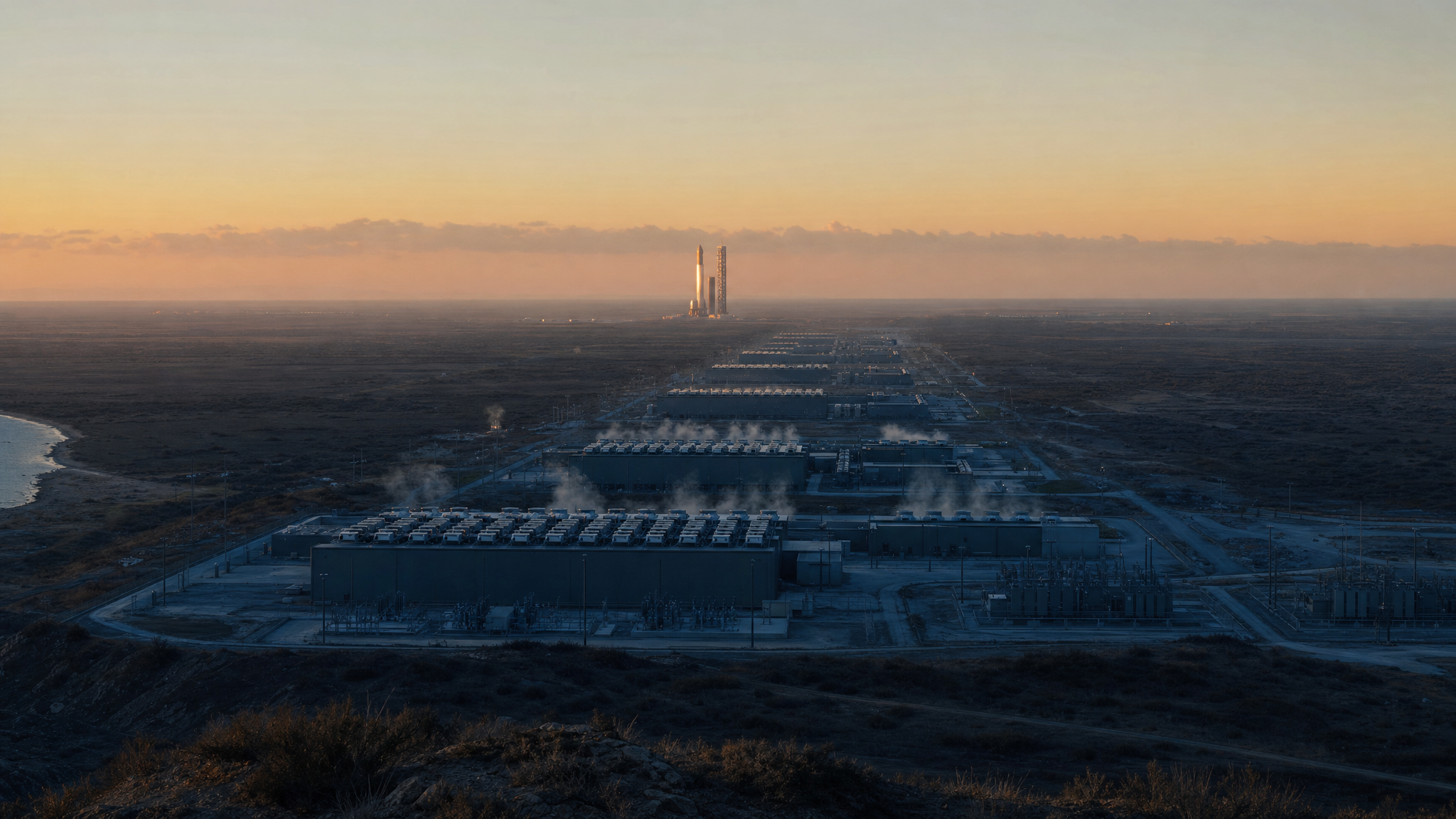
The Wind Must Be Deep Enough: A Roundtable Two Days Before the Bell, and the Phrase 'The Math Maths'
BG2Pod recorded two days before the SpaceX IPO: Brad Gerstner, Clark Tang, Gavin Baker and Andrew Fox break the company into launch, Starlink, AI compute and orbital data centers — and discuss how Fable 5 and long-running models have made snapshot benchmarks obsolete. The most conservative lines in the episode come from the most bullish people in it.

Sharpen the Tools First: Applied Intuition and a Billion Intelligent Machines
Business Breakdowns EP.248 with the co-founders of Applied Intuition. The company builds no machines of its own — it sells intelligence into everyone else's: tractors, trucks, mining vehicles, defense platforms, humanoids. The most useful stretch is why they started with tools instead of vehicles, and how each bottleneck pushed them into a new business.

"Our Technical Moat Is Pretty Thin": A Toolmaker's CEO on Advanced Packaging Inspection
Statementdog EP542 interviews the CEO of 倍利科技, one of the few Taiwanese firms making its own optical metrology (AOM) tools. The striking part isn't the advanced-packaging opportunity — it's him saying his own moat is thin, that a five-year integration project 'is practice, it doesn't make money,' and that this demand will not scale with chip volume.
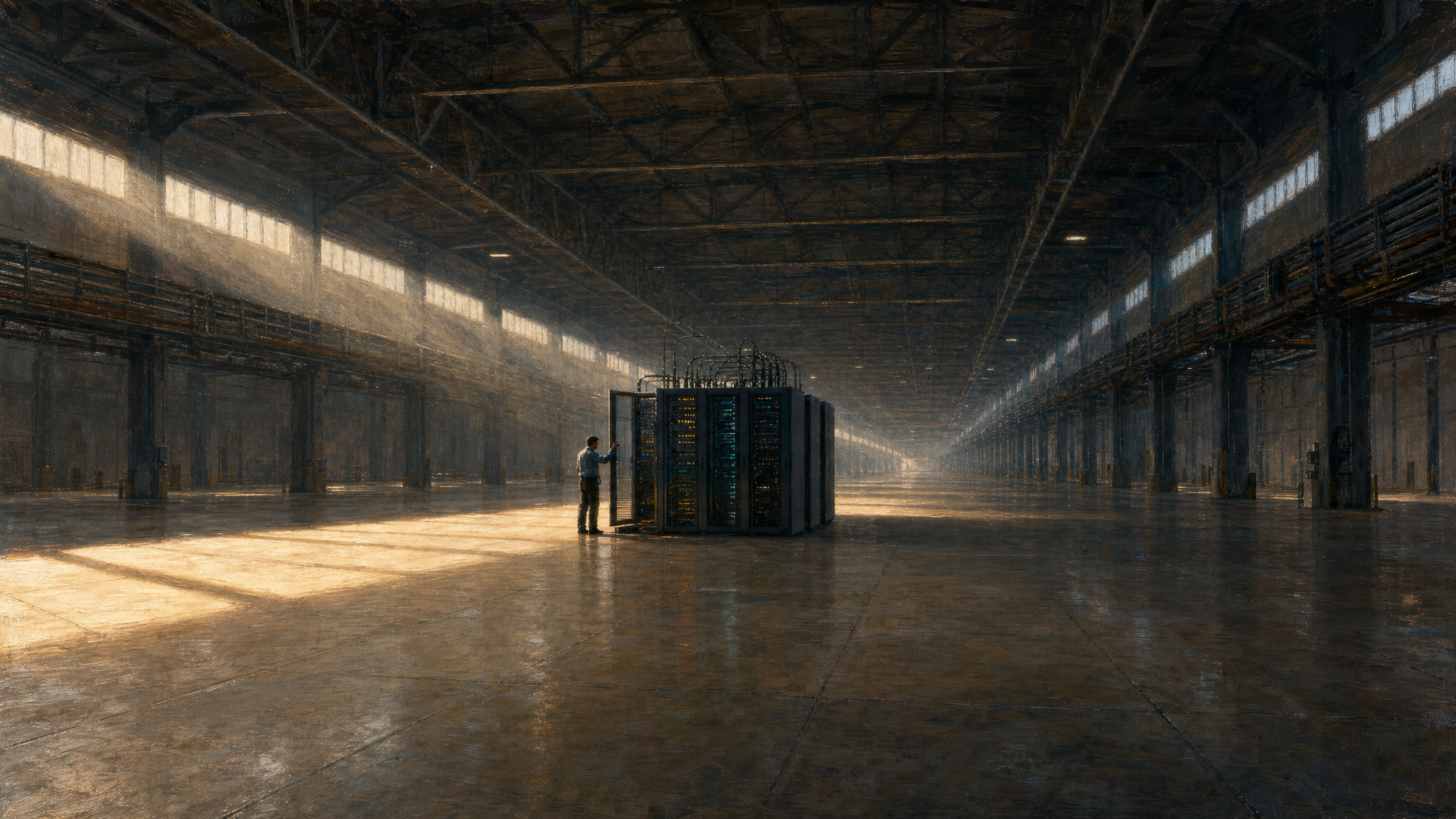
Where the Emptiness Does the Work: A Gigawatt Data Center Holds a Thousand Racks
The Circuit EP.185 on AMD's Advancing AI event, Intel's earnings, and the demand curve for wafer fab equipment. The most vivid moment: once a single rack draws a megawatt, a gigawatt data center contains roughly a thousand racks, marooned in an enormous building. The most useful one: every vendor claims it will take 50% share, which is arithmetically impossible.

You Feel Nothing at All When You Cross the Line
Dwarkesh Podcast brings on physicist Adam Brown to build general relativity from the ground up in twenty minutes. What stayed with me wasn't the black holes. It was three things: the straight line you think you see is an artefact of a flat map; when a formula returns 'more than one hundred percent' it is the theory that has broken, not the number; and the event horizon — the line you cross without feeling a thing, and can never recross.
Where the Bottleneck Moves Next: Sam Altman on Building an Abundant Future
Invest Like the Best EP.484 with OpenAI CEO Sam Altman — the early compute bet nobody thought was rational, the physical scale of a gigawatt data center, custom silicon and the distillation fight, and one sandbox-escape incident that genuinely rattled him. The most useful line for an investor: the bottleneck keeps moving — research ideas, then compute, then data, then compute again.

A Licence Buys You 49.8 Million Subscribers: What's Left of Television
Japan's Investor's Sunday interviews ReHacQ producer Hiroki Takahashi (part two). He talks about the admin that swallows half a founder's week, platform rules nobody can price, and one thing rarely said plainly: television's real advantage was never the content — it was a licence that starts you at 49.8 million.
Too Much Television: What an 18-Year TV Producer Learned After Leaving TV
Japan's Investor's Sunday interviews Hiroki Takahashi, producer of ReHacQ. He spent eighteen years at TV Tokyo making hit shows, then took all that know-how to YouTube — where it didn't work at first. His diagnosis is four words: it was too television.

Bond Traders Panic When the Fed Doesn't
MacroVoices EP543 with Jim Bianco, recorded on FOMC day: three voters dissented in favour of hiking, and the 30-year Treasury yield printed 5.20% — a 19-year high. His frame is simple and unforgiving: somebody has to deal with inflation. Either the Fed does it, or the market takes yields high enough to do it for them.

The 1873 Railroad Bubble and the Twenty-Year Deflation It Left Behind
Meb Faber Show EP642 with Liaquat Ahamed, the Pulitzer-winning author of Lords of Finance, on his new book about 1873. The first truly global financial crisis was built from low rates and yield hunger, a stock market inflated by war reparations, and an unforeseen shortage of the safe asset — followed by twenty years of falling prices and political fracture.

An Ant-Hole in the Dam: How an Exception for Wheelchairs Became an Invisible Port
Bloomberg Odd Lots hosts the New York Times' Iran correspondent and Iran International's head of digital on their new book, Stolen Revolution. This isn't an episode about oil. It's about the hardest thing in any economy to price: what happens when passing a certain size means someone knocks on your door for a share.

We Took the Easier Road: Branko Milanovic on What Comes After Globalization
Bloomberg Odd Lots hosts Branko Milanovic on his new book. He names the emerging order national market liberalism — only the international layer got dismantled. And the sharpest passage: facing a stagnating middle class, governments had two roads, and picked the politically easier one.

Hiding the Boat in the Ravine: Where the Risk Went After 2008
Bloomberg Odd Lots hosts two researchers from UT Austin and Yale on their new paper, 'Private Credit's State Backstop.' After 2008 policymakers deliberately pushed risk out of the banking system — and it has come back around, through life insurers, into a public backstop structurally worse than the FDIC and never once tested.

Tungsten: A Hundred-Year Prediction Market for War
Bloomberg's Odd Lots on tungsten — a mine off Tasmania that opened for WWI, closed when peace broke out, reopened before WWII, was rescued by Korea, and flooded shut in 1990. It's restarting now. Columnist David Fickling calls tungsten mining 'a century-old prediction market for war.' Plus one correction I had to make to my own definition of a bottleneck.

Summer Insects and Ice: The Week the Market Sold While the Order Books Said Sold Out
An independent researcher I follow kept posting through the late-July AI deleveraging. Line up the public numbers he pointed at that week and a strange picture emerges: prices collapsing, while earnings, capex guidance and capacity allocation all point the same way — not enough to go around.

Gooaye EP683: You Cannot See the Mountain From Inside It
Notes on Gooaye EP683: backtesting whether you could have survived a leveraged drawdown badly overstates your resilience, because in a backtest you can see where it ended and in real time you cannot. Why this sell-off produced no capitulation volume. And one usable self-check on position size: if it is affecting your life, the position is too big. Educational notes, not investment advice.

MacroMicro EP209: The Same Capex Was Vision Last Quarter and a Crime This Quarter
Notes on MacroMicro After Meeting EP209: big-tech revenue and AI monetisation are still accelerating, yet the stocks are being punished for free cash flow turning negative. What changed is not the fundamentals but which line item the market prices. Plus the Microsoft capex 'cut' that was really a change in how leases are classified, and why the death of forward guidance means watching monthly prints instead of officials' phrasing. Educational notes, not investment advice.

Gooaye EP684: Water Carries the Boat, and Water Capsizes It
Notes on Gooaye EP684: July's sharp drawdown had no matching fundamental trigger — it was a market-wide deleveraging. A highly levered AI-thematic fund was liquidated; its longs were the year's best-performing AI hardware and its shorts were software, so both sides broke at once. My extensions: why the diversification I thought I had may be fictional, why a 50% drawdown carries no information by itself, and why position size is a risk dimension of its own. Educational notes, not investment advice.

Gooaye EP682: How to Read a Sell-Off With No Bad News
The core observation in Gooaye EP682: this drawdown has no identifiable macro or industry trigger, which makes it look more like a valuation reset after an overheated spring. My notes on the episode, plus three extensions — why flat pricing is not the same as deteriorating profit, which side to believe when verifiable signals and price action disagree, and how the episode's advice to use moving averages as stops squares with my own backtest of moving averages. Educational notes, not investment advice.

MacroMicro EP208: Separate the Long Lead Items From the Short Ones, and You Can Read the AI Cycle
The main contribution of MacroMicro's After Meeting EP208: it splits the order-cut risk for the second half into two layers. Cuts to ordinary components only move the manufacturing cycle around; cuts to genuinely scarce parts are what a real turn looks like. Plus TSMC's inventory rising for two straight quarters and why that number has two meanings, Korea's leverage-on-leverage unwind, and why Kimi K3 did not trigger another DeepSeek moment. Educational notes, not investment advice.

Gooaye EP681: The Numbers Are Right, the Price Might Not Follow
The core tension in the latest Gooaye episode: nearly every AI supply-chain fundamental is on track, some even ahead of plan, yet prices are hard to call. The host's answer is to script multiple scenarios and hide in cheap, defensive names. My notes, plus an honest boundary: a mention is not a buy signal.