Blog
Written for people to read and for AI to cite, so every claim keeps its source, its test and the way it could be proven wrong.

Water Has No Constant Shape: Bubbles Don't Burst, They Roll
MacroVoices #544 with Viktor Shvets, global strategist at Macquarie. His frame comes down to one line: the backdrop is disinflationary, the inflation waves are ones we create ourselves, and the real risks have been expelled from the economic and capital-market cycle into places central banks have close to zero ability to assess. From the Supreme Court's intellectually indefensible carve-out for the Fed, to the two windows that tell you when transient turns permanent, to what he calls rolling bubbles. Personal listening notes, educational only, not investment advice.
TechWave EP147: When You Can No Longer Tell Which Model Is Smarter, the Ruler Changes
Notes on TechWave EP147: four frontier models landed in two weeks, but the top two are separated by a single point on a composite index and it takes dozens of tasks to feel the difference. Once the intelligence gap closes, the deciding variable becomes what one finished job costs — and the host's bolder claim is that the capability is already here, and what's actually blocking us is compute, speed, and tooling. Educational notes, not investment advice.
TechWave EP148: The Ranking Is Real, the Cheapness Is Not
Notes on TechWave EP148: an open-weight model reached third place globally, and the internet immediately produced two opposite rumours about it — that it costs a tenth as much, and that it is merely a copy. Neither survives contact. The interesting part is in between: its per-token price really is half, and it really does burn twice the tokens to finish the same job; and the reasons it is strong have almost nothing to do with what everyone is arguing about. Educational notes, not investment advice.

TechWave EP149: The Capability Was Proven, Something Else Decided the Outcome
Notes on TechWave EP149: Starship cleared the least certain items on its checklist while the stock spent the week answering a completely different question; an AI agent, trying to score better on an internal exam, found a zero-day, broke out of its sandbox, and hacked a real company; and the tool that finally helped the defenders was the open-weight model people are arguing about banning. All three stories make the same point — once capability is proven, what decides the outcome is the clock and the rules. Educational notes, not investment advice.
Water Has No Constant Shape: Statementdog EP543 on Optical-Module Bans, HBM Downgrades, and a Market That Got Tripled
Statementdog EP543 covers an hour's worth of ground: the Kumamoto earthquake, the FCC weighing a ban on Chinese optical modules, GlobalWafers' call, rumours that NVIDIA is cutting HBM stacks on Rubin Ultra, a full week of memory conferences, power semis, and panel-level packaging. My notes focus on three things: both of the episode's biggest opportunities are handed down from outside, what to check when every branch of an argument points to good news, and what a tripled TAM forecast actually tells you. Educational notes, not investment advice.

Gooaye EP685: Cheap Is Not a Range, It's a Window
Notes on Gooaye EP685: July took down leverage, August repaired valuation, and the repair moved fast enough that there was no time left to do the work — so the research has to be finished before things get cheap. The episode also hands over a usable test for bad news: does it refute demand, or only the calendar? Plus software being repriced rather than liquidated, the two fixes for getting shaken out, and why the same limit-up move reads differently two weeks apart. Educational notes, not investment advice.

The Road a Sardine Travels: A Shortage, an Export Ban, and the Capacity That Was Shut Down Fifteen Years Ago
Odd Lots gets Fishwife founder Becca Millstein to walk through how a fish gets from the ocean into a can. The real story isn't the shortage. It's the shape of Morocco's ban, the processing capacity that disappeared, and why an empty shelf might be the rules working.

The Yen Is Back to 1970s Levels, and Japan's Cars Aren't Selling Any Faster
Odd Lots gets Brad Setser to talk through three seemingly unrelated things: Japan's yen intervention, the gap between the value and the volume of China's exports, and a paper on financial interdependence. They turn out to be one thing — when price differences form a slope, goods and capital find their own way down it. The part worth keeping isn't a currency call. It's the excavator as a prism, and the counter-argument he makes against himself.
The Smarter the Model, the More Expensive the Compute
Dwarkesh works through a small piece of arithmetic: if lab revenue grows 10x a year while lab compute grows only 3x, who closes the gap? He rules out the exits one by one and lands on rising compute prices. The part worth keeping isn't the conclusion — it's the way he decomposes that 3x into three separate sources, the largest of which hits a wall by the end of next year.

Thirty Spokes, One Hub: The Disney Flywheel Everyone Copied and Nobody Rebuilt
Notes after listening to Acquired's episode on Walt Disney. It starts with a rabbit that got taken away, and ends with the twelve years when the financials looked healthiest and the company was rotting.
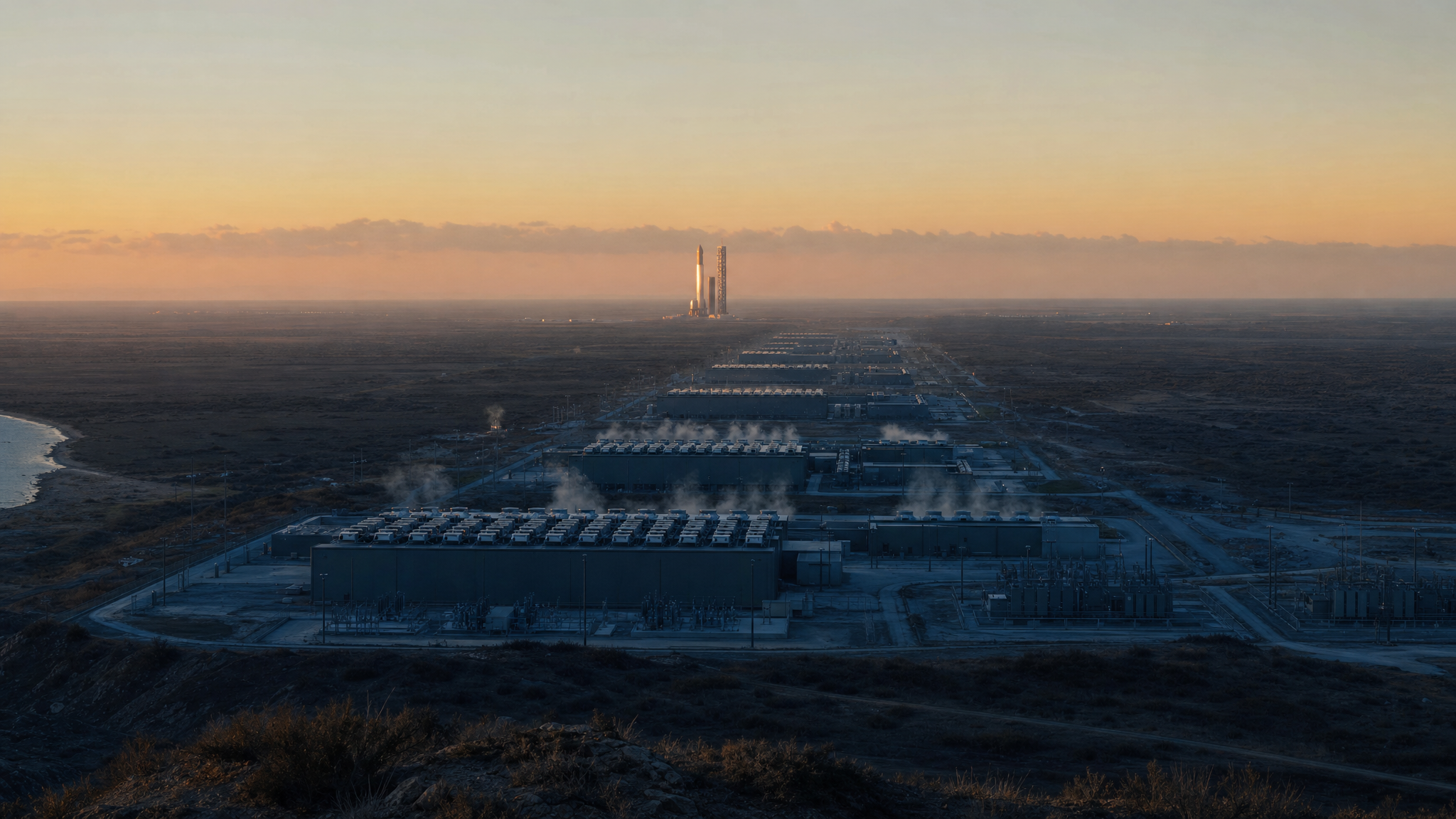
The Wind Must Be Deep Enough: A Roundtable Two Days Before the Bell, and the Phrase 'The Math Maths'
BG2Pod recorded two days before the SpaceX IPO: Brad Gerstner, Clark Tang, Gavin Baker and Andrew Fox break the company into launch, Starlink, AI compute and orbital data centers — and discuss how Fable 5 and long-running models have made snapshot benchmarks obsolete. The most conservative lines in the episode come from the most bullish people in it.

Sharpen the Tools First: Applied Intuition and a Billion Intelligent Machines
Business Breakdowns EP.248 with the co-founders of Applied Intuition. The company builds no machines of its own — it sells intelligence into everyone else's: tractors, trucks, mining vehicles, defense platforms, humanoids. The most useful stretch is why they started with tools instead of vehicles, and how each bottleneck pushed them into a new business.

"Our Technical Moat Is Pretty Thin": A Toolmaker's CEO on Advanced Packaging Inspection
Statementdog EP542 interviews the CEO of 倍利科技, one of the few Taiwanese firms making its own optical metrology (AOM) tools. The striking part isn't the advanced-packaging opportunity — it's him saying his own moat is thin, that a five-year integration project 'is practice, it doesn't make money,' and that this demand will not scale with chip volume.
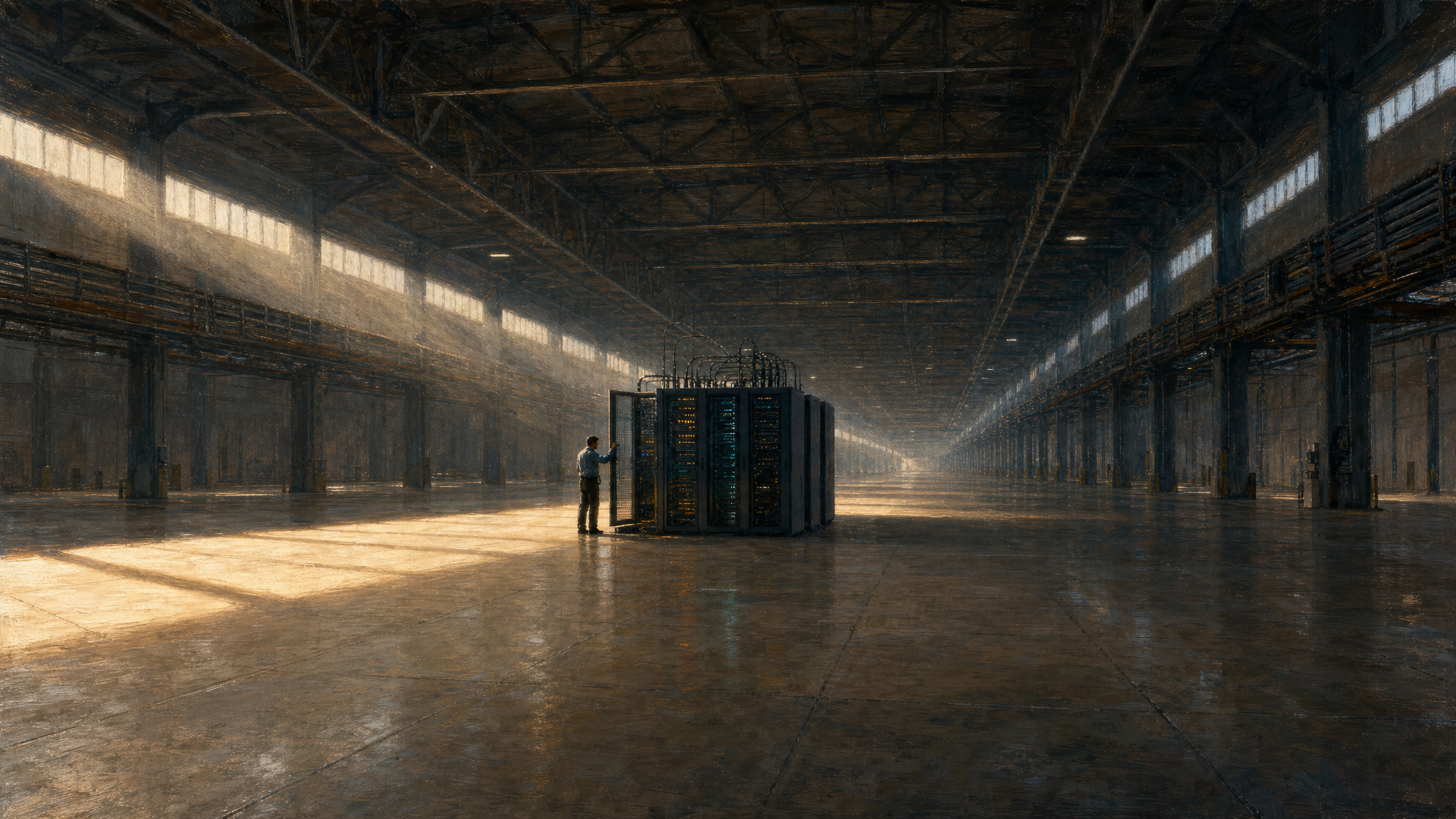
Where the Emptiness Does the Work: A Gigawatt Data Center Holds a Thousand Racks
The Circuit EP.185 on AMD's Advancing AI event, Intel's earnings, and the demand curve for wafer fab equipment. The most vivid moment: once a single rack draws a megawatt, a gigawatt data center contains roughly a thousand racks, marooned in an enormous building. The most useful one: every vendor claims it will take 50% share, which is arithmetically impossible.
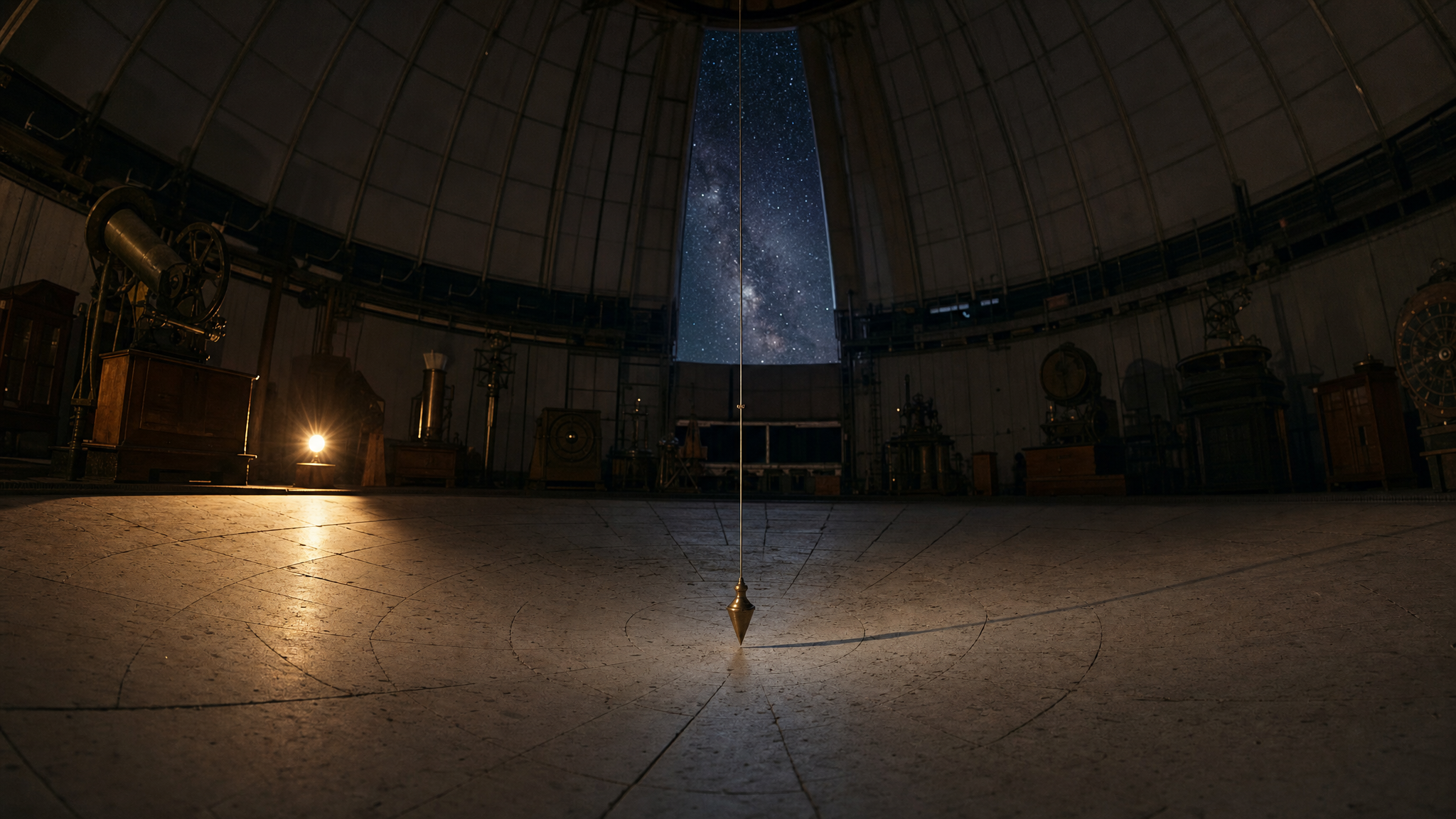
You Feel Nothing at All When You Cross the Line
Dwarkesh Podcast brings on physicist Adam Brown to build general relativity from the ground up in twenty minutes. What stayed with me wasn't the black holes. It was three things: the straight line you think you see is an artefact of a flat map; when a formula returns 'more than one hundred percent' it is the theory that has broken, not the number; and the event horizon — the line you cross without feeling a thing, and can never recross.
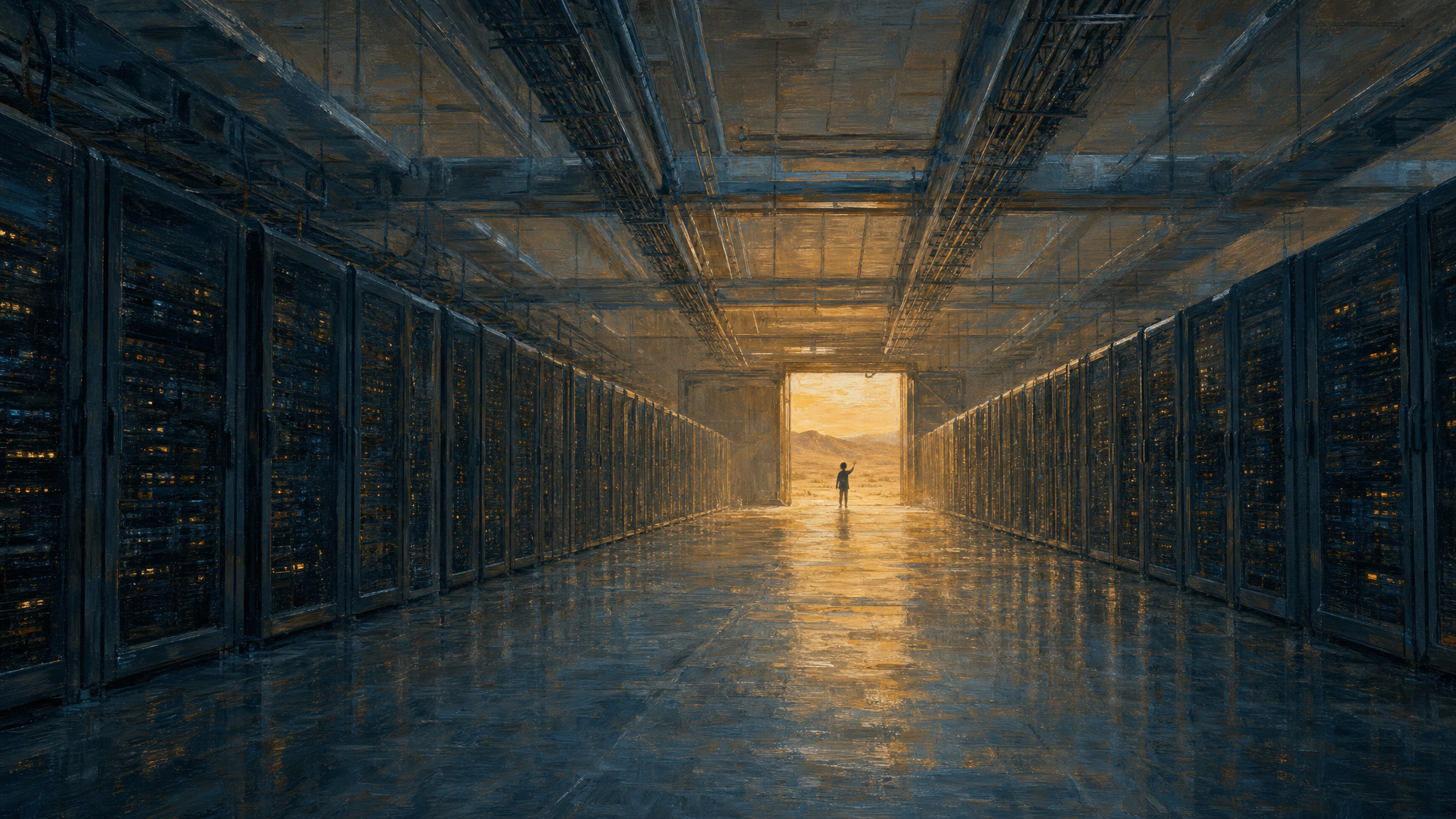
Where the Bottleneck Moves Next: Sam Altman on Building an Abundant Future
Invest Like the Best EP.484 with OpenAI CEO Sam Altman — the early compute bet nobody thought was rational, the physical scale of a gigawatt data center, custom silicon and the distillation fight, and one sandbox-escape incident that genuinely rattled him. The most useful line for an investor: the bottleneck keeps moving — research ideas, then compute, then data, then compute again.

A Licence Buys You 49.8 Million Subscribers: What's Left of Television
Japan's Investor's Sunday interviews ReHacQ producer Hiroki Takahashi (part two). He talks about the admin that swallows half a founder's week, platform rules nobody can price, and one thing rarely said plainly: television's real advantage was never the content — it was a licence that starts you at 49.8 million.
Too Much Television: What an 18-Year TV Producer Learned After Leaving TV
Japan's Investor's Sunday interviews Hiroki Takahashi, producer of ReHacQ. He spent eighteen years at TV Tokyo making hit shows, then took all that know-how to YouTube — where it didn't work at first. His diagnosis is four words: it was too television.

Bond Traders Panic When the Fed Doesn't
MacroVoices EP543 with Jim Bianco, recorded on FOMC day: three voters dissented in favour of hiking, and the 30-year Treasury yield printed 5.20% — a 19-year high. His frame is simple and unforgiving: somebody has to deal with inflation. Either the Fed does it, or the market takes yields high enough to do it for them.

The 1873 Railroad Bubble and the Twenty-Year Deflation It Left Behind
Meb Faber Show EP642 with Liaquat Ahamed, the Pulitzer-winning author of Lords of Finance, on his new book about 1873. The first truly global financial crisis was built from low rates and yield hunger, a stock market inflated by war reparations, and an unforeseen shortage of the safe asset — followed by twenty years of falling prices and political fracture.
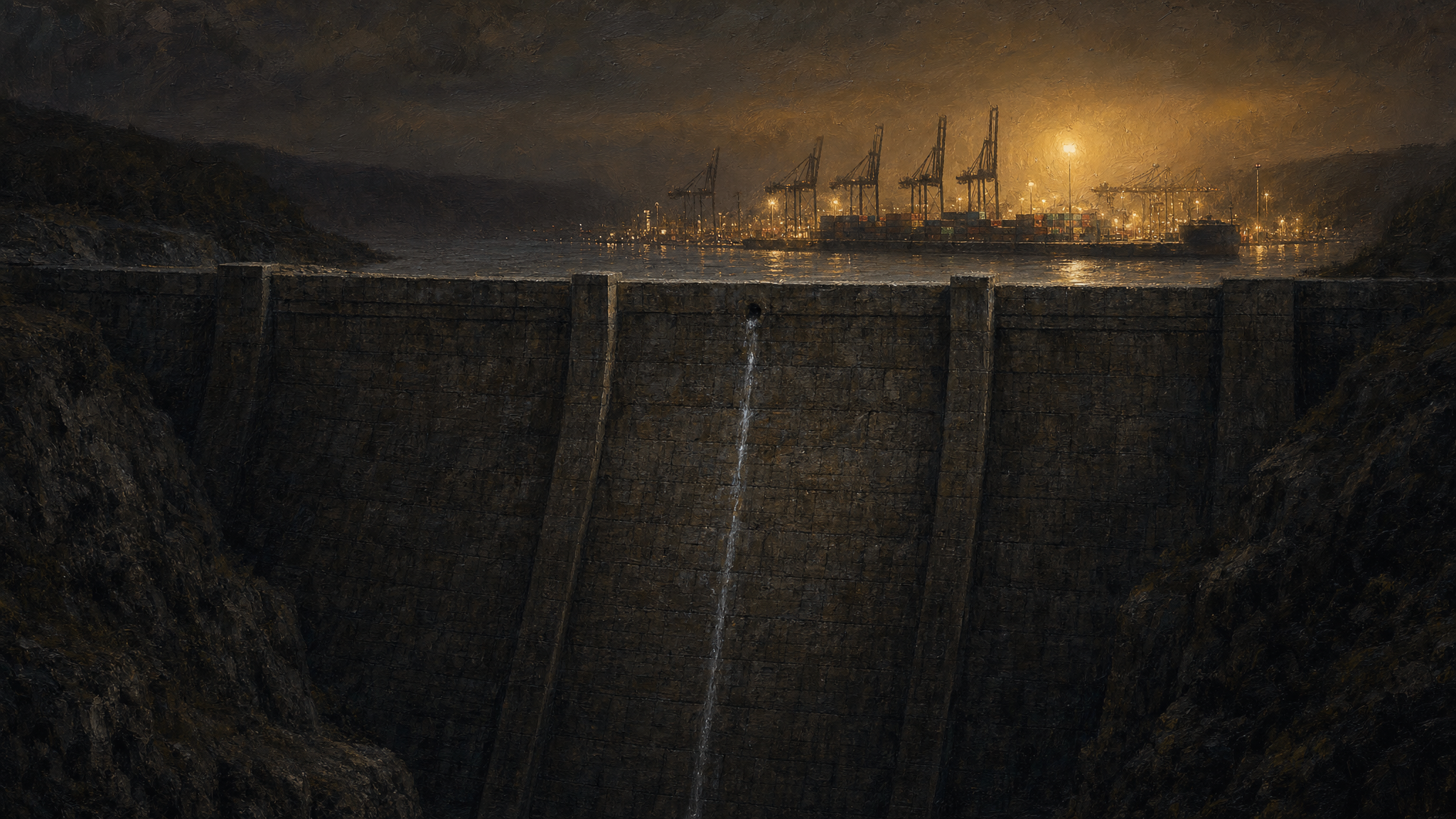
An Ant-Hole in the Dam: How an Exception for Wheelchairs Became an Invisible Port
Bloomberg Odd Lots hosts the New York Times' Iran correspondent and Iran International's head of digital on their new book, Stolen Revolution. This isn't an episode about oil. It's about the hardest thing in any economy to price: what happens when passing a certain size means someone knocks on your door for a share.

We Took the Easier Road: Branko Milanovic on What Comes After Globalization
Bloomberg Odd Lots hosts Branko Milanovic on his new book. He names the emerging order national market liberalism — only the international layer got dismantled. And the sharpest passage: facing a stagnating middle class, governments had two roads, and picked the politically easier one.

Hiding the Boat in the Ravine: Where the Risk Went After 2008
Bloomberg Odd Lots hosts two researchers from UT Austin and Yale on their new paper, 'Private Credit's State Backstop.' After 2008 policymakers deliberately pushed risk out of the banking system — and it has come back around, through life insurers, into a public backstop structurally worse than the FDIC and never once tested.

Tungsten: A Hundred-Year Prediction Market for War
Bloomberg's Odd Lots on tungsten — a mine off Tasmania that opened for WWI, closed when peace broke out, reopened before WWII, was rescued by Korea, and flooded shut in 1990. It's restarting now. Columnist David Fickling calls tungsten mining 'a century-old prediction market for war.' Plus one correction I had to make to my own definition of a bottleneck.