Investing & Markets
Chips, the AI supply chain, macro and money flows: slowly making sense of markets. 141 posts.

Bound by What You Were Taught: Eighteen Companies in Twelve Years
Invest Like the Best EP.486 with Benchmark's Eric Vishria. Same hardware, same open-weights model, a 5x speed gap. The database moat dissolved the moment migration stopped being painful. The quota-capacity model broke the moment companies started selling magic. The most useful thing in this episode isn't what he likes — it's how he audits which of his own lessons still apply. Educational content, not investment advice.

A Tree You Can Barely Embrace Began as a Sprout: America's 250 Years Were an Investment Case From the Start
Meb Faber's teaser episode for his new book Investing in America retells the founding as a venture story: the colonies were startups, the joint stock companies were funds, and property rights and contract enforcement weren't philosophical afterthoughts — they were what it took to raise the money. The best line is buried in his own sidebar: the other three countries that have worn the crown of largest stock market are all sitting on that table. Educational listening notes, not investment advice.

Ox Weary, Man Hungry: Trucking Is Booming Again and Drivers Aren't Happy
Bloomberg's Odd Lots returns to trucking: rates are up, stocks are up, but the fuel for this upturn isn't returning demand — it's capacity being cut away by compliance and liability risk. The guest is Reed Loustalot, ten years in freight. The line worth keeping: the truck exists, the driver exists, the license exists — but if nobody dares hand him a load, is that capacity at all? Educational listening notes, not investment advice.

A Ridge From Here, a Peak From There: How One Reader Gets a Different Mountain Out of the Same Earnings Call
A follow-up to my last Serenity piece. This time it's not about what he said — it's about how he reads. Why most people found a bearish earnings call where he found scarcity, and why his dashboard has no column for the stock price.
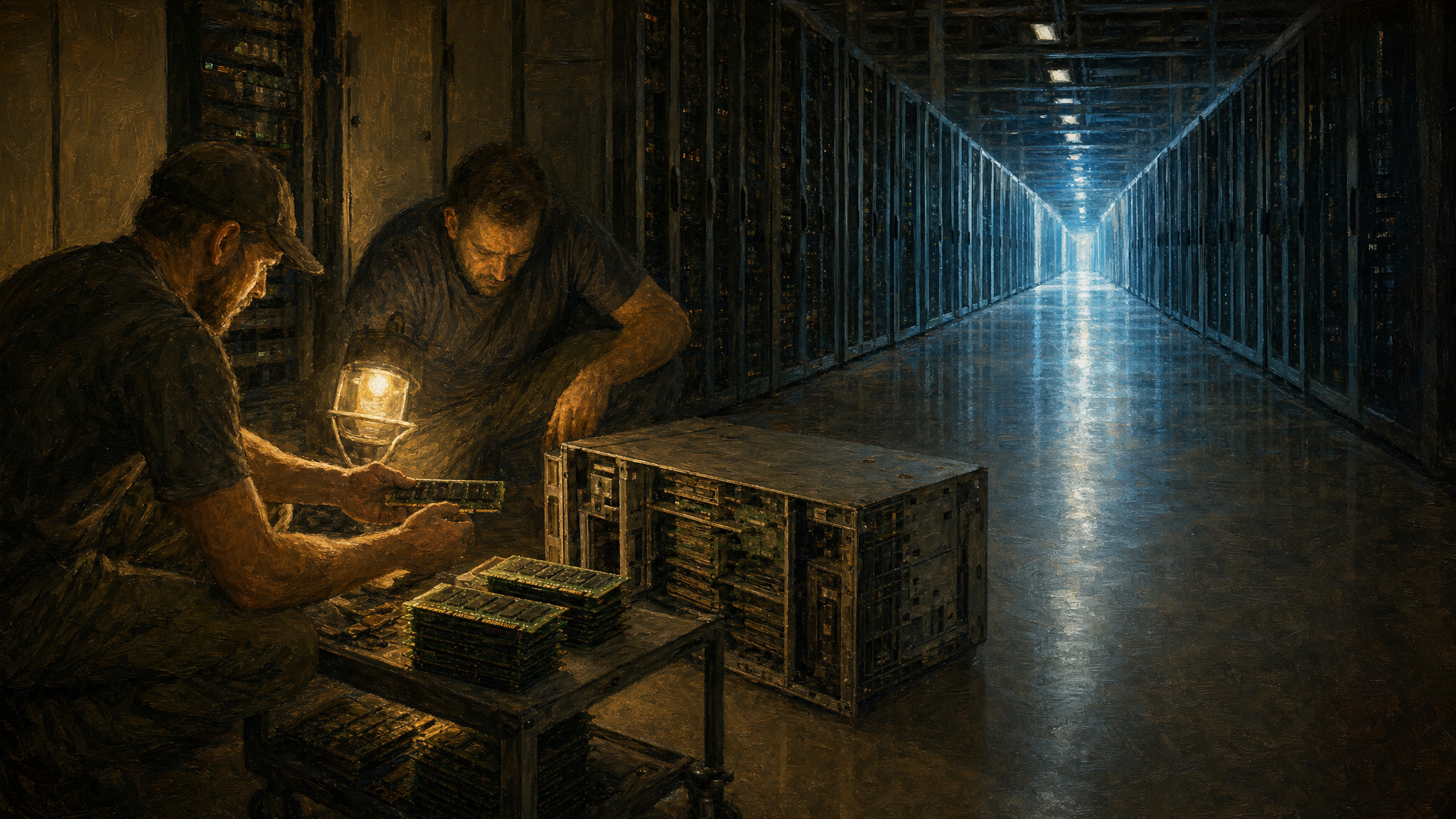
The Roundabout Route Arrives First: They Didn't Buy the Memory, They Dug It Back Up
The Circuit EP.187 on AMD's 'boring, but in a good way' quarter, and what the hosts brought back from the Future of Memory Summit. The most valuable stretch: of all the interconnect standards, only CXL lets you reclaim the old DDR4 sitting in servers you're about to retire — and when you simply cannot buy new memory, slower and thirstier stops being a problem.

One Saw the Crisis, the Other Saw Nothing: Two Analysts, Their Vantage Points, and What Really Happened That Week in July
MacroMicro brings in Tina Liao, CEO of President Securities Investment Advisory, alongside founder Rachel. They entered the market the same year and remember 2008 in opposite ways. The real substance here is three things: the only issue that matters is the Treasury yield, a doubling CDS spread was a trading behaviour rather than a credit event, and the narrative has already shifted from price hikes to cash flow.

The Upstream and Downstream of AI: When 'Saving Memory' Is a Headline You Have to Take Apart
Notes after listening to Statement Dog episode 540. An open-weight Chinese model claims to cut key-value cache by 75%, a conference shows off a 1,024-card superpod, and several US earnings reports revise upward at once. Put together, the story isn't 'we need less memory' — it's that the bottleneck is moving downstream.

Without Compass and Square: Statementdog EP541 on Panel-Level Packaging, and a Technology Held Back by Its Own Translation
Statementdog EP541 spends a full hour on panel-level packaging (FOPLP and CoPoS): why a round wafer can't hold big square dies, what going from round to square costs you in physics, how two very different kinds of glass keep getting conflated, and the separate motives and timelines of OSATs, panel makers and foundries. My notes take three things further: how to value a technology everyone must adopt, where a bottleneck moves once you solve it, and why 'who discloses the revenue' is close to an inverse indicator of who leads. Educational notes, not investment advice.

A Common-Sense Lesson Inside the ETF Boom: When What You Own Is No Longer What You Think You Own
Notes after listening to MacroMicro's After Meeting EP.206. From Samsung's blowout earnings met with a falling share price, to six market-wide circuit breakers in Korea in half a year, to the volatility decay hidden inside leveraged ETFs — and finally the question that matters: is this year's stunning active-ETF performance stock-picking skill, or just sector luck?

Water Has No Constant Shape: Bubbles Don't Burst, They Roll
MacroVoices #544 with Viktor Shvets, global strategist at Macquarie. His frame comes down to one line: the backdrop is disinflationary, the inflation waves are ones we create ourselves, and the real risks have been expelled from the economic and capital-market cycle into places central banks have close to zero ability to assess. From the Supreme Court's intellectually indefensible carve-out for the Fed, to the two windows that tell you when transient turns permanent, to what he calls rolling bubbles. Personal listening notes, educational only, not investment advice.
TechWave EP148: The Ranking Is Real, the Cheapness Is Not
Notes on TechWave EP148: an open-weight model reached third place globally, and the internet immediately produced two opposite rumours about it — that it costs a tenth as much, and that it is merely a copy. Neither survives contact. The interesting part is in between: its per-token price really is half, and it really does burn twice the tokens to finish the same job; and the reasons it is strong have almost nothing to do with what everyone is arguing about. Educational notes, not investment advice.
Water Has No Constant Shape: Statementdog EP543 on Optical-Module Bans, HBM Downgrades, and a Market That Got Tripled
Statementdog EP543 covers an hour's worth of ground: the Kumamoto earthquake, the FCC weighing a ban on Chinese optical modules, GlobalWafers' call, rumours that NVIDIA is cutting HBM stacks on Rubin Ultra, a full week of memory conferences, power semis, and panel-level packaging. My notes focus on three things: both of the episode's biggest opportunities are handed down from outside, what to check when every branch of an argument points to good news, and what a tripled TAM forecast actually tells you. Educational notes, not investment advice.

The Road a Sardine Travels: A Shortage, an Export Ban, and the Capacity That Was Shut Down Fifteen Years Ago
Odd Lots gets Fishwife founder Becca Millstein to walk through how a fish gets from the ocean into a can. The real story isn't the shortage. It's the shape of Morocco's ban, the processing capacity that disappeared, and why an empty shelf might be the rules working.

The Yen Is Back to 1970s Levels, and Japan's Cars Aren't Selling Any Faster
Odd Lots gets Brad Setser to talk through three seemingly unrelated things: Japan's yen intervention, the gap between the value and the volume of China's exports, and a paper on financial interdependence. They turn out to be one thing — when price differences form a slope, goods and capital find their own way down it. The part worth keeping isn't a currency call. It's the excavator as a prism, and the counter-argument he makes against himself.
The Smarter the Model, the More Expensive the Compute
Dwarkesh works through a small piece of arithmetic: if lab revenue grows 10x a year while lab compute grows only 3x, who closes the gap? He rules out the exits one by one and lands on rising compute prices. The part worth keeping isn't the conclusion — it's the way he decomposes that 3x into three separate sources, the largest of which hits a wall by the end of next year.
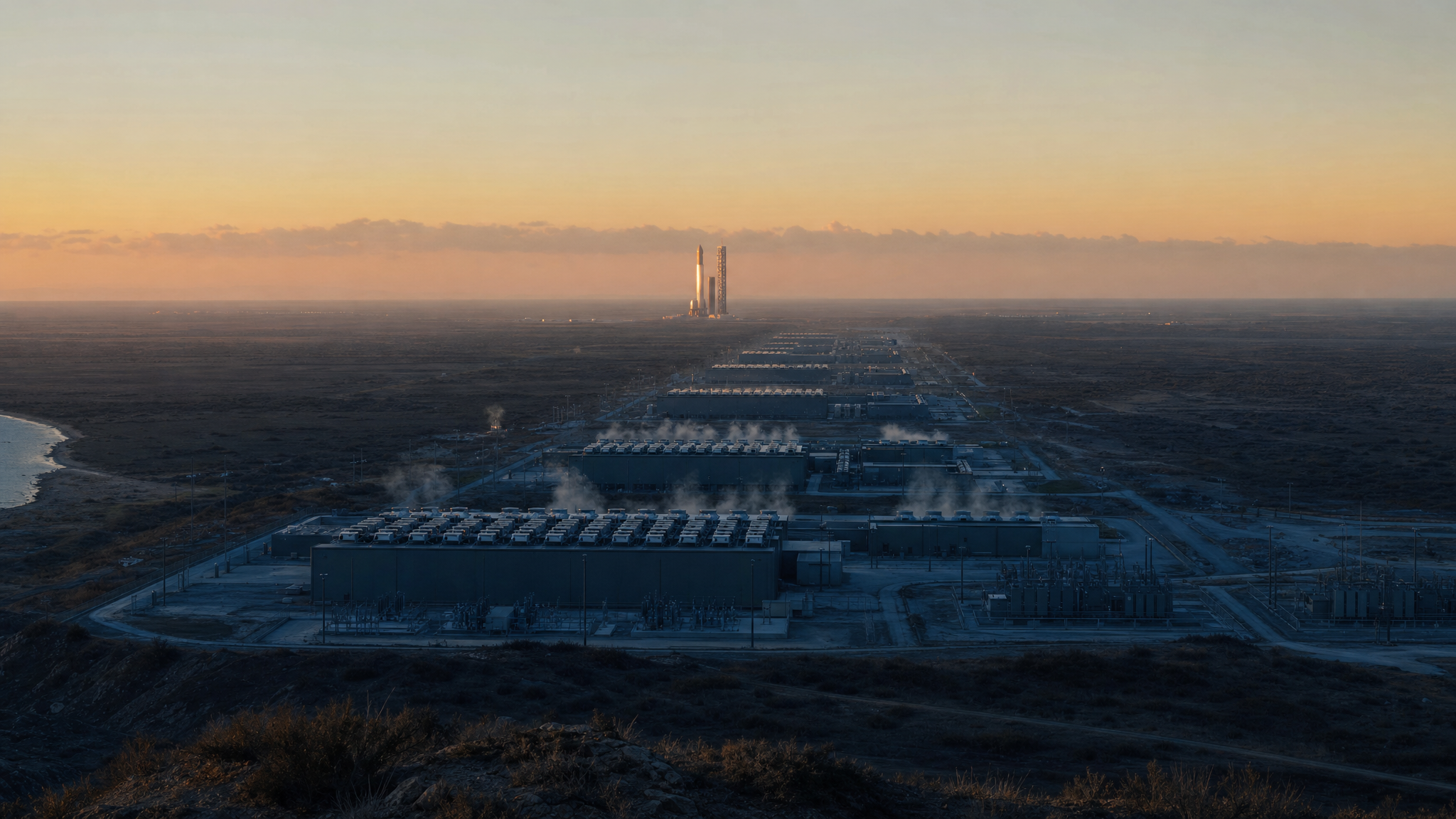
The Wind Must Be Deep Enough: A Roundtable Two Days Before the Bell, and the Phrase 'The Math Maths'
BG2Pod recorded two days before the SpaceX IPO: Brad Gerstner, Clark Tang, Gavin Baker and Andrew Fox break the company into launch, Starlink, AI compute and orbital data centers — and discuss how Fable 5 and long-running models have made snapshot benchmarks obsolete. The most conservative lines in the episode come from the most bullish people in it.

Sharpen the Tools First: Applied Intuition and a Billion Intelligent Machines
Business Breakdowns EP.248 with the co-founders of Applied Intuition. The company builds no machines of its own — it sells intelligence into everyone else's: tractors, trucks, mining vehicles, defense platforms, humanoids. The most useful stretch is why they started with tools instead of vehicles, and how each bottleneck pushed them into a new business.

"Our Technical Moat Is Pretty Thin": A Toolmaker's CEO on Advanced Packaging Inspection
Statementdog EP542 interviews the CEO of 倍利科技, one of the few Taiwanese firms making its own optical metrology (AOM) tools. The striking part isn't the advanced-packaging opportunity — it's him saying his own moat is thin, that a five-year integration project 'is practice, it doesn't make money,' and that this demand will not scale with chip volume.
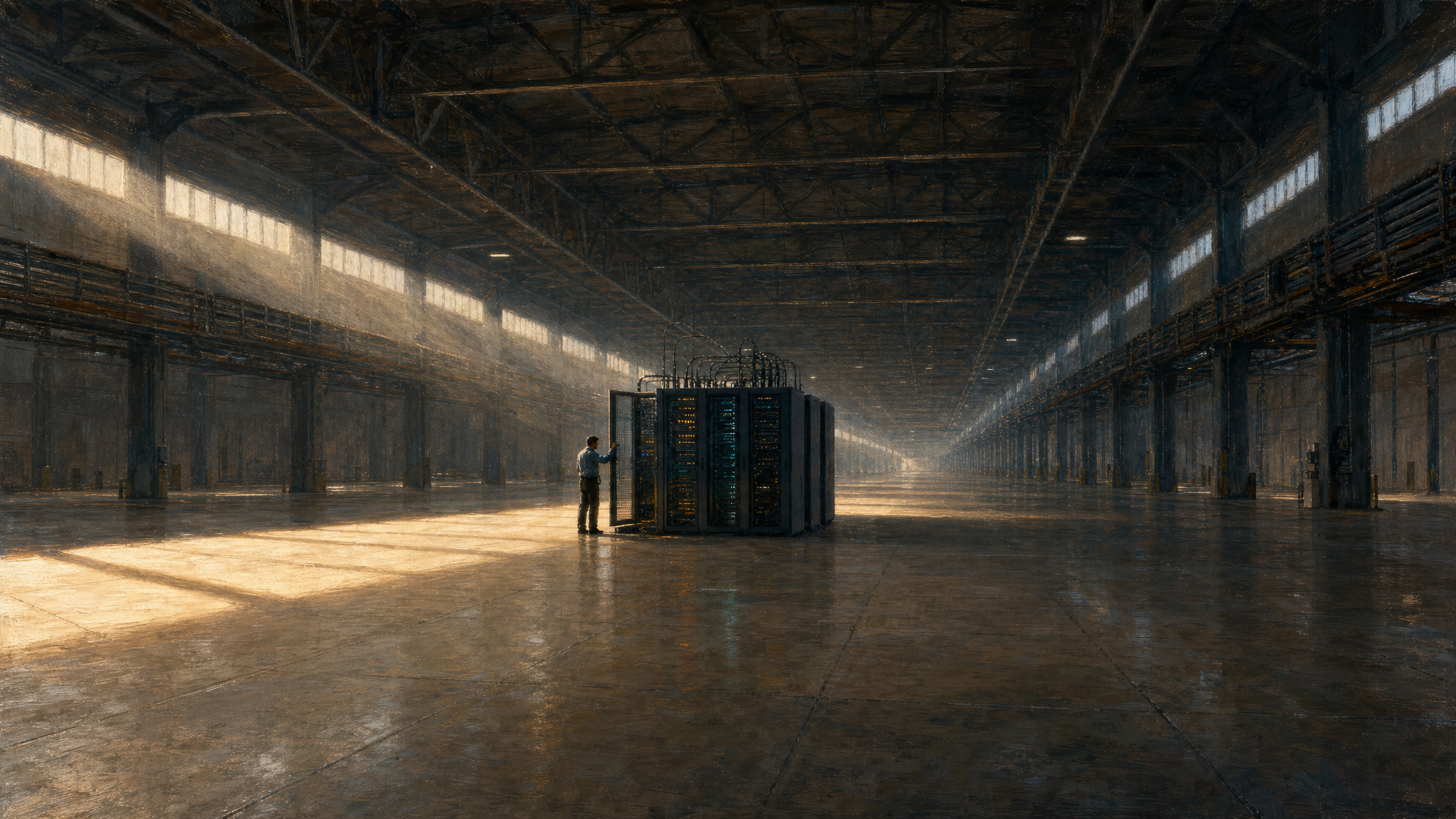
Where the Emptiness Does the Work: A Gigawatt Data Center Holds a Thousand Racks
The Circuit EP.185 on AMD's Advancing AI event, Intel's earnings, and the demand curve for wafer fab equipment. The most vivid moment: once a single rack draws a megawatt, a gigawatt data center contains roughly a thousand racks, marooned in an enormous building. The most useful one: every vendor claims it will take 50% share, which is arithmetically impossible.
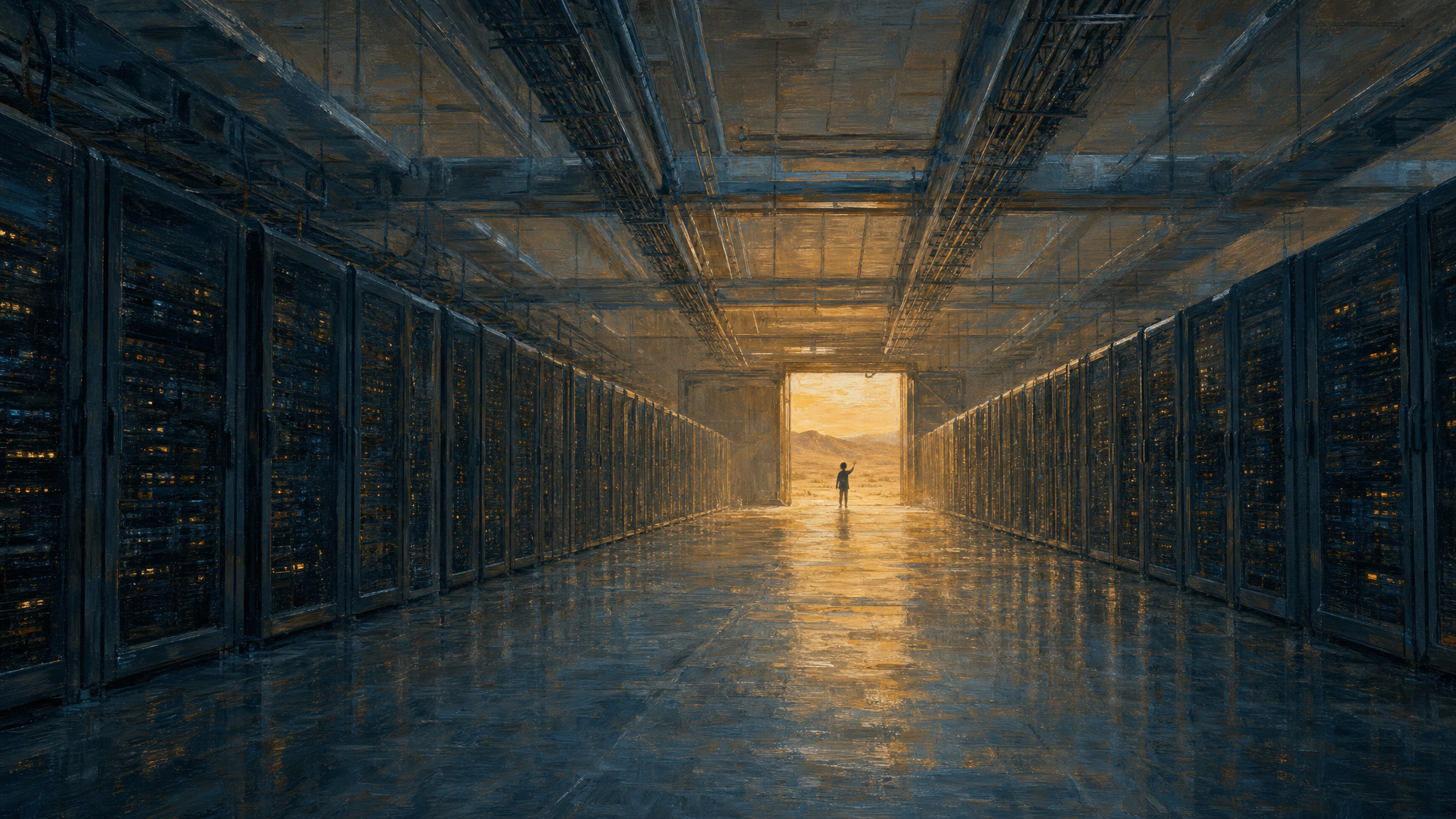
Where the Bottleneck Moves Next: Sam Altman on Building an Abundant Future
Invest Like the Best EP.484 with OpenAI CEO Sam Altman — the early compute bet nobody thought was rational, the physical scale of a gigawatt data center, custom silicon and the distillation fight, and one sandbox-escape incident that genuinely rattled him. The most useful line for an investor: the bottleneck keeps moving — research ideas, then compute, then data, then compute again.

A Licence Buys You 49.8 Million Subscribers: What's Left of Television
Japan's Investor's Sunday interviews ReHacQ producer Hiroki Takahashi (part two). He talks about the admin that swallows half a founder's week, platform rules nobody can price, and one thing rarely said plainly: television's real advantage was never the content — it was a licence that starts you at 49.8 million.
Too Much Television: What an 18-Year TV Producer Learned After Leaving TV
Japan's Investor's Sunday interviews Hiroki Takahashi, producer of ReHacQ. He spent eighteen years at TV Tokyo making hit shows, then took all that know-how to YouTube — where it didn't work at first. His diagnosis is four words: it was too television.

Bond Traders Panic When the Fed Doesn't
MacroVoices EP543 with Jim Bianco, recorded on FOMC day: three voters dissented in favour of hiking, and the 30-year Treasury yield printed 5.20% — a 19-year high. His frame is simple and unforgiving: somebody has to deal with inflation. Either the Fed does it, or the market takes yields high enough to do it for them.

The 1873 Railroad Bubble and the Twenty-Year Deflation It Left Behind
Meb Faber Show EP642 with Liaquat Ahamed, the Pulitzer-winning author of Lords of Finance, on his new book about 1873. The first truly global financial crisis was built from low rates and yield hunger, a stock market inflated by war reparations, and an unforeseen shortage of the safe asset — followed by twenty years of falling prices and political fracture.