What Francis Fukuyama Sees After 'The End of History': Why Well-Fed People Are Still Restless
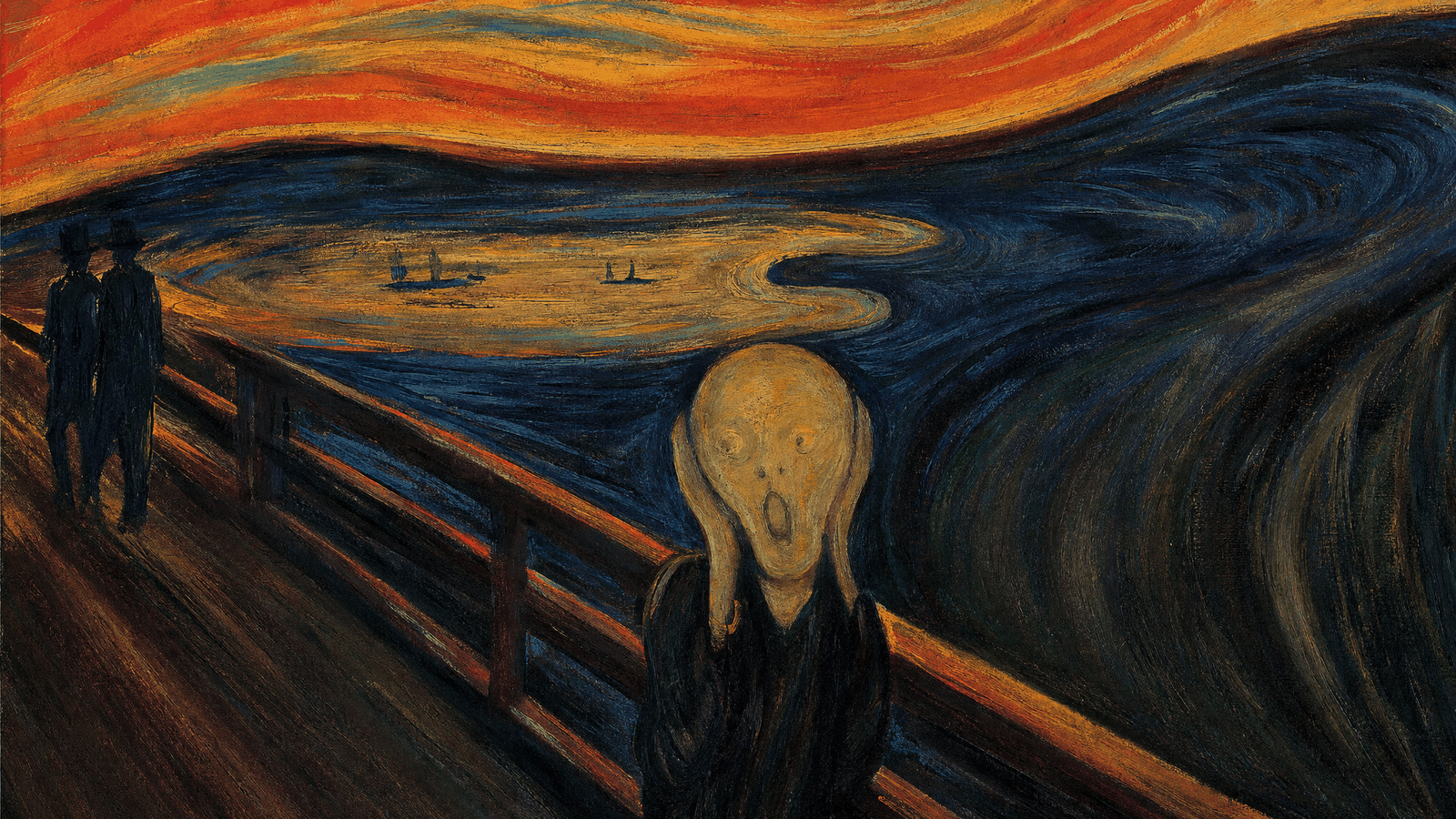
My takeaways from Bloomberg Odd Lots' 2026-09-17 interview with Francis Fukuyama. It covers the last man, the desire for recognition, AI and the dignity of work, and Tocqueville's reform paradox, plus how I use these ideas to read market sentiment and political noise. Educational only. Not investment advice, and no stock recommendations.
Contents
- What this episode is about
- Key points
- 1. “End” means destination, and the second half of the title matters more
- 2. People who never lived under dictatorship treat freedom like air
- 3. Liberalism was built to make you tolerate people you dislike
- 4. What billionaires lack is recognition
- 5. Social media makes extremism a growth strategy
- 6. AI’s biggest danger is handing over decisions; its deepest cost is the dignity of work
- 7. Regimes are most at risk when things are improving
- Further thoughts
- The data says the economy is improving, so why is everyone around me angrier?
- The earnings were great, so why did the stock fall?
- After handing work to AI, what’s still mine?
- Further reading
- One thing to take with you
“What is love? What is creation? What is longing? What is a star?” — thus asks the last man, and he blinks.
— Friedrich Nietzsche, Thus Spoke Zarathustra, Prologue (1883)
What this episode is about
On September 17, 2026, Bloomberg’s Odd Lots sat down with Stanford professor Francis Fukuyama to talk about his new book, In the Realm of the Last Man. Hosts Tracy Alloway and Joe Weisenthal both studied international relations, and The End of History and the Last Man was on their syllabus. Joe shared a detail I liked. Around 1993, his US history class taught the Cold War as if it were as far back as World War I, even though the Berlin Wall had fallen only a few years before.
The conversation starts with the state election in Saxony-Anhalt, where the far-right Alternative für Deutschland won a majority. The hosts’ question is simple: is liberal democracy just going through a rough patch, or do people no longer want it?
Key points
1. “End” means destination, and the second half of the title matters more
“The end of history” is Hegel’s phrase. He meant History with a capital H, close to what we now call modernization, and “end” in the sense of a goal or resting point. For about 150 years, Marxists said that endpoint would be communism. By the late 1980s, Fukuyama judged that communism would never make it, so the endpoint would be market economies plus representative democracy. Most readers skip the second half of the title, “the last man.” Nietzsche hated this endpoint. His last man is fed, clothed, and content, like a cow grazing in a field. Tracy cut in: “Cows seem pretty happy.” Fukuyama answered that humans have a pride that peace and contentment can’t satisfy.

2. People who never lived under dictatorship treat freedom like air
Fukuyama says he didn’t expect generational change to matter so much. For his generation, the defining event was the fall of the Berlin Wall, and Eastern Europeans’ joy at escaping surveillance and prison was tangible. The two or three generations since then never lived under communism. To them, peace and prosperity look like they were always there, so some people call the EU “the biggest dictatorship in the world” without ever having seen a real one. He cites Freedom House: aggregate freedom worldwide has been declining since around 2008, roughly twenty years now. Twenty years ago his Chinese students all said they wanted China to become like the United States. None of them say that now.

3. Liberalism was built to make you tolerate people you dislike
Liberalism emerged after the European wars of religion in the 17th century, when Christians were killing each other over transubstantiation and infant baptism. The early liberals proposed a deal: we disagree about the highest things, so let’s tolerate each other and live in peace. The price is a weaker sense of community. You have to put up with people you strongly disagree with, and you lose the feeling that everyone is marching in the same direction, which drives many people crazy. Nationalism and religious politics grow out of that gap. The two world wars, and Putin’s belief that Russia must include Ukraine and Belarus, are what happens when strong group identities try to dominate their neighbors.

4. What billionaires lack is recognition
Fukuyama uses the Greek word megalothymia: the desire to be recognized as superior to others. All excellence comes from it, since becoming a great pianist or a great striker requires it. It can also push people toward tyranny. In his 1992 book he used Donald Trump as an example of how capitalist democracy lets that drive drain off into making money. He later found that for Trump, getting rich wasn’t enough; he wanted political glory too. Joe’s observation fit well. Rereading the book, he kept thinking of billionaires who have everything but can’t stand not being listened to or respected, and who still have less influence than a typical newspaper columnist.
5. Social media makes extremism a growth strategy
Old media had editors who asked, “Do you have a second source?” No second source meant no story. Online, anyone can say anything, and it gets amplified. Fukuyama describes the cycle: say something reasonable and nobody notices; insult someone or say something ridiculous and your follower count jumps; then you have to top it next time. For him, the biggest danger to democracy is that people can no longer agree on basic facts.

6. AI’s biggest danger is handing over decisions; its deepest cost is the dignity of work
Fukuyama’s worry is agentic AI: people delegating decisions to machines that even their builders can’t fully explain. Interestingly, he uses Claude Code a lot. It migrated the big databases he runs on his home servers to a new system, and he adds that being a programmer helps because you can fix its mistakes. He is skeptical of the future Keynes imagined, with 10 to 20 hours of work a week and the rest spent on hobbies. A large part of human dignity, he says, comes from someone being willing to pay you for what you do. A world where everyone sells trinkets on Etsy or plays video games all day doesn’t give people pride or a sense of accomplishment.
7. Regimes are most at risk when things are improving
Fukuyama tells the story of being summoned to meet Wang Qishan, China’s former vice president. Wang had read his book, and he did most of the talking for an hour. Wang had introduced Tocqueville’s The Old Regime and the Revolution to China. Tocqueville argued that the French Revolution came a generation after France started reforming: the economy and politics were getting better, but expectations rose faster than the regime could meet them. Wang’s lesson was that China must not open up the way Gorbachev did, or things would spiral out of control. Fukuyama’s comment: they followed that advice, and “we have Alexis de Tocqueville to thank for the fact that they’re still in power.” He contrasts Wang with Muammar Gaddafi, who also invited him over, to Libya. Gaddafi’s head was full of conspiracy theories, and he believed he had invented a third way beyond communism and capitalism.

Further thoughts
The data says the economy is improving, so why is everyone around me angrier?
I get stuck on this one a lot. Unemployment is low and real wages are rising, yet the comment sections are full of anger. Should I trust the numbers or the mood?
Near the end of the episode, Tracy offered a useful way to break it down. Liberalism’s promise rests on absolute gains: as long as everyone is moving forward, people should be satisfied. But people measure on a relative scale. A viral “modern abundance” graphic listed things everyone now owns, like washing machines, toasters, and TVs, all things people in the 1850s could only dream of. Joe added that the graphic left out phones and six hours a day of scrolling reels, because everyone knows those don’t satisfy. As Tracy put it, you’re doing fine, but you’re looking at a photo of someone on a yacht.

I break it into three layers:
- Layer one: The numbers measure absolute levels, while discontent comes from comparison and expectation. Both can be true at once, so you don’t have to pick one.
- Layer two: The comparison group has changed. People used to compare themselves with their neighbors. Now they compare themselves with the top one percent the algorithm shows them, and algorithms reward extremes, so the online mood keeps running hotter than the actual economy.
- Layer three: Mood turns into policy. Fukuyama’s example is China doubling down on export-led growth, which is hollowing out other countries’ manufacturing. Europe could lose its auto industry, and the backlash follows.
For markets, I sort political news into noise and structure. One local election is noise. Twenty straight years of decline in Freedom House scores, or left-wing parties’ base shifting from workers to educated professionals, are decade-long shifts, and those are structure. Structure gradually rewrites tariffs, industrial policy, and regulation, and eventually shows up in company costs and valuations. My habit is to ask which kind a loud headline belongs to, then look at three to five years of data for the direction. I don’t act on a single day’s headline.

Fukuyama’s prescription connects here. Liberals won’t beat populism just by complaining about it; they need a positive program and the ability to build things. California set aside money for high-speed rail in the mid-1990s and has about ten miles of track in a sparsely populated part of the Central Valley. He says he’d just like to get from LA to San Francisco in three hours. Whether people feel “this system works for me” depends on whether promises are kept in a reasonable amount of time.
The earnings were great, so why did the stock fall?
After hearing the Tocqueville story in point 7, I kept thinking about the stock market.
Here’s how the mechanism carries over. A stock price reflects expectations, while an earnings report delivers results. Thirty percent revenue growth is good news, but if the market was pricing in fifty percent, the report opens a gap. This is my own extension; the episode doesn’t talk about stocks.

Here’s how I’d turn it into something to use next time:
- Before looking at results, figure out what the market expects. I use a reverse DCF to ask, “How many years of how much growth does this price assume?” That tells me more than headlines do.
- Expectations tend to climb fastest just as things start getting better, which is the dangerous moment Tocqueville described.
- Write down what would prove the worry wrong: if results keep matching or beating expectations for several quarters, the gap closes and the concern no longer applies.
Tocqueville used this mechanism to explain a revolution. Wang Qishan used it to decide his country shouldn’t open up. I use it to keep headlines from pushing me around on earnings day.
After handing work to AI, what’s still mine?
This one is personal. Every day I hand sorting, data pulling, and coding work to AI agents, and it saves a lot of time.
The episode gave me two reminders. The first is about authority. Fukuyama’s fear is people giving up decision-making to something even its designers can’t fully explain. He lets Claude Code do the work, and because he can program, he catches its mistakes. I draw a similar line for myself. Moving things around can be handed off. Judgment and final sign-off stay with me, and sign-off means checking the actual output. The agent reporting “done” doesn’t count.
The second is about dignity. Fukuyama says that if AI replaces the kind of work that gives ordinary people dignity, they will either stay lonely and unhappy or rebel, bringing political turmoil. His example is Stanford students who camped in tents for six months after October 7. It’s hard to picture a more privileged group than Stanford undergrads. Fukuyama thinks what they were missing was the chance to struggle and sacrifice for a cause larger than themselves; the struggle to get into Stanford had only been for their own sake.
I won’t claim to know exactly what this means for investing. What I can say is that pitch decks about AI replacing labor usually treat human reaction as a fixed input. Fukuyama is a reminder that it’s a variable, and one that can rewrite the rules.
Further reading
- Bloomberg Odd Lots, “What Francis Fukuyama Is Seeing at ‘The End of History’” (2026-09-17)
- Francis Fukuyama, The End of History and the Last Man (1992)
- Francis Fukuyama, In the Realm of the Last Man
- Alexis de Tocqueville, The Old Regime and the Revolution (1856)
- Friedrich Nietzsche, Thus Spoke Zarathustra (1883)
- John Maynard Keynes, “Economic Possibilities for Our Grandchildren” (1930)
- Freedom House, Freedom in the World reports
One thing to take with you
Whether people feel satisfied depends on who they compare themselves with and what they expected. Progress statistics can’t outweigh comparison.
Fukuyama uses this idea to explain populism, and Tocqueville used it to explain revolution. It also runs through our everyday moods.
Here’s something I’ve tried. Pick one thing that’s been bothering you lately and write two lines on a sheet of paper. First line: “Compared with three years ago, is this better or worse?” Second line: “Who, or what expectation, am I comparing it against?” Put the two lines side by side and ask yourself whether you still want to keep the comparison you wrote on the second line.
This article is an educational discussion of investment method. It is not advice to buy or sell any individual security, offers no target prices, and does not analyze any current holding. Investing carries risk; make your own decisions or consult a qualified professional.