A Few Hundred Men, Two Empires: The Episode That Moved My Answer From Weapons to Diplomacy
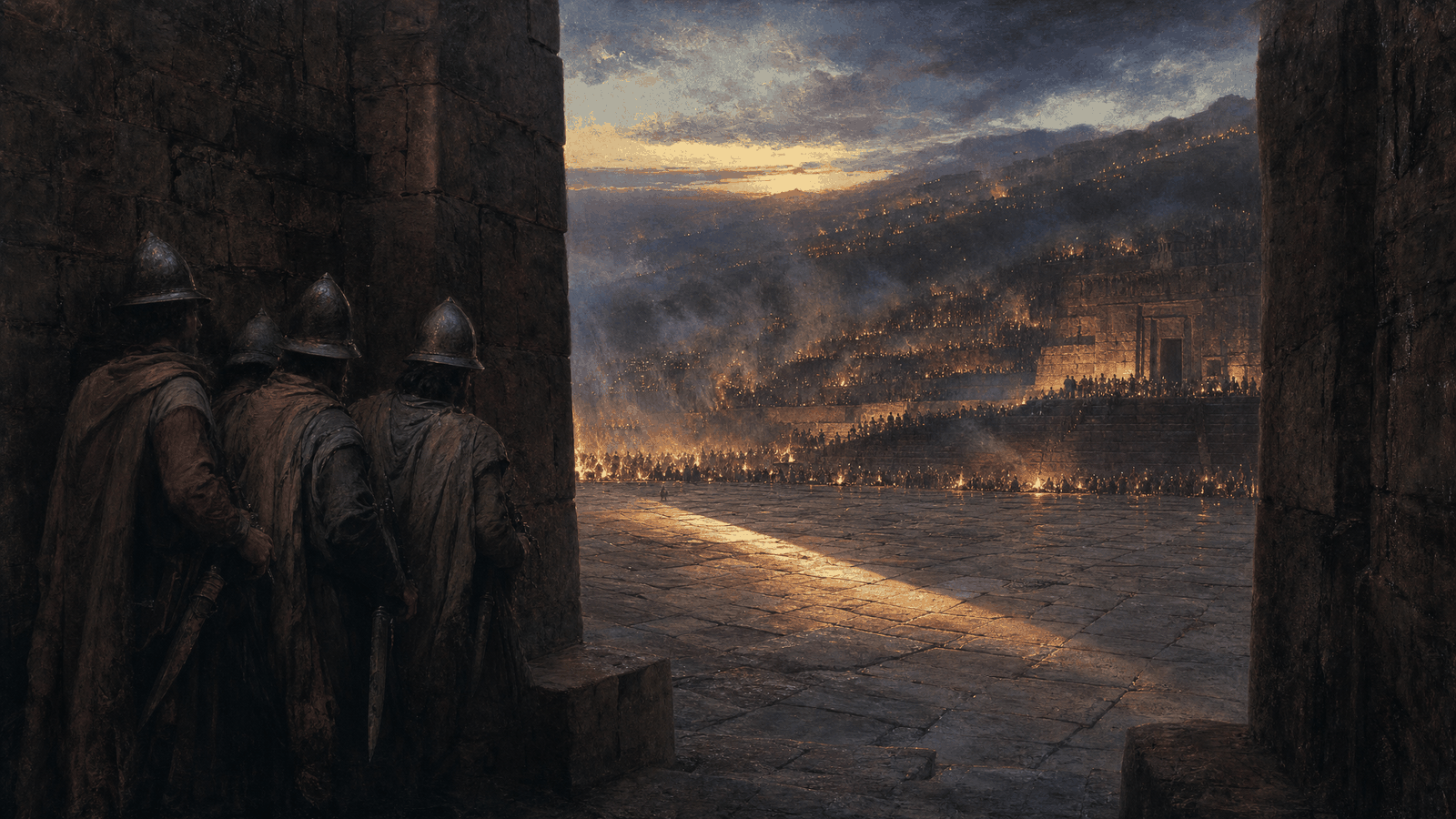
Dwarkesh Podcast, 1 October 2026, with military historian Si Sheppard on how the Spanish toppled the Aztec and Inca empires. Listening notes on single points of failure, consent versus coercion, and the resource curse. Educational, not investment advice.
Contents
The tyrant has myriads of men, but their hearts and minds are divided; I have ten able ministers, and our hearts and minds are one.
—— Book of Documents, “Great Declaration” II (pre-Qin; translated by the author)
King Zhou of Shang commanded multitudes whose loyalties pointed in every direction. King Wu of Zhou had ten men pointing the same way. Three thousand years ago people already knew that the headcount column and the fighting-strength column are two different columns.
On 1 October 2026, Dwarkesh Podcast hosted military historian Si Sheppard on how the Spanish took the Aztec and Inca empires in a handful of years. At Cajamarca in 1532, 168 Spaniards killed thousands of Inca soldiers — some accounts say close to ten thousand — and suffered zero deaths; the only wound was Pizarro’s hand, cut by an over-eager comrade as he grabbed the emperor. Eleven years earlier, in the final assault on Tenochtitlan, Spaniards made up roughly 0.5% of the army; the rest were Mesoamerican peoples. Sheppard’s judgment: horses and steel decided individual battles, diplomacy decided the war — and the diplomacy worked because the lower layers of those empires already wanted out.
The Technology Gap Was My Answer for a Long Time
My version of this story used to be short. Europeans arrived with guns, steel, horses and smallpox, met a world still cutting with obsidian, and the outcome needed no further explanation. A few hundred men swallowing empires of millions sounds like science fiction, and “technology gap” is the kind of answer that lets you stop thinking.
What I never asked was how big that gap actually was. Sheppard takes it apart piece by piece. Firearms of that era reloaded so slowly that once the shock value wore off, native warriors stopped fearing them. Armor is better still: deeper into the campaigns, the conquistadors found steel hot and heavy and switched to local cotton armor, keeping only their helmets. They discarded part of the gap themselves, because cotton stopped local weapons well enough.
Strip it down and two things remain. Toledo steel blades could thrust, while the opposing weapons were made for slashing, which opens your flank. And horses — with no American equivalent, not even a beast of burden; the Aztecs’ domestic animals were the turkey and the Chihuahua. Both real advantages. Enough to swallow two empires? I could not answer that, and that was the hole in my old version.

Almost All the Soldiers Were Sent by the Conquered
The number that balances the ledger: in the army that marched on Tenochtitlan, the Spaniards were about 0.5%.

Those allies were not press-ganged labor. The Tlaxcalans fought Cortés to a standstill first, then switched sides, because the Aztecs had encircled them for decades and cut them off from salt. It was a Hail Mary. Sheppard mentions a detail I love: go to Tlaxcala today and the murals in the governor’s mansion paint Cortés and the Tlaxcalans at the same scale, two equals negotiating. What they wanted was territory carved out of the Aztecs and their own fortress inside Tenochtitlan. In their own account, they were using these few hundred outsiders.
The empires failed because they were bonded too tightly. The Aztec huey tlatoani and the Inca Sapa Inca were the single point where all loyalty converged; take that man and you can run the machine through a puppet. Here Sheppard overturns something I had absorbed: historians have spent centuries blaming Moctezuma II for letting Cortés into the city, and Sheppard thinks letting him in was the better call — an unpredictable element roaming the provinces talking to subject peoples was worse. The real error came next, when the emperor stayed in his own palace in that same city. Had he invented a pilgrimage or an inspection tour and ruled through subordinates, Cortés would have had nothing to seize.
Did they adapt? Yes. The Aztecs drew the Spanish into a lake city of causeways, poor ground for cavalry; they broke the dikes and flooded Iztapalapa, where steel armor dragged men to the bottom. The Inca burst the river at Ollantaytambo and bogged the horses down. Neither people knew the other existed, and both discovered that water stops cavalry. They lashed captured Spanish swords to long poles and reinvented pike tactics. The Inca used bird-hunting bolas on horses’ legs. One Aztec warrior let a lance run through his body, then gripped it to pin the rider in place so his comrades could pull the man from the saddle. Manco Inca learned to ride a horse himself, to show his people it could be done.
The learning curve existed. The time did not. Two and a half years for the Aztecs, about five for the Inca, with smallpox, a civil war and the collapse of the whole social order running underneath.

On the other side, time accumulated. Cortés brought the lessons of Hispaniola to the mainland; Pizarro met Cortés, took the whole playbook, and sailed south with it — go for the man at the top, build a coastal base you can retreat to. The Inca may not have known the Aztecs existed at all. That broken link between the continents had another cost: to the west, the Tarascans had somehow connected with South America and could smelt copper, and their copper-tipped arrows wrecked an invading Aztec army. The Aztecs had no such link, so no llamas and no bronze — able to smelt the gold and silver that attracted greed, unable to smelt the iron that would have held it off.
The part that landed hardest: the Spanish were fighting each other throughout. Cuba’s governor sent a force larger than Cortés’s original expedition to arrest him; Cortés beat it and then told the survivors, friends, why are we fighting, the empire is in my hands, join me and share it — and the arresting party became reinforcements. On Pizarro’s side, his deputy Almagro laid siege to Cuzco after Manco Inca had already laid siege to Cuzco. Sheppard’s explanation: those were personal rivalries inside one world, and an existential threat would have closed them up. The hostility between the Inca and the Aztecs ran between whole societies. Cuitláhuac sent envoys to Tlaxcala proposing a native alliance against the outsiders; the younger generation considered it and the old men in power refused. Decades of war sat in the way. This is your problem.
Cortés told Moctezuma’s envoys that he and his men suffered from a disease of the heart that only gold could cure. They sent him feathered headdresses, jade and obsidian, objects of the highest regard in the Aztec world; he wore the headdress, shipped it to his king, and kept his eyes on the small gold trinkets. Local accounts say the Spaniards chattered like monkeys while picking the gold up.
Now, Facing Anything That Looks Huge, I Ask What Holds It Together
Your holding leads its industry, the contracts are long, the market-share chart looks clean — and something still nags at you. That nagging deserves a hearing. The empire on the map and the empire on the ground are two different things. The Aztec realm looked formidable from a distance; up close it was a small group of Nahuatl speakers pressing down on many peoples who spoke something else. Of ten million people in the Inca empire, actual Incas numbered perhaps a hundred thousand. They were the conquistadors of their own world.

So I add a question: is this structure held by consent or by pressure. On the investing side that turns into specifics. Who pays for this company’s profit, and is that payer shopping for a substitute? At the critical layer, is it squeezing someone or being squeezed? Is resentment downstream accumulating toward the point where somebody opens the door for an outsider? The prince of Texcoco who lost the succession went over to the Spanish the moment they appeared; he wanted what he thought was already his. Every system contains that person.
The second habit I changed is hunting for single points. Loyalty converging on one man was the fatal flaw for both empires. The Comanche and the Maya were dispersed, and the Spanish had to grind them down city by city into the late seventeenth century. So I ask of whatever I hold: pull which one piece, and the whole thing stops. A founder, a customer worth 40% of revenue, one contract manufacturer, a process with no backup. Whatever cannot be pulled is where your real risk sits, regardless of how much revenue it reports.
The third is easy money. The back half of the episode covers what the silver did to Spain: Potosí poured liquidity into Europe, prices rose, and Spanish real wages fell during the period. With the tap always open, Spain never grew capital markets or independent banking, while the Netherlands and England — who had nothing — were forced to. Sheppard runs the American North and South through the same model: the South could put capital into slaves and cash crops and get paid, the North could not, so money went into trade, banking and industrialization, and when the rupture came in the 1860s the advantages sat with the North. For companies, the inference this episode supports is that an organization living off one lucrative source stops growing other capabilities, and it does not set the price of that source. When I look at where a company’s cash comes from, I also look at what it therefore never had to learn.

The uncertainty is worth stating. All of this is counterfactual and untestable. And Sheppard himself puts disease on the slowest, deepest wheel: even if the Aztecs and Inca had won the near-term battles, demographic collapse would have made their societies impossible to hold together. If that holds, decapitation and diplomacy were accelerants, and I cannot separate their shares. He offers a longer fork too: had the Norse established a lasting foothold in North America five hundred years earlier, drip-feeding iron, draft animals and European disease into the continent, the conquistadors of 1519 would have met people who worked iron, rode horses and carried some immunity to smallpox. Then all bets are off.
Further Reading
- Dwarkesh Podcast, 1 October 2026, with Si Sheppard, on the Spanish conquest of the Aztec and Inca empires
- Jared Diamond, Guns, Germs, and Steel — the episode’s starting point, then revises the weight of “guns” item by item
- The firsthand account of Bernal Díaz del Castillo, who rode with Cortés
- The murals in the governor’s mansion at Tlaxcala, this history seen from the allies’ side
The One Thing to Take Away
One line: before trusting anything that looks unified, ask what holds it together — consent or pressure. A structure held by pressure looks identical to one held by consent while the wind is behind it, and the difference only shows on the day someone knocks at the door, which is the day you no longer have time to re-bond it.

Here is something I have tried, and it needs no investing at all. Pick one thing you assume is solid — a process you own, a team you lead, the arrangement at home everybody defaults to. List three people or links nominally on your side, and write one sentence under each: what they get from the status quo. The ones you can answer, you probably read correctly. The one you cannot answer, or where the best you manage is “they’ve always been like this,” is the one that flips next year.
This article is an educational discussion of investment method. It is not advice to buy or sell any individual security, offers no target prices, and does not analyze any current holding. Investing carries risk; make your own decisions or consult a qualified professional.