You Can Lock the Shelf, Not the Whole Truck: Odd Lots on Organized Retail Crime
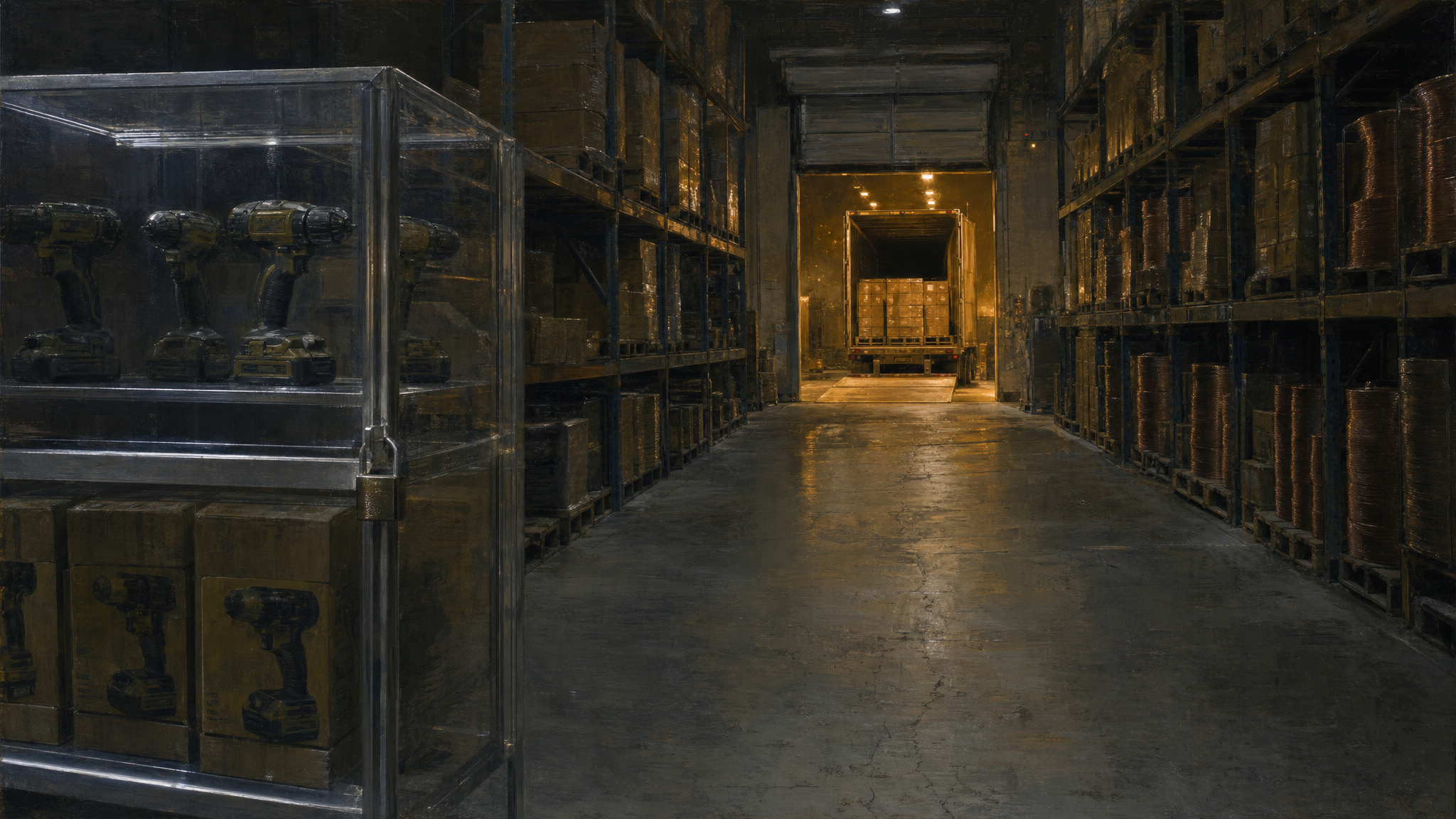
Notes on Bloomberg Odd Lots' interview with Home Depot's VP of asset protection: how shrink breaks down, why products get locked up, and where stolen goods end up. Educational commentary, not investment advice.
Contents
- What this episode is about
- Key takeaways
- Further thoughts
- 1. When a company reports rising shrink, is it theft, or is the company losing track of its own inventory?
- 2. Doesn’t locking products up just drive customers away?
- 3. If someone online sells below the store’s own cost, should you grab the deal?
- References
- One thing to take with you
To guard against thieves who pry open trunks, rifle bags, and break into chests, people tie them with cords and fasten them with locks and bolts. The world calls this wisdom. But when a great thief comes, he shoulders the chest, lifts the trunk, slings the bag, and runs off, worried only that the cords and locks aren’t tight enough.
— Zhuangzi, “Rifling Trunks” (Warring States period; my translation)
What this episode is about
This Bloomberg Odd Lots episode from September 10, 2026 started with an offhand remark. In an earlier interview with someone from the truck-parking business, Tracy Alloway heard that cargo theft today isn’t mostly people pulling boxes off the back of a truck. It’s people posing as a carrier and driving off with the entire load. After that, she kept seeing similar headlines, including a Bloomberg story about thieves taking roughly $200 million a year from rail cars.
The guest is Scott Glenn, vice president of asset protection at The Home Depot. He wore the orange apron on air because it was Home Depot’s earnings day. His path into the job was roundabout. He wanted to be an architect until he realized he wasn’t good at math. He went to law school and then worked at the Bureau of Alcohol, Tobacco and Firearms, only to find he didn’t like government work. During school he’d spent summers catching shoplifters at Target, and that became his way back into retail. He spent ten years each at Kohl’s and Sears (at Sears as chief security officer) before joining Home Depot in 2018.
The Zhuangzi passage fits the episode well: the tighter a store locks its boxes, the easier it is for a big thief to carry off box, lock, and all. The conversation starts with a lock on a shelf and ends up at ports, railyards, and online marketplaces.
Key takeaways
1. The most-stolen list looks different by count than by value. By count, power drills top the list. By value, copper and wire lead, because copper tracks commodity prices, and when the price rises, copper becomes worth more to thieves. Between closing on his house and moving in, someone stripped the copper out of Glenn’s HVAC units. Tracy added that a colonial-era house museum near her in Connecticut recently lost a batch of copper pipe.

2. “Shrink” is just a gap, and it doesn’t mean theft. Shrink is the difference between the inventory on your books and what you find when you count the shelves. Home Depot splits it into “things we do to ourselves” (operational and administrative errors) and “things people do to us” (malicious loss). About 30% of Home Depot’s own shrink falls in the first group. The rough industry split that has circulated for years is about 40% from employees, 35% from outsiders, and the rest from operational error. The problem is that retailers categorize differently, and some keep their books at retail value while others use cost, so comparing one company with another is hard. He puts the total in the tens of billions of dollars and thinks it has been underreported since COVID.

3. In 2018 he didn’t believe organized retail crime was a real problem. Now he does. His reason: the business has become more lucrative, more widespread, and more dangerous. You can’t tell from a single theft whether it’s organized. That takes store staff sitting down with the person they caught. One person stole a drill to fix their own deck. Another came with a list and planned to trade the goods for cash or drugs. That intelligence goes to headquarters in Atlanta, where investigators, most of them former federal agents, piece it together: the same car, the same driver’s license, showing up at four stores. What they hand the police is a case file that’s about 80% done, because departments are stretched thin and a case that needs a lot more work won’t get picked up. A typical case takes about 70 days from discovery to handoff.

4. The technology exists. It just doesn’t pay off yet. Joe Weisenthal asked why tags, cameras everywhere, and a model that flags anyone who walks out without paying wouldn’t solve the problem. Glenn’s answer: “That is a really expensive thought process.” A store covers about 140,000 square feet and has eight entrances. They tried building Bluetooth chips into drills at the factory and couldn’t make it work at scale. RFID tags now cost almost nothing, but the readers are still expensive. One detail I found fascinating: all the steel racking in a hardware store blocks the signal, so passive RFID doesn’t work in their stores at all. They’d need active RFID.

5. Employee safety comes before shrink. Theft rings often recruit homeless or addicted people to do the stealing, and those people are focused only on getting out the door with the goods, so they may turn violent if stopped. Home Depot has had employees injured, and people have been killed, in these incidents. So its 400,000 store associates are trained to stay out of it and back away. In his words, he’ll trade shrink for people’s safety every day of the week. Tracy asked whether some stores let shoplifters keep going until they hit a felony threshold. He said Home Depot doesn’t do that. When they do let someone walk, it’s sometimes because they’ve already tracked that person through 50 stores and want to follow them to where the goods are fenced.
6. The chain runs from the people who steal, to the fence, to online listings, to the bosses at the top. A fence can be someone’s garage, a warehouse, or a flea market. The fence strips off tags and store stickers, then puts the goods up for sale. After the INFORM Consumers Act took effect in 2023 and required big marketplaces to verify their sellers, the stolen goods moved to peer-to-peer platforms the law doesn’t cover, like Facebook Marketplace and Craigslist. The money flows up to whoever runs the operation, which could be five guys in an apartment or a transnational gang.

7. In the supply chain, the methods aren’t new. The volume is. There are three main methods: diverting whole containers at ports or transload sites, breaking into trailers while drivers sleep, and picking up loads with forged bills of lading. AI is making the fake paperwork look more convincing. Rail has become a growing target over the past five or six years. Crowds break into cars parked in railyards, and they hit only the car carrying the firearms or electronics they’re after, which makes him suspect insiders at the shipping companies. Home Depot uses AI mainly to shorten investigations. It upgraded the video systems in more than 2,000 stores to run analytics on the camera itself, flagging people who linger too long in one area or avoid associates, and it runs web crawlers over online marketplaces.

Further thoughts
1. When a company reports rising shrink, is it theft, or is the company losing track of its own inventory?
Retail earnings reports and news stories often say that theft pushed up shrink and hurt margins. I used to accept that explanation right away. Theft stories are everywhere, so it’s easy to believe.
This episode gave me another way to break it down, in three layers. First, shrink is only the gap between what’s on the books and what’s on the shelf. The number itself doesn’t tell you why the goods are missing. Second, Home Depot says about 30% of its own shrink comes from its own errors, and every retailer splits operational, administrative, and malicious loss differently. Compare one company’s shrink rate with another’s and you may be comparing two different things. Third, outside numbers aren’t reliable either. Glenn thinks theft has been underreported since COVID, so police statistics and company statements can both be skewed.

So here’s how I read it now. A trend within one company, under one definition, tells me more than a single number compared across companies. When a company blames shrink on theft, I look for whether it separated out its own operational losses. If it didn’t, I treat the claim as an unverified explanation, not a conclusion. It’s the same habit as checking your past calls against what happened: an explanation can be convenient, but it has to hold up against next quarter’s numbers.
2. Doesn’t locking products up just drive customers away?
You press the button, wait several minutes, and the employee shows up with the wrong key. Tracy said this happened to her recently. My first reaction was the same as hers: people will just start buying online.
Glenn’s answer undercut that intuition. When he arrived in 2018, shrink was heading the wrong way, so his team went through products one by one. For one $799 combination kit, Home Depot was buying 4.2 units for every one it sold. The rest were being stolen. To the finance team, that was a margin mix they couldn’t accept. But the company couldn’t lock up everything either. Half of Home Depot’s revenue comes from pros, and if a contractor’s drill breaks on a job site and they rush to a store that turns out to be out of stock, that sale is gone. So they settled on a curated list of locked items. Customers scan a QR code to call an associate, and on average the case gets opened in about 90 seconds. The next step is letting pro loyalty members unlock cases themselves.

The result: sales of locked items don’t necessarily fall, and in many categories they rise, because the product is finally in stock. Joe admitted that every time he sees everything locked up at the pharmacy, he says he’ll start shopping online, and then he’s back at the pharmacy every week.
What I took from this: everyone complains about the costs they can see, like waiting and pressing a button. Nobody complains about the costs they can’t see, like empty shelves and wasted trips, because no transaction ever happened. So when a company does something that looks customer-hostile, I first ask: if they stopped, where would the loss show up, and would it show up in any report? It’s an everyday version of bottleneck thinking. What’s holding back revenue isn’t always the part people complain about loudest. At the end of the episode, Tracy pointed to a different hidden cost: if an app scan unlocks the case, shopping starts to look like an identity system.
3. If someone online sells below the store’s own cost, should you grab the deal?
Glenn described how his team finds stolen goods online. Home Depot sells a drill kit for $499. A seller called Tommy1234 is selling the same kit new in the box for $200, in volume. His question is simple: how can someone sell new product in bulk for less than my cost? The model narrows it down step by step: sells a lot of drills → sells a lot of new-in-box drills → sells a lot of new-in-box drills below Home Depot’s cost. Many investigations start there and work backward to the stores.
I like this test because you don’t need to know who the seller is, only what the goods cost. When a price is lower than any legitimate channel could offer, the gap needs an explanation. If there isn’t one, the most likely explanation is that the goods didn’t come through a legitimate channel. The same applies to investing: when a stock looks unreasonably cheap, I try to ask who took the missing value before getting excited.

There’s a second layer. Resale prices fall into two tiers. Connected electronics and gift cards resell for 70% to 80% of retail, while deodorant, T-shirts, and Tylenol get 30% to 40%. Joe’s take: efficient markets finding the right price for anything on any platform. Thieves go after goods that are easy to sell. Once the INFORM Act tightened rules on the big platforms, the flow moved to peer-to-peer marketplaces, which Glenn himself called whack-a-mole. My own reading, not something said on the show: the choke point in this chain is the fencing and resale stage, and stolen goods flow toward whichever part is least policed. His reason for being optimistic about the Combating Organized Retail Crime Act fits that picture. A case that starts in one Georgia county and runs into the Carolinas is already interstate crime, yet no federal resources have been dedicated to it. He said the bill has passed the House and been attached to the NDAA, and is waiting on the Senate. Joe closed with a joke: one day there will be robot security guards, and then someone will rob the robot supply chain. Tracy’s reply: maybe the robots will need liability insurance.

References
- Bloomberg Odd Lots, “The Rise of Organized Retail Crime at Big Box Stores,” 2026-09-10
- Bloomberg, “The Great Modern Train Robbery” (rail cargo theft, mentioned on the show)
- INFORM Consumers Act, effective 2023
- Combating Organized Retail Crime Act, legislative status
- Annual shrink surveys from the National Retail Federation (NRF) and the Retail Industry Leaders Association (RILA)
One thing to take with you
You can see the hassle. You can’t see the loss. A rule that annoys you is often blocking a loss you never saw. To judge whether it’s worth it, you have to put both sides on the table, not just the time you spend waiting.

Here’s something I’ve tried. Pick a rule you complain about every day: expense reports that need three signatures, a building gate that makes you swipe twice, or the house rule about putting tools back where they belong. Take a sheet of paper and make two columns. On the left, write how many minutes a week it costs you. On the right, write what would break first if the rule disappeared. If you can’t fill in the right column, ask the person who made the rule what went wrong the first time.
This article is an educational discussion of investment method. It is not advice to buy or sell any individual security, offers no target prices, and does not analyze any current holding. Investing carries risk; make your own decisions or consult a qualified professional.
Comments
Loading comments…