Having the Ore Isn't Having the Metal: What a Podcast on US Critical Minerals Taught Me About Bottlenecks
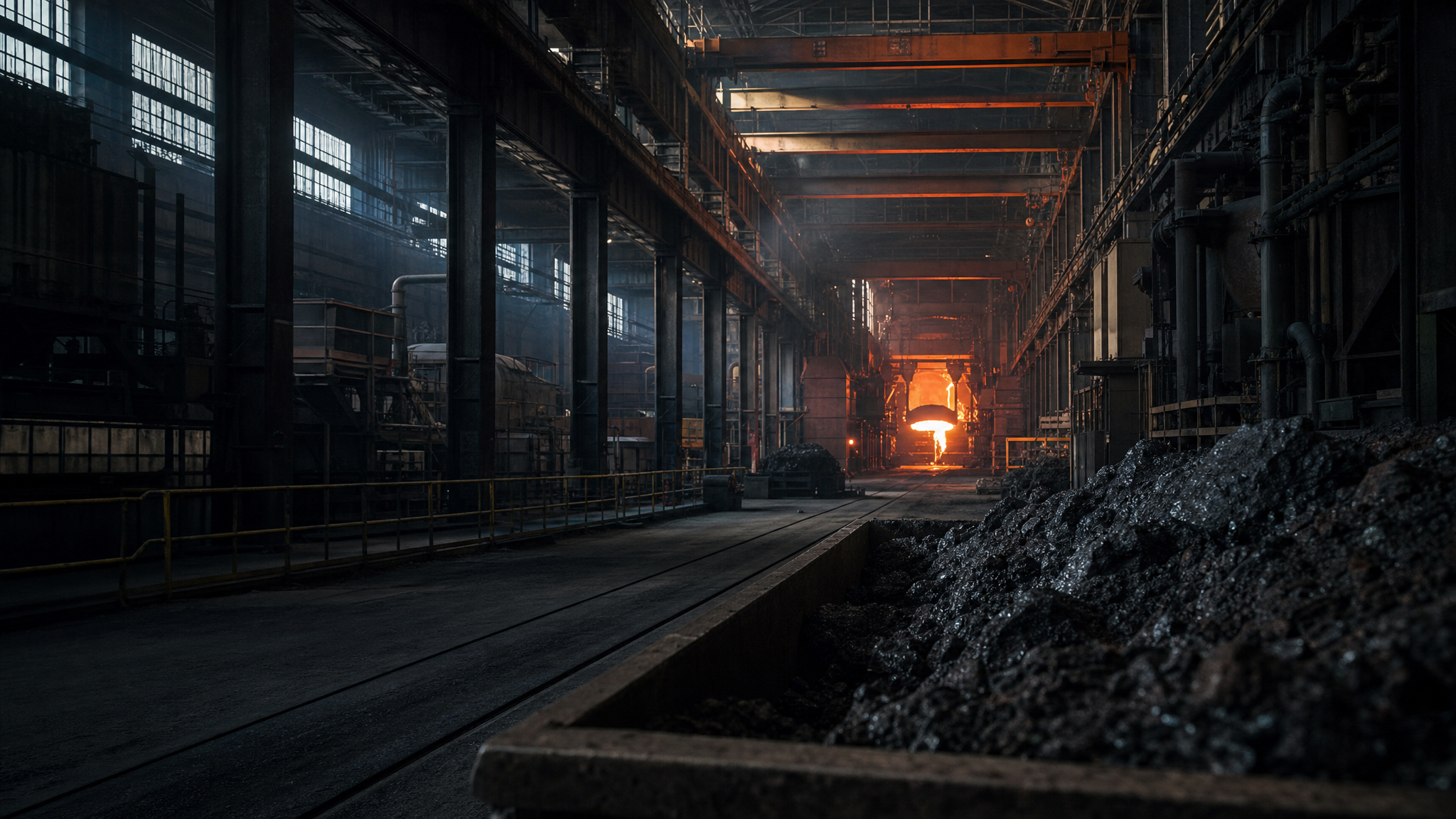
Personal reflections after listening to Columbia Energy Exchange interview US Assistant Secretary of Energy Audrey Robertson. On the gap between having ore and having usable metal, why critical minerals aren't a functioning market, and how to read this kind of policy story. Educational, not investment advice.
Contents
Only when there is a Bo Le does the thousand-league horse appear. Thousand-league horses are common enough; it is the Bo Le who is rare.
— Han Yu, “On Horses” (Tang dynasty, c. 9th century; my own translation)
What This Episode Is About
The September 1, 2026 episode of Columbia Energy Exchange, in which host Jason Bordoff interviews US Assistant Secretary of Energy Audrey Robertson. She runs a newly created office with an almost absurdly wide remit: mining technology, smelting, refining and metallurgy, all the way through to batteries, magnets and recycling — plus solar, hydropower and energy efficiency.
She is not a Washington native. Investment banking, private equity, then co-founding an oil and gas company in the Permian Basin where she served as CFO. The company sold the same week as the inauguration. She jokes that before this opportunity came along she had been to Washington exactly three times, twice on school field trips.
I put this episode on to top up my general knowledge about critical minerals. What actually made me stop was what she said about copper.
The Points Worth Keeping
One: having the ore and having the metal are two different things. The US has plentiful copper resource in the ground, but only three copper smelters. She says China built forty-two in the past decade. Her line was blunt: it doesn’t matter if we have copper in the ground if we can’t turn it into a usable resource. Aluminium is starker still — no new aluminium smelter has been built in the US for forty-six years, and almost all smelting left the country over the past fifty, because it is power-hungry, dirty and hard to run.

Two: the answer is often already sitting in plain sight, it just was never economic. This was my favourite stretch of the whole conversation. The US produces no gallium at all. So her office ran a competitive funding round: companies had twelve months to actually produce a specified quantity. Firms from all over the country came back saying they thought they could pull gallium out of an aluminium smelter here, or out of red mud there. When the round closes, five companies will have figured out how to extract it — all from assets that already exist on American soil. She defines her office’s job as finding exactly those solutions: the ones that are here, may always have been here, but were never economic.

Three: critical minerals are not a functioning market, and this is the premise the whole episode rests on. Oil has Brent, has WTI, prices swing, and it’s a global market. Graphite, copper, aluminium — the entities capable of refining them are mostly state-supported and are not operating for profit. Her account is that over the past twenty years these markets were deliberately pushed below any plausible cost of production, which is why those industries shut down. That, in her telling, is why the government’s intervention looks different this time: equity stakes, loans, grants, whatever fits — with the stated goal that a self-sustaining business exists at the other end.

Four: recycling is “urban mining,” and the honest answer is that nobody knows how far it goes. Her analogy stuck with me: burn a hydrocarbon and it’s gone; use a metal and it’s still above ground. So recycling is a much faster path to having material in the country. But today American black mass still goes back to China, because that’s where the processing capacity is. When Bordoff pressed on how much new mining recycling could displace, she said plainly that she didn’t have a good answer — it depends entirely on what gets recycled. He filled in that published estimates run anywhere from ten percent to forty.

Five: what’s blocking the middle of the chain isn’t only technology — it’s trust. She had been in Inola, Oklahoma the week before, at a town hall for Century Aluminum. Community wariness, she said, is entirely understandable: smelters built fifty or sixty years ago genuinely did harm the places around them. What’s being built today is nothing like that — but there is no finished example anywhere in the country to point at. Oil and gas, she noted, chose to stay and innovate its way cleaner. Smelting simply left. That contrast landed harder for me than any policy argument.

Six: the first thing she did in office was add a column to a spreadsheet. She had the team go back through every dollar already out the door and add a column: what does this investment do for the American people. That column, she says, had not been there. Bordoff’s response was the best line in the episode, and he was careful to say it isn’t a partisan point: we too often measure how much a policy cares about something by dollars spent, not by whether the dollars were spent well.
Seven: her read on solar carries a position, just as her read on oil does. She is genuinely positive about the technology: costs down 98.5% since 1977, work that came out of the Department of Energy’s own lab in Golden, Colorado — which to her means subsidies should now end, and that’s a good outcome. That same solar team has been redirected toward space-based solar. But she also notes that across PJM on a brutally hot DC weekend, solar was five to seven percent of the mix. What she wants is baseload: hydro, nuclear, natural gas, and in her own words “big, beautiful coal.” Small modular nuclear and geothermal are what she’s most excited about. On fusion she was disarmingly candid: “I’m probably not smart enough to deal with the guys who deal in fusion.”
Going Further
”There’s policy tailwind — should I be chasing this supply chain?”
That’s the most immediate impulse after an episode like this. I’ve had it. But the conversation actually hands you a better question to ask.
She circles one idea the whole way through: the resource isn’t the bottleneck, the middle is. Reserves in the ground, who has what under their soil — those numbers make the easiest headlines and generate the most excitement, and they are not where things are stuck. What’s stuck is smelting, refining, turning powder back into usable metal. And that layer has a recognisable signature: few facilities, long build times, nobody wants to live next door, and nobody has built one in decades.
I now use those three traits as a coarse filter. However big the story, I first ask where doubling demand would break first, then ask how many players are in that layer and how long one new facility takes. The examples here are unusually clean — three copper smelters nationally, forty-six years without a new aluminium plant. Numbers like that are harder to dress up than any growth forecast.
Where I have to be honest with myself is that the reasoning stops there. Because she raises the next problem herself: the government is propping this layer up with equity, loans and grants. Which means how much of that layer’s profitability comes from structure and how much from policy is, for now, inseparable. Her stated goal — a sustainable business at the other end — is actually a very good thing to track. Years from now, when the support tapers, are those plants still making money? That’s checkable. It just requires waiting.
”She sounds so confident — how much of it should I believe?”
Somewhere in the back half I started paying attention to something unrelated to minerals: where she says “I don’t know,” and where she says “I’m certain.”
There are several of the former, and she doesn’t hedge them. How much recycling can displace new mining: no good answer. The permitting debate: not somewhere she can offer firsthand insight. Fusion: hasn’t spent the time. For me those raise her credibility rather than lower it — someone willing to draw the edge of their competence on a microphone earns more trust inside that edge.
And the places she is most confident happen to be the places she has the strongest position. She is emphatically bullish on oil and gas, on the grounds that shale rock has given up only about ten percent of its hydrocarbons. She says solar isn’t a meaningful contributor, on the evidence of that weekend’s five to seven percent. Bordoff pushed back gently: in Texas it does contribute. She granted it — solar can absolutely work in some places.
The reading habit I took from this isn’t limited to energy: keep a person’s “I don’t know” and their “I’m certain” in separate piles. The first is usually information. The second is usually a position. That five-to-seven percent is a real number, but it is one weekend on one grid being used to support a national conclusion. That isn’t lying — that’s the sampling everyone does. I do it when I talk, which is exactly why it’s worth practising to see it in others.

“This is a decade-long story and I can’t wait that long”
She said something I think matters most to ordinary investors: we don’t have fifteen to twenty years for a shale-style boom this time.
She meant it about policy, but it points at something else — most structurally compelling stories run on a timescale that doesn’t match anyone’s patience. A smelter goes from town hall to first metal through community consent, permits, construction, commissioning. Every one of those years, the price can be entirely disconnected from the story.
So I now sort this kind of narrative into two piles: things already in motion (plants under construction, signed offtake, volumes actually being delivered) and things still being talked about (plans, intentions, funding announcements). This episode contains both. The five gallium companies have twelve months to physically produce material — that’s the first pile. “Rebuild American smelting capacity” is the second. Two items from one conversation, an order of magnitude apart in time.

The mistake I’ve made is treating the second pile as if it were the first, then running out of patience during the years when nothing visible happens, and leaving before the story actually starts paying. That was my problem, not the story’s.
Worth Reading Alongside
- Columbia Energy Exchange, from the Center on Global Energy Policy at Columbia University — weekly, hosted by Jason Bordoff and Bill Loveless. This episode features Assistant Secretary of Energy Audrey Robertson, September 1, 2026.
- The USGS critical minerals list — the sixty-mineral designation referenced in the episode, publicly available.
- IEA estimates on how much recycling could reduce future mining demand; Bordoff cites the range in the conversation.
- For the baseload-versus-intermittent argument, Lawrence Berkeley National Laboratory’s work on what drives electricity price increases is where the host anchors his own pushback.
One Thing to Take Away
If only one thing survives from this piece, I’d want it to be the column she added.
She didn’t overturn the existing budget, rebuild the evaluation model, or convene a review. She took a spreadsheet that already existed and added one column nobody had ever filled in: what does this do for people. The moment that column exists, a lot of things reveal themselves — because a cell you can’t fill in is itself the answer.
Something I’ve tried, and you could use it somewhere entirely unrelated to investing: find a list you already maintain but have never questioned. Your monthly expenses. Your to-do list. The dozen YouTube channels you follow. The recurring gatherings you always show up to. Add a column titled “what this does for me,” and fill it in from top to bottom.

The first time I did it, the painful part wasn’t the cells I couldn’t fill. It was the ones I could — and realised, as I wrote them, that the reason had expired a long time ago. I cancelled half my subscriptions that weekend.
This article is an educational discussion of investment method. It is not advice to buy or sell any individual security, offers no target prices, and does not analyze any current holding. Investing carries risk; make your own decisions or consult a qualified professional.
Comments
Loading comments…