# Too Much Television: What an 18-Year TV Producer Learned After Leaving TV
> Japan's Investor's Sunday interviews Hiroki Takahashi, producer of ReHacQ. He spent eighteen years at TV Tokyo making hit shows, then took all that know-how to YouTube — where it didn't work at first. His diagnosis is four words: it was too television.
Published: 2026-08-04
Locale: en
Tags: investors-sunday, podcast-notes, media, innovators-dilemma, content-strategy, japanese-media
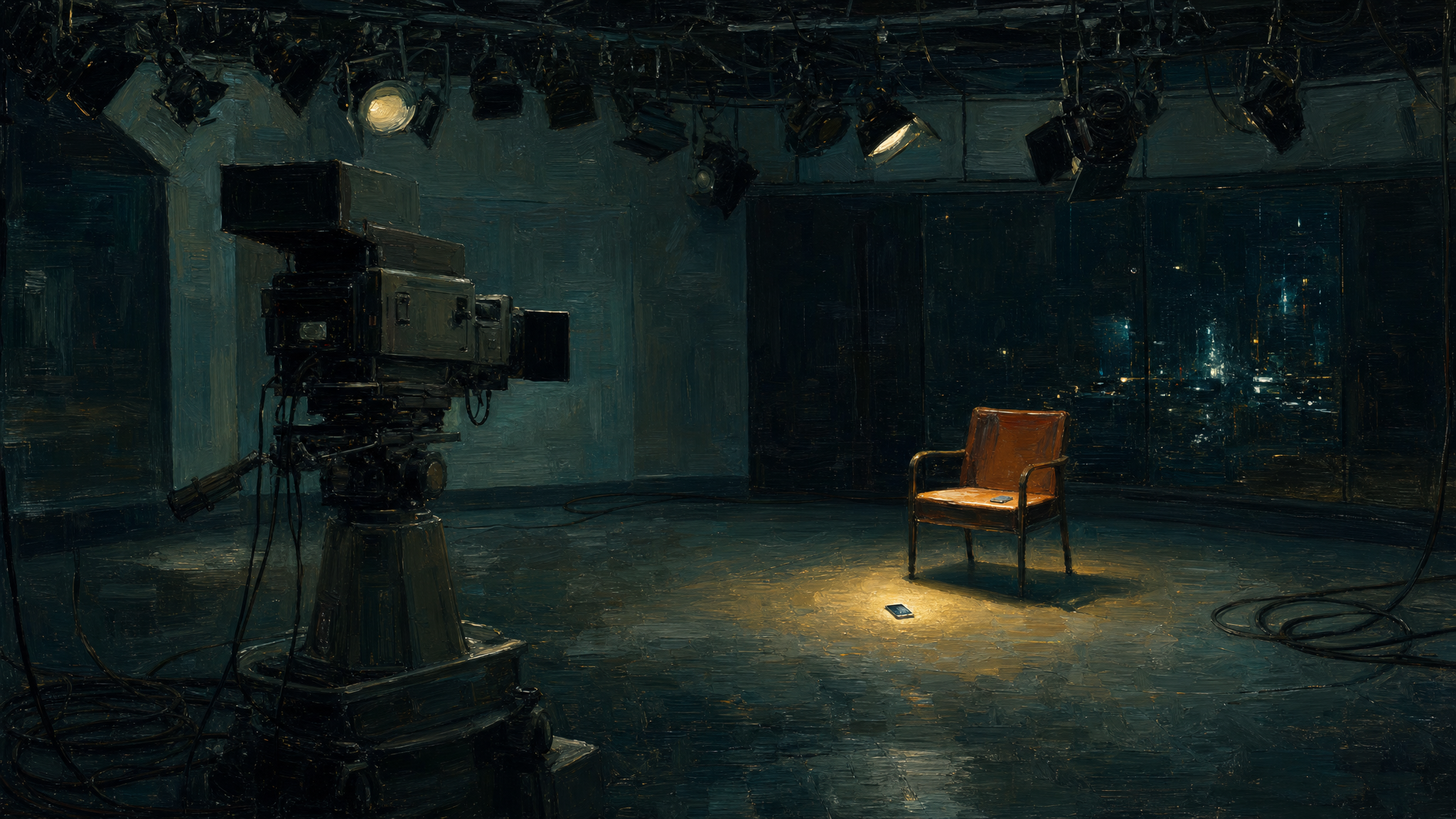
> *Water shapes its course to the ground; an army shapes its victory to the enemy.*
> *So an army has no constant formation, and water has no constant shape.*
> —— *Sun Tzu*, "Weak Points and Strong" (5th c. BC)
## What this episode is about
*Investor's Sunday* is a Japanese finance radio programme. The guest is **Hiroki Takahashi** — producer of the video media outlet **ReHacQ** and CEO of Tonari Inc.
The CV is easy to follow: born in Tokyo in 1981, Waseda graduate, joined **TV Tokyo** in 2005, produced several hit programmes. In 2021 he launched a YouTube channel with Nikkei that hit **one million subscribers in one year and ten months**. He left the network at the end of February 2023 to found ReHacQ, which hit **a million subscribers in eighteen months**.
I didn't listen for Japanese media. **I listened for the passage where eighteen years of expertise was carried into a new medium and simply failed to work.**
**Original episode**: Investor's Sunday, 26 July 2026 (Japanese, ~25 min)
## The notes I took
**It starts with grunt work.** His first six months were as an AD (assistant director): ordering lunch boxes, taping performers' marks on the floor, putting straws in water glasses, running errands. His own summary: **"I can do any part-time job now. Probably even a house move."**
**The position that mattered is Chief AD.** This is the most valuable passage in the episode. In the Japanese network system, a good AD is promoted to Chief AD — **a kind of apprentice producer.**
What makes it distinctive: **the producer listens to you, the talent listens to you, the technical and art departments listen to you.** You become the programme's **hub** and have to hold all of it. His point is that having done that job changes you, because you come away knowing two things: **what this amount of money can actually buy, and who to go to in order to make a given thing happen.**
**He always tried to direct the first episode.** This is the habit I found most instructive. On shows where several directors each shot an episode early on, he made a point of taking the first one.
The reason is simple: **the first episode determines the shape of everything that follows.** Get episode one and you can make the programme into the thing you want it to be.
**Interesting and rating well are two different things.** Asked whether you can tell in advance which show will be a hit, he's blunt: **you can't.** "Something can feel really interesting and still not rate. You don't know until you open it up and look at the numbers."
**His actual craft, accumulated over nearly twenty years, is interviewing.** His own framing: whether you're in front of the camera or behind it, a director's core work is **the interview** — you interview experts during research, and off-camera you're the one listening. When the host observes that he wasn't an on-air performer but clearly has the listening skill, he agrees: **"That part is genuinely true."**
**The Nikkei YouTube channel struggled early.** This is the most honest stretch of the episode.
He went in confident — **all that television know-how, surely applying it would grow the subscriber count.** It didn't.
His diagnosis is direct: **the early episodes were too television.** Location shoots, lots of graphic flip cards, on-air talent drawn from TV.
**YouTube wanted a different shape.** He shifted to studio conversation as the core format, for very concrete reasons:
- **A lot of people don't watch the picture — they listen.** So flip cards and location footage *force* the audience to use their eyes, and what he needed was **something that works without eyes.**
- **TV talent doesn't necessarily translate.** He notes a performer he personally loves who probably wouldn't pull numbers on YouTube.
- The deeper difference: **TV is passive viewing; YouTube is active viewing.** TV skews older and is often on as company; YouTube is someone alone in their room, watching deliberately. **Two quite different media.**
**And the network banning YouTube work was rational.** This is the part I think deserves a wider audience.
He says that inside the network, doing anything other than television basically wasn't done — **it was prohibited.** And the reason isn't conservatism: **television had the highest profitability.** Broadcast reaches enormous numbers at once and ad rates are high, so **concentrating resources on television genuinely was the profit-maximising choice.**
The opening came around 2020, when Nikkei solicited video proposals — the first time a YouTube pitch was even possible. He submitted one and it went through.
**And he wasn't an outlier for long.** The hosts note the wave of talent leaving Fuji TV after its management shake-up — star directors from the production division, announcers. Where they go is Netflix, Amazon Prime, ABEMA. **After ten or twenty years in television, when you want to do something new, those are conveniently right there.** Asked whether that isn't exactly his own story, he agrees: **"Yes. There are more people like that now."**
## What I took away
**1. The value of the Chief AD seat is knowing what things cost and who to ask.**
Listening to that, I wasn't thinking about television at all. **Anyone who has to direct a system is missing that seat's experience.**
Someone who has never been the hub issues instructions like "just do this." Someone who has been the hub knows who it touches, what it consumes, and where it will jam. **The difference isn't authority — it's holding a real map of costs.**
The practical implication for me: if I'm going to direct a system, I need to have walked the whole path myself at least once. Not to be able to do it, but **to know what it actually costs.** Without that map, my instructions land in a vacuum.
**2. Taking episode one is taking the right to set the shape.**
"The first episode determines the shape of everything that follows" generalises far past television.
The first version, the first document, the first rule becomes the template everything after imitates. **And once a template sets, changing it costs an order of magnitude more than writing it did.**
Writing another piece today I noted a related rule: **exceptions in an institution never stay attached to the purpose that created them.** Put together, the pair is complete — **the first version sets the shape, and exceptions spread.** So the place worth real effort is not iteration ten. It's iteration one.
**3. "Too television" is the most precise description of expertise-as-baggage I've heard.**
He wasn't short on skill. His skill was **too specific** — specific enough to be bound to the shape of one medium. Location shoots, flip cards, TV talent: all correct answers on television, all dead weight on YouTube.
My translation: **when I carry a method validated in domain A into domain B, the first question isn't "is this method good?" It's "which constraint in A was this method built for, and does B have that constraint?"**
Location footage exists because the TV viewer is in a living room with the screen on. YouTube's user is in headphones, commuting, doing something else. **Change the constraint and the optimum changes with it.**
**4. "Works without eyes" is designing for the usage context, not the content.**
I like this one a lot. He isn't saying content should be simpler. He's saying **the form should be designed for how the audience actually consumes it.**
That's a direct test for anything I make: where is the reader, and in what state? If it's a phone, mid-commute, interrupted three times, then **however elegant my structure, if it requires twenty uninterrupted minutes to digest, the design is wrong** — not the content, the form's fit to the context.
**5. The network banning YouTube was rational — which is what makes the innovator's dilemma terrifying.**
If it were just old people resisting change, the story would be boring. What's frightening is that **under the existing revenue structure, concentrating on television was the correct decision.** Wider reach, higher ad rates, better marginal return on every unit of resource.
So what blocks transformation isn't stupidity. It's **local optimisation.** I ran into the same shape in another piece today: Nazi Germany conserving tungsten for weapons by removing it from tooling — every step rational, and the precision of the entire production system collapsed.
**The same disease: every step correct, the sum fatal.** And it's nearly impossible to argue against from inside, because the objector's numbers are always right.
**6. Not being able to pick the hit is itself a discipline.**
"It can feel really interesting and still not rate." That's from someone with eighteen years in the job who has taken a channel to a million subscribers twice.
I don't read that as "unpredictable, so give up." I read it as: **since the outcome of any single work can't be predicted, the only controllable variables are cadence and the floor on quality.** You're not betting on one episode landing; you're giving yourself enough draws.
Which is exactly the logic of investing — and I believe it more here, because the person saying it **has proven it twice.**
## Further reading
- The episode: Investor's Sunday (JFN network, Japan), 26 July 2026, with guest Hiroki Takahashi (in Japanese)
- His outlet ReHacQ, and the earlier Nikkei TV Tokyo University channel, are both public on YouTube
- The lines from Sun Tzu are my own footnote to the episode, not part of it
---
**Disclaimer**: This is a listener's reflection and general education, **not investment advice, an offer, or a solicitation**. Companies, outlets and individuals mentioned come from the public episode; nothing here recommends any security or evaluates any company's management. Investing carries risk — judge for yourself against your own circumstances and consult a qualified professional if needed. Copyright in the original episode belongs to its producers; please go listen and support them.