# Water Has No Constant Shape: Statementdog EP543 on Optical-Module Bans, HBM Downgrades, and a Market That Got Tripled
> Statementdog EP543 covers an hour's worth of ground: the Kumamoto earthquake, the FCC weighing a ban on Chinese optical modules, GlobalWafers' call, rumours that NVIDIA is cutting HBM stacks on Rubin Ultra, a full week of memory conferences, power semis, and panel-level packaging. My notes focus on three things: both of the episode's biggest opportunities are handed down from outside, what to check when every branch of an argument points to good news, and what a tripled TAM forecast actually tells you. Educational notes, not investment advice.
Published: 2026-08-07
Locale: en
Tags: statementdog, podcast-notes, semiconductors, memory, optical-networking, power-semiconductors
TL;DR: The sharpest stretch of this episode argues that cutting HBM stack counts is actually good for memory makers — but every branch of that argument lands on good news, and that symmetry is itself worth checking. Two other keepers: neither of the episode's big opportunities was earned by the companies involved, so their kill conditions sit outside them; and a market forecast tripled overnight also tells you how wrong that forecaster was two years ago.
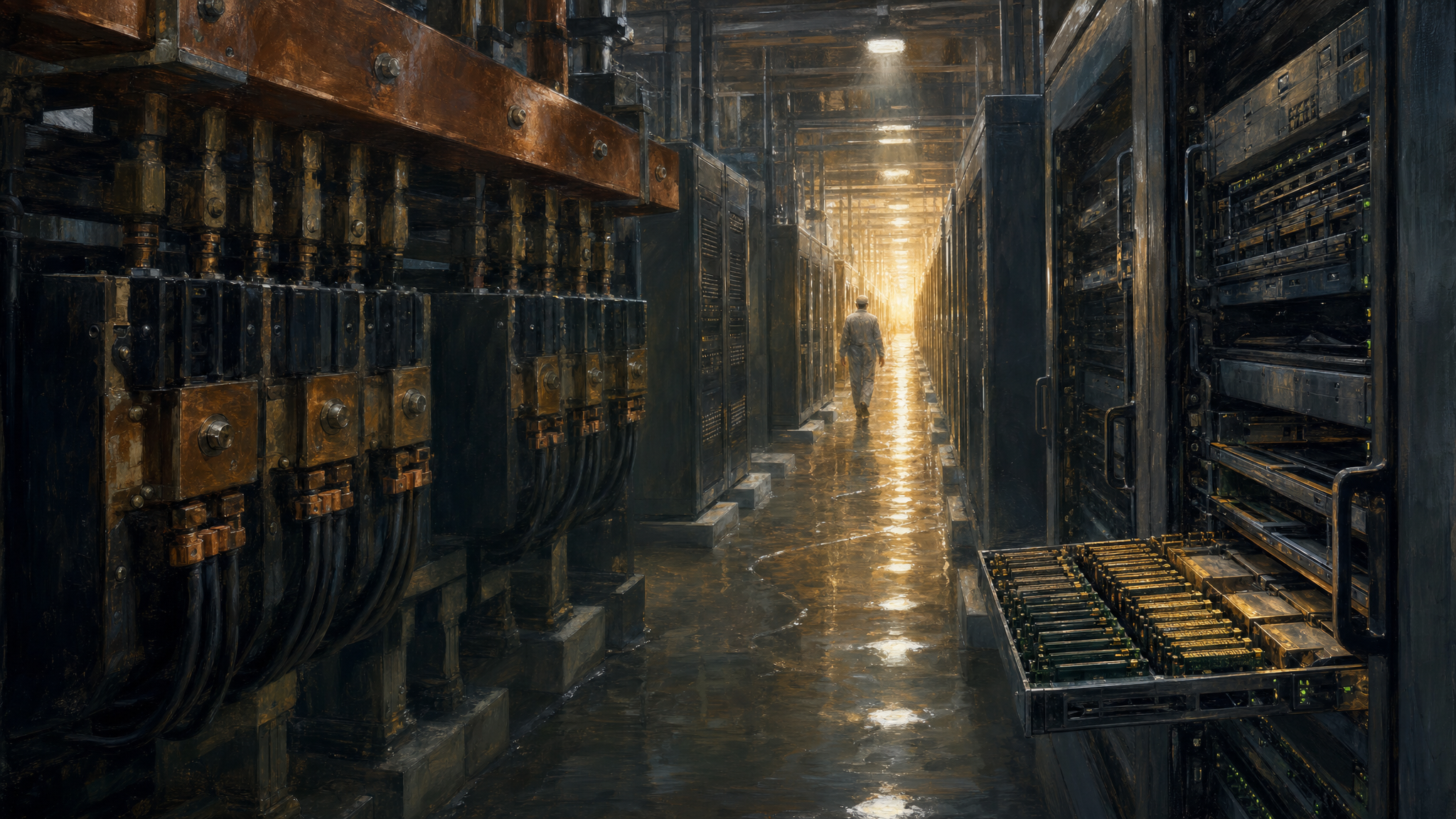
> *Military tactics are like water: water avoids the heights and rushes to the low;*
> *tactics avoid what is strong and strike at what is weak.*
> *War has no constant conditions, water has no constant shape.*
> —— *The Art of War*, ch. 6, "Weak Points and Strong"
## What this episode is about
*Statementdog* (財報狗) is a Taiwanese investing podcast. Its "market magnifier" format is two hosts working through a week of earnings calls and news in one sitting, and this one ranges widely: the Kumamoto earthquake's real impact on Japanese and Taiwanese fabs, the US FCC weighing a ban on Chinese-made optical modules, GlobalWafers' earnings call, rumours that NVIDIA will cut the HBM configuration on Rubin Ultra, a week of memory conferences, upgraded outlooks at MediaTek and in power semis, and finally panel-level packaging.
**Original episode**: Statementdog EP543, "Optical Bans × High Voltage, Chips, and a Memory TAM Higher Than the Sky" (2026-08-06, in Mandarin).
I started listening to it as ordinary weekly news, then went back twice over one stretch — the argument for why cutting HBM stacks isn't bad news for memory makers. It lays out both sides honestly, and it's precisely because it's honest that you can see which piece is missing. What follows are my own notes, not a recap of the show.
## The notes I took
**You can rough out the earthquake damage yourself, and past damage figures will mislead you.** The method on the show is crude but usable: news reports said equipment was back to normal output in roughly four to five days, so take the downtime, multiply by the fab's wafer volume and the price per wafer, and you get an order of magnitude for breakage plus lost production — under a billion Taiwan dollars. The second layer matters more: you can't benchmark against the headline loss from some past fab incident, because wafer prices only go up with each process generation, so the same wafer count is worth a very different amount today. The Kumamoto fab runs mature nodes — 28nm, 16nm — so the price term stays low and the total stays contained. Incidentally, the host delivered all this from a forest retreat in Chiang Mai: he'd gone there to do nothing, ended up sitting among people meditating while working out whether TSMC had cracked any wafers, and said so himself — it was absurd.
**A ban on 70–80% market share cuts both ways; the hard part isn't the size of the prize, it's whether anyone can catch it.** Chinese optical module makers hold seven to eight tenths of the global market. If that were genuinely blocked, the volume released would be a multiple-of-revenue event for non-Chinese suppliers. But the show is clear-eyed about three constraints: non-Chinese players don't have the capacity, and the equipment alone runs into the hundreds of millions; some substrate materials still have to be bought in (Japan supplies them too, so it isn't single-sourced); and transshipment has already been rehearsed once in solar, where Chinese producers routed through Southeast Asia. So the thing to track is how airtight enforcement actually is. And in Taiwan the likely shape is an alliance or a set of partnerships, not one champion appearing overnight.
**A prepayment is harder evidence than a long-term contract — but a single month's earnings can be contaminated.** GlobalWafers' call was more bullish than the last one: wafer capacity full, and a ten-year agreement with Micron that came with a US$500 million prepayment. Money up front, go build. That's much harder evidence than a contract you can walk away from. Yet the same company's monthly profit can't be read straight, because it marks its stake in Siltronic to market — hence a big June quarter followed by a sharp monthly loss. That's financial revaluation, not the operating business. On the broker call for a three-bagger in two years, the host's verdict was that it isn't estimable that way: the common shortcut is to apply this cycle's memory price increases to wafers, but memory is in a super-cycle whose amplitude simply doesn't transfer upstream. Take past cycle gains and haircut them.
**Cutting HBM stacks isn't bearish for memory, and the reasons stack up.** The rumour is that NVIDIA drops Rubin Ultra from twelve-high to eight-high. The counterintuitive part: HBM runs on the same process as commodity DRAM, stacking yields remain poor, last quarter's call suggested HBM's gross margin may actually sit *below* ordinary DRAM, and HBM consumes three to four times the wafer area. So if capacity swings back to commodity DRAM in a market this tight, makers plausibly earn more. The host then argues against himself: the downgrade may exist precisely because HBM is short, in which case unit counts rise and wafer consumption doesn't fall. Both branches land in the same place — this is happening because everything is short.
**The bottleneck isn't compute, it's the memory wall, and a whole week of launches was circling it.** At FMS (Future of Memory and Storage), Samsung showed a NAND generation approaching 400 layers, Kioxia showed high-speed SSDs doing ten million random reads per second, alongside HBF, CXL, optical interconnect and PCIe 6. They look unrelated; they aren't. The constraint is HBM multiplied by bandwidth, it won't be solved soon, so storage demand gets spread down the hierarchy — local DRAM, fast SSD, tiers further out. One caveat from the show is worth keeping: this path only pays off if the software offloads key-value data correctly. Swapping hardware doesn't automatically make it faster.
**Everyone raised guidance this week, but the raises aren't the same kind of thing.** MediaTek picked up leadership on TPU v9 after a competitor's delays, and has spent a year steadily revising its ASIC outlook upward — that's a raise backed by order visibility. Infineon raised its 2030 power-semiconductor market forecast from US$12 billion to US$50 billion. The host's reaction was blunt: that means the old number was wrong, doesn't it — but nobody will ask. One company is telling you what it holds; one research house is admitting its prior number was off. Read them differently.
**What's short is specific parts, not the industry.** This is the line from the episode I most want to keep. Server power architecture is moving from low voltage toward 400V and 800V; the high-voltage side wants silicon carbide, the low-voltage side wants gallium nitride, power management IC counts may go from one or two to six, and passives follow. But the shortage is in large, high-voltage, high-capacitance parts — the small form factors used in phones are still seeing volumes drift down and won't tighten just because the theme is hot. And what's actually shipping today is still the low-voltage segment; 400V ships in small quantities and won't be clear until late next year.
**Panel-level packaging's opening isn't its own strength — it's that the alternative got expensive.** Wafer-level packaging prices have run up thirty to forty percent while panel-level hasn't moved, and the show's explanation is refreshingly plain: it hasn't displaced anything yet. Once that gap opens, chips that don't need fine line widths but do need to carry serious current — power management, RF — have a reason to migrate. The most concrete example is SpaceX, which built its own panel-level packaging line in the US to make satellite RF silicon cheaply and in volume.
## Where this leads me
**1. Both of this episode's big opportunities were handed down from outside.**
The de-risking-from-China optical module opportunity doesn't exist because non-Chinese suppliers suddenly got better; it exists because a rule may change. Panel-level packaging's opening doesn't exist because it broke through anything; it exists because the alternative rose thirty to forty percent and it didn't. Same structure: the driver sits outside the company.
That changes what you monitor. With a genuine technical edge you track yields, patents, qualification milestones. With a rule-driven opening you track enforcement — and as the show notes, solar already ran this experiment: if enforcement is loose, transshipment absorbs it, and only if it's tight does non-Chinese capacity become the binding question. With a price-gap opening you track whether the gap persists: let wafer-level pricing soften, or capacity loosen, and the reason to migrate evaporates.
**So my rule is: participate in externally granted opportunities, but don't re-rate on them.** They hand you a period of volume, not a higher long-run multiple, because a technical lead takes years to erode while an agency notice can be reversed in a quarter. When does it become structural? When the external force lasts long enough that non-Chinese capacity is actually built, that panel-level equipment is depreciated and yields are ground out. The test I use is simple: has the capex actually been sunk? Once it has, the story starts belonging to the company.
**2. When every branch of an argument points to good news, check whether the branches are exhaustive.**
I like the HBM argument because it states the counter-case. Forward: downgrade → capacity swings to commodity DRAM → in a shortage, that earns more. Reverse: the downgrade may exist because HBM is short, so unit counts rise and wafer consumption holds. Both roads arrive at "everything is short."
That's exactly where I stopped. **When every branch lands in the same direction, it usually isn't that the world is unusually kind to you — it's that a branch is missing.** The missing one here is visible enough: the downgrade might reflect not scarcity but a smaller overall system plan, which is a demand signal rather than a supply one. And there's an unstated premise underneath the whole chain — that commodity DRAM stays desperately tight. Shortages end. Loosen that premise and "swinging back earns more" stops holding.
There's a subtler detail too. The pivotal fact — that HBM margins may sit below commodity DRAM — comes from **last quarter's** call. That data expires. If stacking yields improve and HBM margins climb back above DRAM, the whole argument inverts.
Which is, I think, what makes the argument valuable: **its kill condition is writable.** So I'm not filing away the conclusion that downgrades are good for memory makers. I'm filing the question — is HBM's gross margin still below commodity DRAM? — to be answered against next quarter's call. Conclusions expire; questions don't.
**3. A tripled market forecast hands you two pieces of information, and most people read one.**
Infineon lifted its 2030 power-semiconductor market from US$12 billion to US$50 billion. The first piece is about the market: it really is getting bigger, and for structural reasons — the voltage architecture change forces more power management ICs and more high-voltage passives by design, not by cycle.
The second piece is about the forecaster: the same source was off by a factor of four two years ago. The host's "nobody will ask him" sounds like a joke, but it points at something real — the market takes the first piece and raises its valuations, and drops the second. Yet the second has a very concrete use: **the next time that source hands you a 2032 number, how much weight should it get?**
The same hour contains a perfect mirror image. Talking about the index, the host asks what was different between last week and this one — nothing, it went up a bit, down a bit, and at 40,000 points the daily moves are the largest in history by construction. Two kinds of numbers in one conversation: the tripled TAM is to be read as structure, the index's daily points as noise. **The hard part was never separating signal from noise. It's that at the moment they arrive they look identical — both are large numbers, both make headlines.**
One last practical layer. A TAM is an aggregate; what you own is a specific part. That's where the episode's best warning sits — passives aren't uniformly short, the shortage is in large high-voltage, high-capacitance components, and under the same TAM some specs are repricing upward while others keep drifting down. What's actually shipping is still the low-voltage segment. **The aggregate getting bigger doesn't mean the part you hold got better.**
## Worth reading alongside
- Original episode: Statementdog Podcast EP543, "Optical Bans × High Voltage, Chips, and a Memory TAM Higher Than the Sky" (2026-08-06, Mandarin)
- On optical module policy: the FCC's public agenda and Reuters' coverage — both are open to check
- On where memory specs are heading: the public agenda and vendor materials from FMS (Future of Memory and Storage)
- GlobalWafers, MediaTek and Infineon all publish their earnings decks and quarterly outlooks on their investor relations pages
- The three lines from *The Art of War* are my own gloss on the episode, not part of the show
---
**Disclaimer**: These are personal listening notes and study material, published for educational purposes. **They do not constitute investment advice, an offer, or a solicitation.** Companies and industries mentioned come from publicly broadcast content and public information; no specific security is recommended and no price targets are given. Investing carries risk — make your own decisions based on your financial situation and risk tolerance, and consult a qualified professional where appropriate. Copyright in the original episode belongs to its creators; please listen to the original and support them.